If you’re planning to walk the Camino de Santiago via the English Way, starting in El Ferrol gives you the opportunity to discover historical treasures before setting off. One of these must-visit places is the San Felipe Castle, a coastal fortress brimming with history that offers spectacular views of the Ferrol estuary.
Whether you’re undertaking the pilgrimage alone or opting for an organized Camino de Santiago guided tour, visiting it will add a unique cultural context to your journey. Below, we present the history of this imposing structure, tips for visiting it, and take the opportunity to compare the English Way with other prominent Camino routes.
Índice de contenidos
History and Features of San Felipe Castle
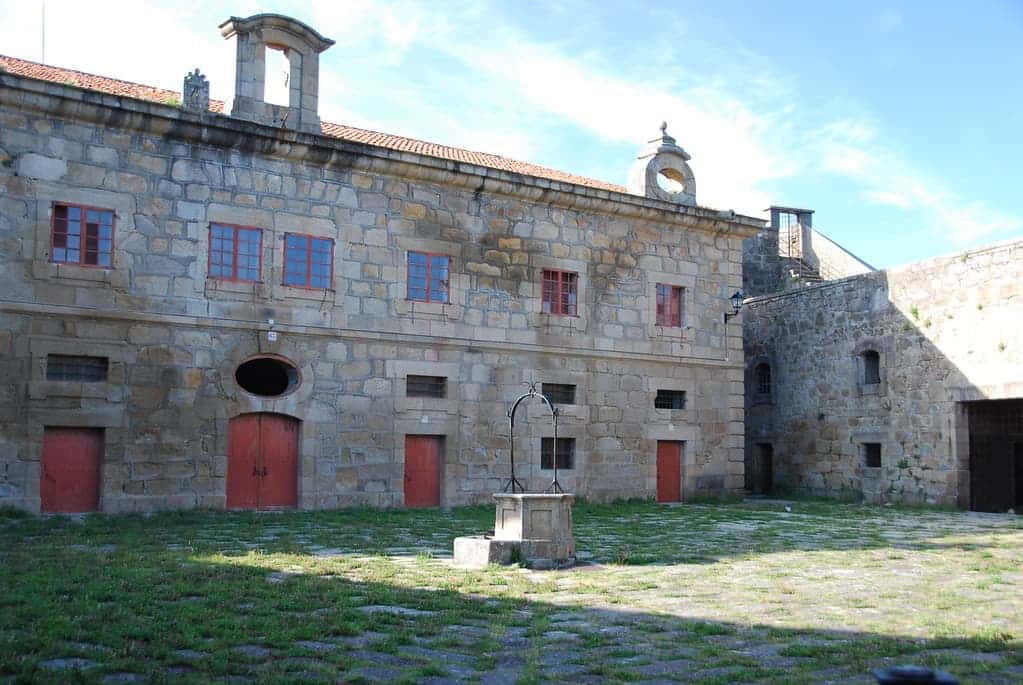
San Felipe Castle, located at the entrance to the Ferrol estuary, is the most important military structure in this city.
Its origins date back to the reign of Philip II: the fortress began construction in 1557 under his patronage, which is why it bears his name. However, the structure we see today mainly dates from the 18th century, when it was extensively remodeled and expanded, with major work completed in 1775.
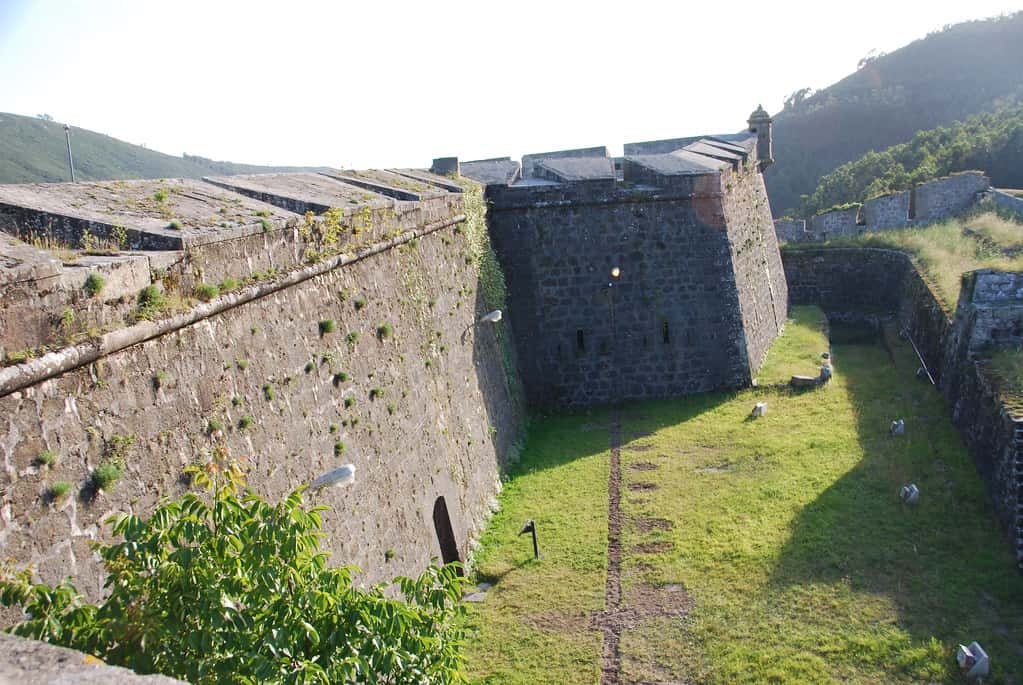
This renovation was carried out by engineer Francisco Montaigú, who applied modern fortification techniques inspired by those of the French Vauban. The result was a notable example of a bastioned battery, with cannon batteries facing the sea and defensive bastions to protect the landward flanks. Thanks to this design, it could repel both maritime and land attacks with great effectiveness.
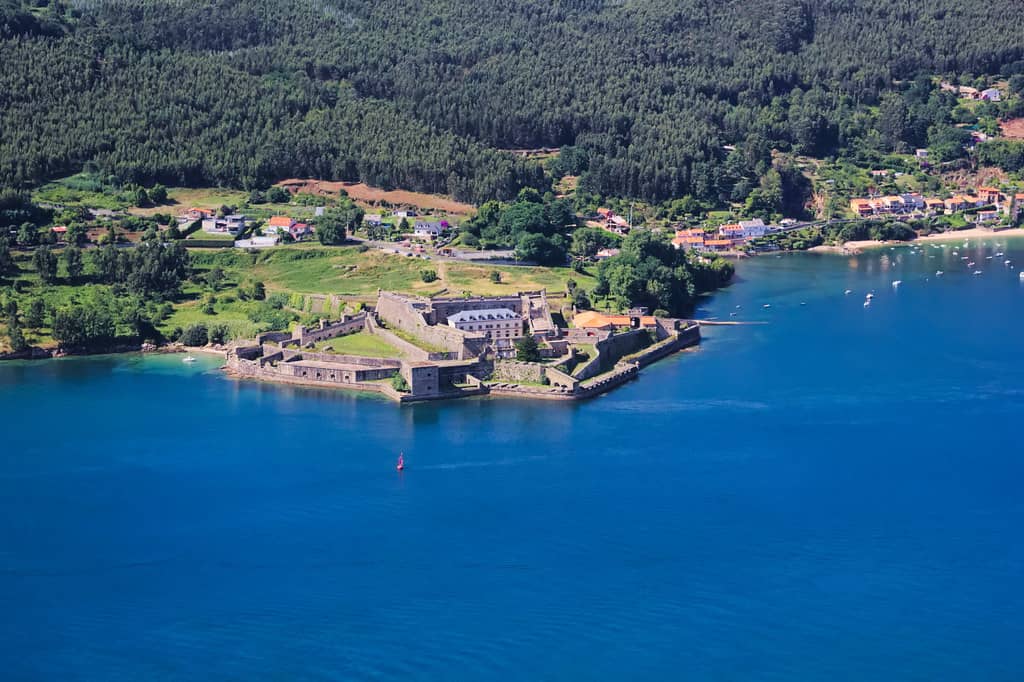
Its strategic location was key to making the estuary an impregnable port. It was part of the “fire triangle” alongside the Castillo de La Palma (on the opposite bank in Mugardos) and the now-destroyed Castillo de San Martiño. Together, the three forts covered the entire entrance to the estuary with their artillery, so no enemy power ever dared to attack this naval base directly.
In fact, at night, a massive iron chain was stretched between San Felipe and La Palma to block the entry of unwanted ships. This defense was so famous that the English admiral Sir Pitt is quoted saying: “If Britain had an estuary like this, with its castles, they would protect it with a silver wall”, referring to how no effort would be sufficient to safeguard a location of such strategic value.
For centuries, the castle protected the vital arsenal and shipyards of Ferrol, from where many Spanish navy warships set sail. Even after the defeat of the Spanish Armada in 1588, some ships managed to take refuge in the estuary, further highlighting the need to fortify it.
Today, it stands as a living witness to military history. Although it no longer serves a defensive purpose, it continues to impress with the magnitude of its walls and the beauty of its natural setting. The fortress is integrated into the coastal landscape, surrounded by forests and beaches, and is under constant restoration, meaning some areas may be adapted for tourism purposes.
Tips for Visiting San Felipe Castle
Visiting San Felipe Castle is a highly recommended activity before starting the English Way from Ferrol. Not only will you appreciate its historical value, but you’ll also begin your pilgrimage with a greater connection to the Galician land and its heritage. Here is some practical information to help you plan your visit:
- Access and Location: The castle is located on the right bank of the estuary, about 10 km from the city center, on the outskirts of Ferrol. It takes around 20-25 minutes by car from the urban area to the fortress. The route follows narrow secondary roads in the final stretch, but it’s well-signposted.
- If you don’t have a private vehicle, you can take a local bus to the parish of A Graña and walk for about 15 minutes. However, the most convenient option for many pilgrims is to take a shared taxi to the entrance.
- Hours and Admission: Access is free and open to the public every day of the year. San Felipe Castle opens every day, including holidays, usually from morning (10 AM to 2 PM) and afternoon (4 PM to 8 PM) during the summer season.
- In winter, the opening hours may be reduced (for example, from 10 AM to 6 PM with continuous hours). It’s advisable to check the updated hours at the tourist office before planning your visit.
- Touring the Fortress: Once there, you can freely explore the grounds. There are informative panels explaining the history and functions of the various military areas. At the entrance, there is usually a small explanatory exhibition providing historical context (in Spanish and English).
- Do not expect furniture or rooms set up like a palace museum. In fact, it has been preserved as a historical ruin, so most of the rooms are either empty or in their original state. Still, exploring its bastions, powder magazines, moats, and guardhouses is fascinating for history enthusiasts.
-
- From the upper battlements, you get privileged views of the estuary entrance. You can spot the Castillo de La Palma across the water, and out in the Atlantic, the vastness of the ocean.
-
- We recommend wearing comfortable footwear to walk on the cobbled paths and climb steep stairs. Please note that not all areas are accessible for people with reduced mobility, due to the age of the structure (there are steps, slopes, and uneven terrain).
- Guided Tours: If you want a more enriching experience, official guided tours are organised a couple of days a week during the high season. For example, during summer, guided tours are usually available on Thursdays and Saturdays at 18:00, lasting approximately an hour and a half. Some of these tours are even dramatized on special dates, adding a fun touch.
-
- The cost is around €10 per person (children usually enter for free). Remember, even without a guide, entry to the site is free – the payment refers only to the guided service.
Spending about two hours exploring the Castillo de San Felipe will give you a different perspective before starting your pilgrimage. In addition to the photographic postcards you can take, you’ll gain a better understanding of Ferrol’s maritime and military importance, the city that marks the starting point of your pilgrimage.
After the visit, you can return to Ferrol to stamp your pilgrim passport at the Tourist Office or at the Concatedral de San Julián.
Ferrol, Starting Point of the Camino Inglés
Ferrol is recognised as the main starting point of the Camino Inglés. This historic port city provides the perfect setting to begin the Jacobean adventure. It combines its military and naval past with hospitality for pilgrims, offering services and attractions worth exploring before setting off.
As a city with a maritime and military tradition, Ferrol boasts iconic places that, like the Castillo de San Felipe, you can visit if you have extra time. These include, for example:
- The Jardín de Capitanía and the Naval Museum, which display models of historic ships and remind visitors that Ferrol is home to one of Spain’s oldest and most prominent shipyards.
- It’s also a pleasure to stroll through the modernist district of A Magdalena, the heart of Ferrol’s urban area, with its distinctive grid layout and 19th-century buildings. In this neighbourhood, you’ll find the famous Meninas de Canido, a series of colourful urban art murals inspired by Velázquez’s “Las Meninas.”
From the Curuxeiras Dock, the Camino Inglés officially begins. Traditionally, pilgrims from northern Europe (British, Irish, Scandinavians, etc.) would arrive by boat at this port and then walk to Santiago.
Today, the Camino Inglés from Ferrol consists of 5 well-defined stages covering just over 100 km to Compostela. The early stages are characterised by the blue of the coastal landscape of the Rías Altas, followed by the green of the valleys and forests inland. One important practical aspect is that Ferrol guarantees the minimum number of kilometres needed to obtain the Compostela.
It’s worth mentioning that the Camino Inglés has experienced a surge in popularity in recent years. After the pandemic hiatus, this short route has become very attractive for those with less time or who seek a less crowded experience. In 2024, it reached a historic record with 28,058 pilgrims completing the route, making it the fourth most popular Jacobean route.
This growth, a 16% increase compared to the previous year, confirms the upward trend of the route. Moreover, more and more international pilgrims are taking it – in 2024, nearly half of the walkers were from abroad, with notable numbers of Italians, Portuguese, British, and Americans, among others.
The Camino Inglés and Other Camino de Santiago Routes
This is just one of the several historic routes leading to Santiago de Compostela. Each Jacobean route has its own charm, mileage, and popularity. Unlike other longer paths, this one is relatively short (about 118 km) and runs entirely through Galicia. Therefore, it’s ideal for those looking for a pilgrimage of less than a week’s duration.
However, if you have more time or are curious to compare experiences, it’s worth learning about the features of the other main routes. Here’s a brief overview of the most notable ones:
- Camino Francés: This is the most well-known and busiest Jacobean route. It covers ~800 km from the Pyrenees to Santiago, passing through various regions of Spain and offering a rich variety of landscapes – from the Pyrenean mountains to the Castilian plateau and the Galician hills.
-
- Due to its long history, this route is filled with monumental towns, cathedrals, medieval bridges, and centuries-old traditions. It’s the best-equipped route in terms of hostels and services and attracts the largest number of pilgrims each year.
- Camino del Norte: This route runs along the Cantabrian Sea from Irún to Galicia. It offers spectacular views of cliffs, beaches, and forests, passing through cities such as San Sebastián, Bilbao, Santander, and Gijón. It has a more challenging profile due to the continuous elevation changes, but rewards with incomparable green and seaside landscapes.
-
- A notable section of this route is the Camino del Norte from Santander to Gijón, which crosses the Cantabrian coast from Cantabria to Asturias, combining historical heritage (such as the Santander lighthouse or the medieval bridge of Liendo) with the refreshing breeze of the Cantabrian Sea.
-
- It’s less crowded than the Francés, which attracts pilgrims seeking more tranquillity without sacrificing scenic beauty.
- Camino Portugués: This is the second most popular route. It traditionally begins in Lisbon, crossing the north of Portugal towards Galicia. It has two main variants: the central route (interior) and the coastal route.
-
- On the central variant, many pilgrims begin in Tui (right on the Spanish-Portuguese border, 115 km from Santiago) and walk for 5-6 days to reach the destination. Meanwhile, the Portuguese coastal variant follows the Atlantic coastline offering beach and sea views.
-
- A common itinerary on this coastal route goes from Oporto to A Guarda, passing through fishing towns like Viana do Castelo and Caminha before crossing into Galicia. From there, pilgrims continue from A Guarda to Santiago de Compostela, usually linking up with the Central Route in Redondela.
-
- In any of its variants, this route stands out for its friendly atmosphere, its gastronomy, and for being a journey of moderate difficulty. It’s ideal for both beginners and veterans looking for a different route.
- Camino Primitivo: Considered the oldest itinerary, it follows the footsteps of King Alfonso II, who in the 9th century left Oviedo for Santiago to verify the discovery of the Apostle’s remains. It covers about 320 km through mountainous landscapes in Asturias and Lugo, combining tough ascents with stunning views of green Spain.
-
- It’s a physically demanding route, with fewer intermediate services, but very rewarding due to its authenticity and relative solitude. Cities like Lugo (with its Roman walls, a UNESCO World Heritage site) are part of its path.
As we can see, the Camino Inglés offers a different experience compared to the other routes: shorter in distance but equally rich in coastal and rural landscapes, with the added value of starting in Galicia from the first kilometre.
It shares with other routes the spirit of camaraderie among pilgrims. However, it provides a very marked local flavour (as it runs entirely through Galicia) and a special connection to maritime history, highlighted by sites like the Castillo de San Felipe in Ferrol.