Walking for several days in a row demands more from the body than many people imagine. It’s not enough to “grab something to eat” at the first bar you find: if you want to reach the end of each stage feeling good, recover quickly, and avoid energy slumps, you need food that’s tailored to the effort.
Below is a practical, clear guide designed for pilgrims: what to have for breakfast, what to carry in your backpack, how to stay hydrated, and how to adapt your diet depending on the route you’re walking.
Índice de contenidos
- 1 Why Nutrition Matters When Pilgrimaging
- 2 Basic Nutritional Needs for Pilgrims
- 3 Planning Your Day: Breakfast, Mid-Morning Snack and Lunch
- 4 What to Eat While Walking
- 5 Hydration and Mineral Salts
- 6 Recovery After Each Stage
- 7 Special Diets and Restrictions
- 8 Diet and Nutrition Along the Main Camino Routes
- 9 Common Food-Related Problems
- 10 Eating Well Without Overspending
- 11 Quick Pilgrim Checklist
Why Nutrition Matters When Pilgrimaging
On a typical day of hiking, you can burn between 400 and 700 kcal more than usual. On the Camino, that energy expenditure repeats day after day. If you don’t refuel properly, you’ll experience accumulated fatigue, cramps, or that feeling of “running on empty”. In addition, heat, hills, or the weight of your backpack make you lose more water and minerals. That’s why we’re not just talking about tasty food here, but about functional nutrition for walking.
Basic Nutritional Needs for Pilgrims
Your body needs a balanced mix of:
- Carbohydrates: the main source of energy for walking. Bread, rice, pasta, potatoes, fruit, oats… all of these help you maintain your pace without energy drops.
- Protein: essential for muscle repair after each stage. Lean meat, fish, eggs, legumes, or dairy.
- Healthy fats: olive oil, nuts, avocado… they provide longer-lasting energy.
- Micronutrients: sodium, potassium, and magnesium help prevent cramps and dizziness, especially if you sweat a lot.
The simple rule is: eat enough and eat a variety. Don’t tackle long stages with just coffee and pastries, because your body will make you pay for it by mid-morning.
Planning Your Day: Breakfast, Mid-Morning Snack and Lunch
A good stage begins with a good breakfast. Ideally, it should combine carbs + protein + some fruit:
- Toast with olive oil and tomato + a French omelette.
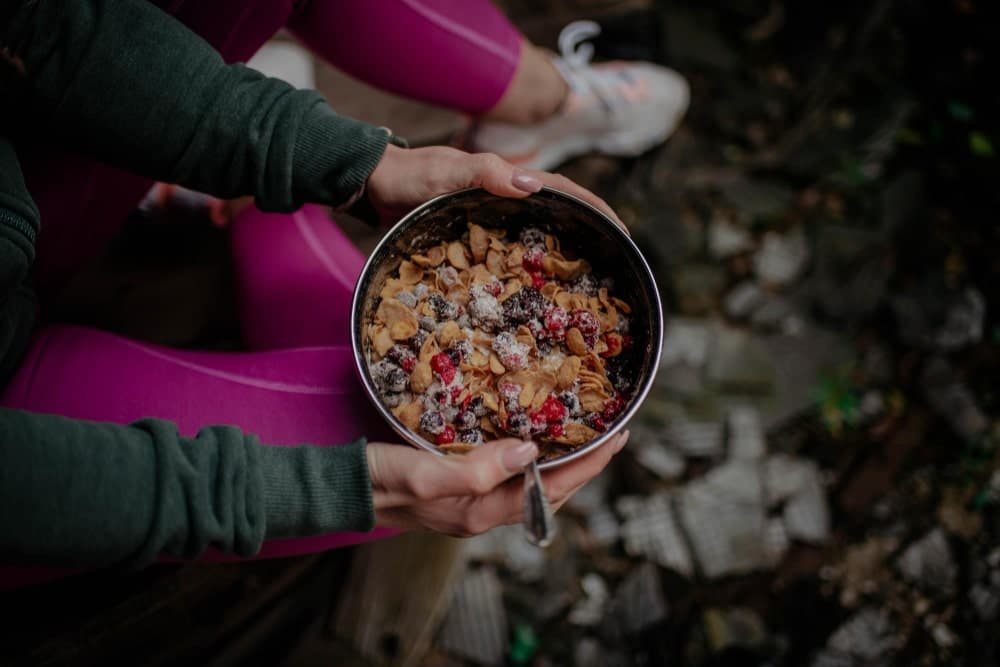
- Oats or cereal with yoghurt and fruit.
- A small turkey or cheese sandwich + coffee/milk.
If you only have pastries and coffee, you’ll get a quick burst of energy but it won’t last.
- Mid-morning: if the stage is over 15 km, always carry something with you. A piece of fruit, a handful of nuts, a cereal bar, or a small sandwich. Taking a 5-minute break to eat something prevents low blood sugar and keeps your spirits high.
- Lunch: if you arrive early at your destination, you can have a more complete meal. If you still have kilometres ahead, opt for something lighter: pasta salad, a sandwich with protein (tuna, chicken), fruit, and plenty of water.
What to Eat While Walking
Think about foods that are light, won’t spoil easily, and can be eaten while walking or during a short break:
- Nuts and trail mixes (walnuts, almonds, raisins).
- Bananas or apples (bananas provide potassium).
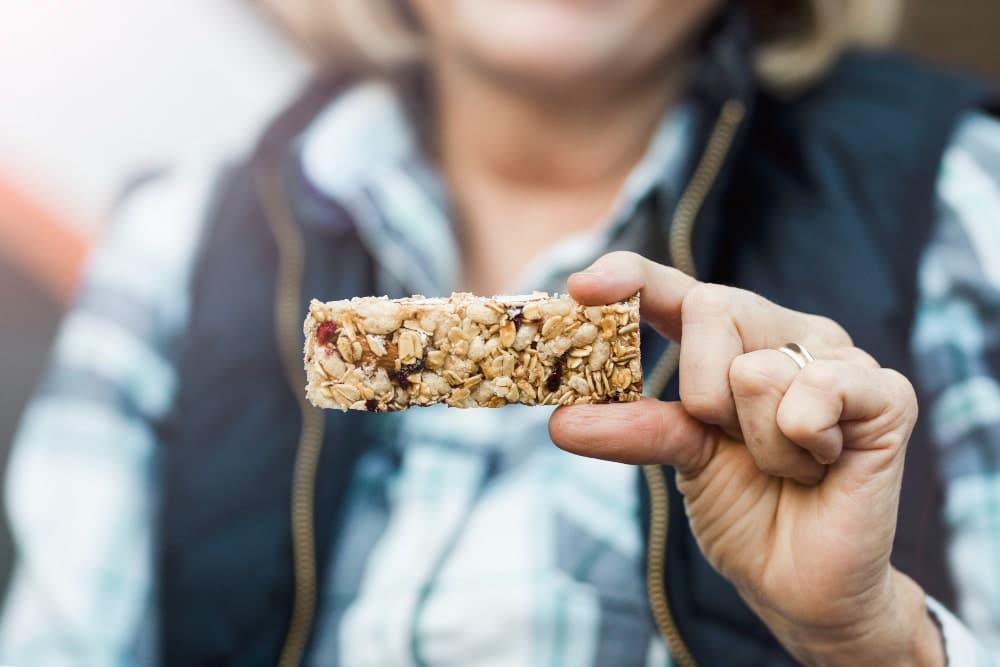
- Cereal or oat bars.
- Plain or wholegrain biscuits.
Avoid overdoing it with chocolate bars or sugary pastries: they give you a quick energy spike but can leave you feeling even more tired afterwards. And be careful with greasy or fried foods mid-stage — they’ll slow down digestion.
Hydration and Mineral Salts
Drinking only when you feel thirsty is often too late, especially in summer. A simple rule: take small sips every 15–20 minutes. If it’s hot, combine water with a drink containing electrolytes or add a pharmacy electrolyte sachet. You can also mix water + a bit of juice + a pinch of salt to restore minerals.
Warning signs: very dark urine, headache, dizziness, or sudden exhaustion. If you notice any of these, stop, find some shade, and drink slowly.
Recovery After Each Stage
When you finish your stage, your body is ready to recover what it has spent. Make the most of the first two hours to eat:
- Carbohydrates: rice, pasta, boiled potatoes, bread.
- Protein: chicken, fish, legumes, eggs.
- Vegetables and fruit: help reduce inflammation and provide vitamins.
A typical balanced menu: soup or salad + a plate of pasta or rice with meat/fish + fruit. If the area offers traditional stews or broths (Galician soups, legumes, etc.), they’re an excellent way to replenish fluids and salts.
Special Diets and Restrictions
Nowadays it’s easier to find adapted options in bars and restaurants on the more popular routes, but it’s still wise to ask or check menus beforehand.
- Vegetarians/Vegans: combine legumes with grains (lentils with rice, hummus with bread), add nuts and fruit. Look for hearty salads and vegetable stews.
- Gluten-free: prioritise fresh foods (meat, fish, eggs, salads, fruit) and bring your own bread or rice cakes so you’re not dependent on bar options.
- Diabetes or blood sugar control: it’s better to eat small portions throughout the day rather than one large meal. Always carry a snack in case of hypoglycaemia.
On less busy routes, it’s a good idea to pack some extra supplies just in case there aren’t many food options available.
Diet and Nutrition Along the Main Camino Routes
Not all routes have the same number of bars, the same climate, or the same local products. That’s why it’s useful to know what to expect. Moreover, the appeal of these routes — gastronomy included — is one of the reasons many pilgrims visit pages such as Mundiplus, specialists in Camino de Santiago tours.
Camino Francés
This is the route with the most services. Almost every stage has bars, pilgrim menus, and shops. That means you can travel lighter when it comes to food. These menus already seem designed for those who’ve walked many kilometres, usually offering dishes with meat, legumes, pasta, and dairy desserts — ideal for recovery.
Still, always carry water and a snack. And if the stage is hot, prioritise lighter dishes and add a good portion of bread and fruit.
Portuguese Way: From Porto and Spiritual Variant
On the Camino from Porto to Tui, you can enjoy food that perfectly supports the effort: plenty of fish, soups, fresh fruit, and quality bread. These foods hydrate, provide minerals, and are easy to digest.
On the Spiritual Variant of the Portuguese Way, as it’s a less crowded section, it’s worth checking where you can stop to eat and bringing extra food. Stages near the coast or in humid areas require extra attention to hydration: always keep water handy and, if it’s hot, add a drink with electrolytes. Rice dishes, soups, and grilled fish are great options for ending the day feeling light yet nourished.
Northern Way
This route also has an excellent selection of fish, dairy products, and hearty dishes (fabadas, stews, casseroles). Since some stages have more elevation and variable weather, it’s best to start with a good breakfast and always carry something in your backpack — some stretches are quite rural. Hot stews are fantastic for replenishing fluids and salts but best enjoyed at the end of the stage.
Primitivo Way
Considered one of the most physically demanding routes. The key here is not to rely solely on bars, as some stretches have fewer services. Bring nuts, energy bars, and enough water. At the end of each stage, go for complete meals with meat or fish and a side of potatoes or rice. Hot soups are especially comforting on cold or rainy days.
Sanabrés Way / From Ourense
If you choose the Camino from Ourense, you’ll find a very pleasant route, though some stretches are less busy than the French Way. That means it’s a good idea to check where you’ll be able to eat and, if it’s a long stage, carry fruit, nuts, and enough water.
Galician cuisine works in your favour: broths, fish, empanadas, and meats that provide protein and help you recover. Just don’t skip fruit or vegetables to balance out heartier dishes.
- Heavy digestion: often happens if you eat fried or fatty foods and keep walking. Solution: choose lighter meals mid-stage.
- Low blood sugar: dizziness, cold sweat, weakness. Solution: stop, eat a piece of fruit or a bar, and drink water.
- Cramps: caused by dehydration or lack of salts. Solution: drink water with electrolytes and stretch if possible.
- Heatstroke: more common on southern routes or in August. Solution: find shade, drink cool water, and don’t continue until you’ve recovered.
Eating Well Without Overspending
Walking for many consecutive days means keeping an eye on your budget. Some ideas:
- Pilgrim menu: usually well balanced and good value.
- Buy local: seasonal fruit, bread, and some cold cuts for a couple of days.
- Reuse: if you have leftover bread, use it for breakfast the next day; if you buy nuts, divide them into small portions for several stages.
- Water: bring your own bottle and refill it at drinking fountains or bars along the way.
Quick Pilgrim Checklist
- Have I had something with carbs and protein for breakfast? A complete breakfast gives you both immediate and lasting energy. Combine bread or oats with eggs, dairy, or turkey and a piece of fruit to avoid mid-morning energy dips.
- Do I have at least 1–1.5 litres of water? That’s the minimum for medium stages. It allows you to sip every 20 minutes and prevent dehydration. If it’s hot or you sweat a lot, carry an extra bottle or electrolytes.
- Do I have an emergency snack (fruit or nuts)? Having one handy can save you from low blood sugar or a long stretch without bars. Choose fruit, a bar, or a nut mix — small to carry and quick energy when needed.
- Do I know where I’ll be able to eat today according to my stage? Planning your stops prevents poor food choices made in a rush. Check the map, ask at the hostel, and pack something extra if there are long stretches without services.
Do I have a complete meal planned for the end of the day? After your stage, your body absorbs nutrients more efficiently. If you already know where you’ll dine, you can choose the right combination of protein, carbs, and vegetables for recovery — avoiding just sandwiches will help you rest better overall.