The Way of Saint James from Gijón begins with its magnificent San Lorenzo Beach and runs largely parallel to the Cantabrian Sea, dotted with beautiful coastal towns such as El Pitu (Cudillero), Navia, Luarca, Tapia de Casariego, and, with a spectacular ending in Ribadeo, overlooking the river that gives its name to the town. Beautiful Indiano mansions will greet us along the way in many towns of this route of the Camino del Norte.
Safety and Peace of Mind
Our rates include travel insurance and vehicle assistance in case of emergency, for your safety and peace of mind.
Customized Way
If you want to cover fewer kilometers per day, we can design this route with more days of duration (suitable for older people or families with children).
Special Discounts
Discounts available for groups. Consult. (Not combinable with other discounts)
More details
Origin
Gijón
Destination
Ribadeo
Duration
9 days / 8 nights / 7 stages
Total Kms
140,44
Price / person
Consult
Book now!
Indicates the number of persons
services
Services
Full and customizable services for a worry-free experience on the Wey of Santiago.
Services Included
Rooms with private bathroom.
Accommodations in Hotels, Rural Houses, Hostels
Special breakfast
Travel assistance insurance in Spain
Travel assistance insurance in Informative digital dossier on the Spanish way
On-Route Telephone Assistance
Luggage transfer on the stages
✓ 1 suitcase per person, maximum 20Kgs
Gifts
✓ Pilgrim's Credential ✓ Pilgrim's Scallop
No cancellation fees
✓ Up to 10 days before starting the Camino
IVA
Optional Services
✓ Up to 10 days before starting the Camino
✓ Consult
Additional baggage
✓ Consult rate if you bring more than 1 suitcase per person
Cancellation Insurance
Remember that the cost of the optional services chosen will be added to the base price of your route. We are committed to making your pilgrimage an unforgettable and carefree experience. Welcome to the Wey!
Discover the Wey of Santiago towards the majestic Santiago de Compostela.
Day 1: Arrival in Gijón. Accommodation.
Welcome to the beginning of your journey. Get ready for an unforgettable adventure!
Day 2: Stage from Gijón to Avilés (24.6 km)
Duration: 6h
Difficulty: Moderate
Breakfast and start of the first stage of our Camino de Santiago from Gijón.
This stage goes through industrial areas, with quite a bit of asphalt. The only difficulty of the stage will be the ascent to Monte Areo (Technological and Industrial Park).
The stage passes through the towns of Pavierno-Santa Eulalia (Carreño)–Zancornio–Tabaza–Trasona, before arriving in Avilés.
Highlights of the stage include the Church of Santa Eulalia in Carreño and the Old Town of Avilés.
Arrival in Avilés. Accommodation.
Day 3: Stage from Avilés to El Pitu (26.9 km)
Duration: 6h 30m
Difficulty: Moderate
Breakfast and start of the stage.
This stage passes through sections with quite a bit of asphalt and constant slopes, both uphill and downhill. Areas of eucalyptus forests and the crossing of the Nalón River will greet us along the route.
The cultural highlight of the stage is the Castle of San Martin in Soto del Barco, and the Palacio de Valdecarzana and Vallehermoso in Muros de Nalon.
In El Pitu, we highlight the Selgas Palace and the Church of Jesus the Nazarene.
A must-visit is Cudillero, located 1.5 km away, considered one of the most beautiful villages in Spain.
Arrival in El Pitu. Accommodation.
Day 4: Stage from El Pitu to Soto de Luiña (10.5 km)
Duration: 2h 30m
Difficulty: Low
Breakfast and start of the stage.
Short stage. Predominantly rural area with frequent slopes, walking in areas very close to the N-632 and the A-8.
In Soto de Luiña, the most significant monument is the Church of Santa María.
Arrival in Soto de Luiña. Accommodation.
Day 5: Stage from Soto de Luiña to Cadavedo (22 km)
Duration: 5h 30m
Difficulty: Moderate
Breakfast and start of the stage.
On this stage, we leave behind the main population centers and walk very close to the N-632, along the Camino Real de las Ballotas, very close to the coast, which makes it a stage of great beauty due to its proximity to the sea and numerous small beaches, with constant ups and downs.
We highlight the Playa del Silencio, between Ballota and Tablizo, as well as the Hermitage of La Regalina, in the vicinity of Cadavedo, as the most interesting places to visit.
Arrival in Cadavedo. End of the stage.
Day 6: Stage from Cadavedo to Luarca (15.94 km)
Duration: 4h
Difficulty: Low
Breakfast and start of the stage.
We will notice a contrast between the coastal hillsides and the valleys near the Marina, with the typical villages of this area of Asturias. The small difficulties of this stage will be the ascent in Canero and the ascent to the Atalaya viewpoint in Luarca.
The most significant part of the stage awaits us in the splendid town of Luarca, with its viewpoints, the fishing port, the lighthouse, the cemetery (one of the most beautiful in Spain, due to its location facing the sea), as well as numerous Indiano houses.
Arrival in Luarca. End of the stage.
Day 7: Stage from Luarca to A Caridad (29 km)
Duration: 7h 15m
Difficulty: Moderate
Breakfast and start of the stage.
This stage goes through the Western Marina, with the Navia estuary as the main attraction. We will walk very close to, or on, the N-634 for several kilometers, with gentle slopes. This area definitively marks the Galician influence in Asturias due to its proximity.
The most significant monuments we encounter on this stage are: the Palace of the Campo Osorio in Piñera. In Navia: the Hermitage of San Roque, the medieval wall, and Indiano houses. In Cartavio, the Parish Church of Santa María (10th century).
Arrival in A Caridad. End of the stage.
Day 8: Stage from A Caridad to Ribadeo (21.5 km)
Duration: 5h 15m
Difficulty: Low
Breakfast and start of the stage.
The official route presents a very comfortable stage, away from population centers. Alternatively, you can choose an alternative route to approach the coast and visit the beautiful town of Tapia de Casariego. In both cases, we will enter Ribadeo, crossing the Bridge of the Saints, which spans the Eo estuary, giving its name to the beautiful city.
In Ribadeo, besides the beautiful views of the estuary, with Castropol and Vegadeo on the other side, if we have time, we should not miss the visit to the Beach of the Cathedrals, 10 km from the city.
We’ve reached the last day of your journey! Enjoy a breakfast and conclude this unforgettable experience with us. Thank you for being part of this adventure!
This itinerary will take you through the most popular stages, allowing you to experience the beauty and culture of the Wey of Santiago. Be sure to book accommodation in advance, as it can get crowded, especially in the high season. Safe travels and buen Wey!
Lodging
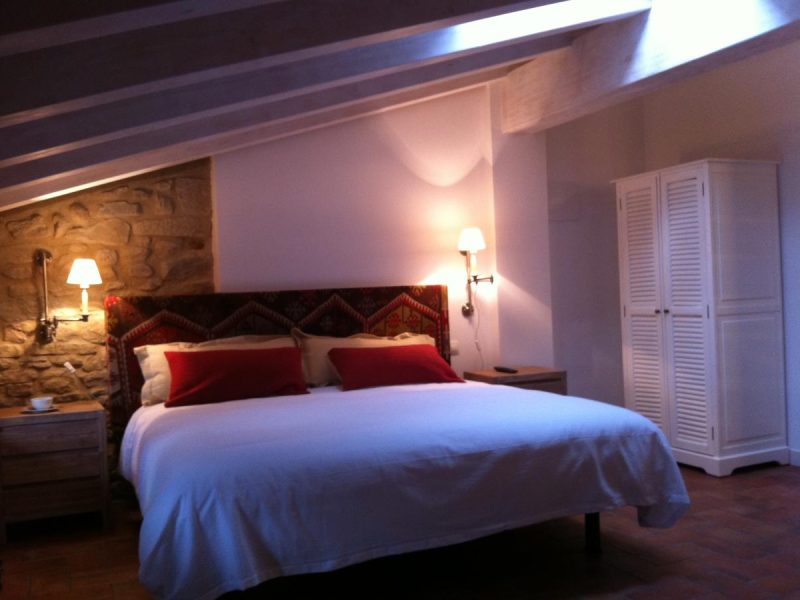
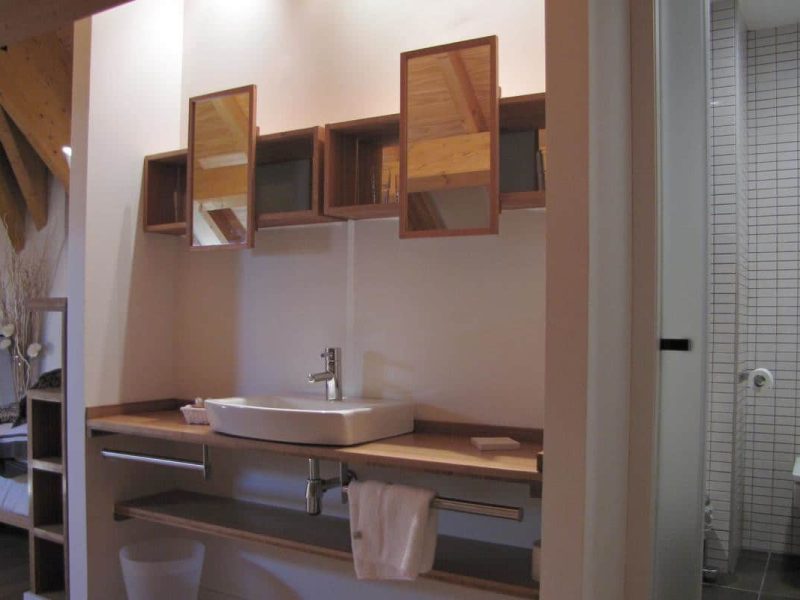
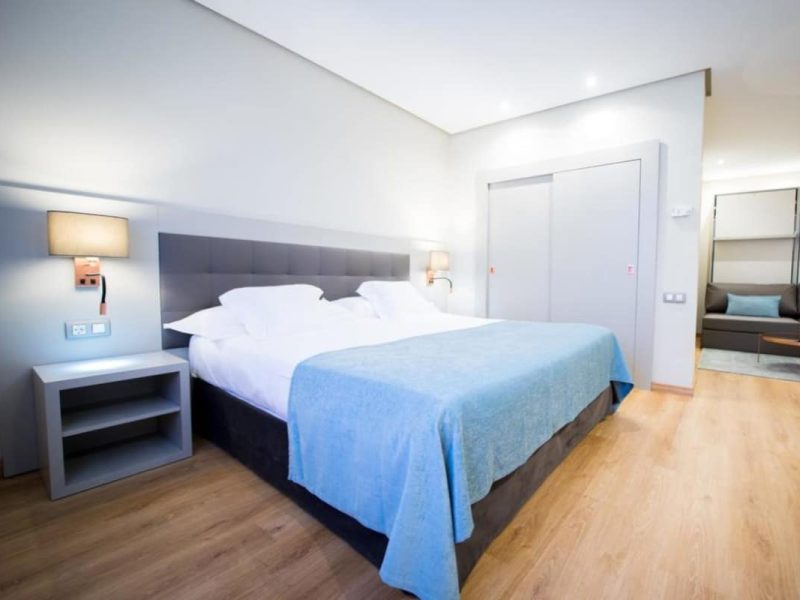
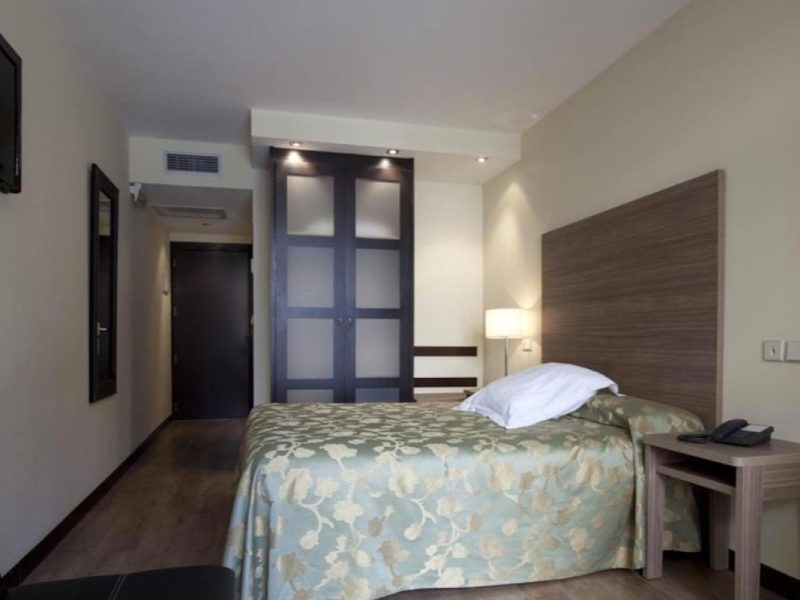
In our constant effort to provide the best experience to our customers, we want to assure you that we are committed to your rest and comfort. The accommodations we offer have been carefully selected and provide private rooms with private bathrooms, along with all the necessary services to make the most of your stay. It is important to note that we will never put you up in hostels.
Since these accommodations have a limited capacity, we will provide you with the exact name once you confirm your reservation and we verify availability on the dates of your choice. Your satisfaction is our priority!
Once at the train station in Pamplona, you can go:
By Bus, as previously mentioned.
Private transfer: pick up in Pamplona and direct transfer to the hotel in Roncesvalles. Please ask us for the price of the service.
Option 4: Airplane
You must arrive at Pamplona Airport and then the simplest option is to pick you up at Pamplona Airport and direct transfer to Roncesvalles. Please ask us for the price of the service.
Do you still have doubts about the Camino?
This video will give you a more detailed and visual look at what to expect on your adventure. Don’t miss it!
Para ofrecer las mejores experiencias, utilizamos tecnologías como las cookies para almacenar y/o acceder a la información del dispositivo. El consentimiento de estas tecnologías nos permitirá procesar datos como el comportamiento de navegación o las identificaciones únicas en este sitio. No consentir o retirar el consentimiento, puede afectar negativamente a ciertas características y funciones.
Funcional
Always active
El almacenamiento o acceso técnico es estrictamente necesario para el propósito legítimo de permitir el uso de un servicio específico explícitamente solicitado por el abonado o usuario, o con el único propósito de llevar a cabo la transmisión de una comunicación a través de una red de comunicaciones electrónicas.
Preferencias
El almacenamiento o acceso técnico es necesario para la finalidad legítima de almacenar preferencias no solicitadas por el abonado o usuario.
Estadísticas
El almacenamiento o acceso técnico que es utilizado exclusivamente con fines estadísticos.El almacenamiento o acceso técnico que se utiliza exclusivamente con fines estadísticos anónimos. Sin un requerimiento, el cumplimiento voluntario por parte de tu Proveedor de servicios de Internet, o los registros adicionales de un tercero, la información almacenada o recuperada sólo para este propósito no se puede utilizar para identificarte.
Marketing
El almacenamiento o acceso técnico es necesario para crear perfiles de usuario para enviar publicidad, o para rastrear al usuario en una web o en varias web con fines de marketing similares.