Indicates the number of persons
Full and customizable services for a worry-free experience on the Wey of Santiago.
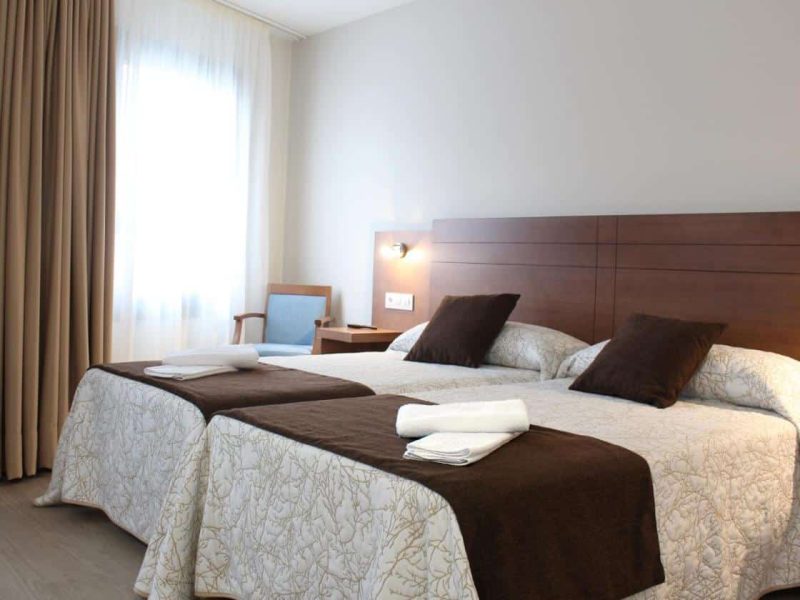
Accommodations in Hotels, Rural Houses, Hostels
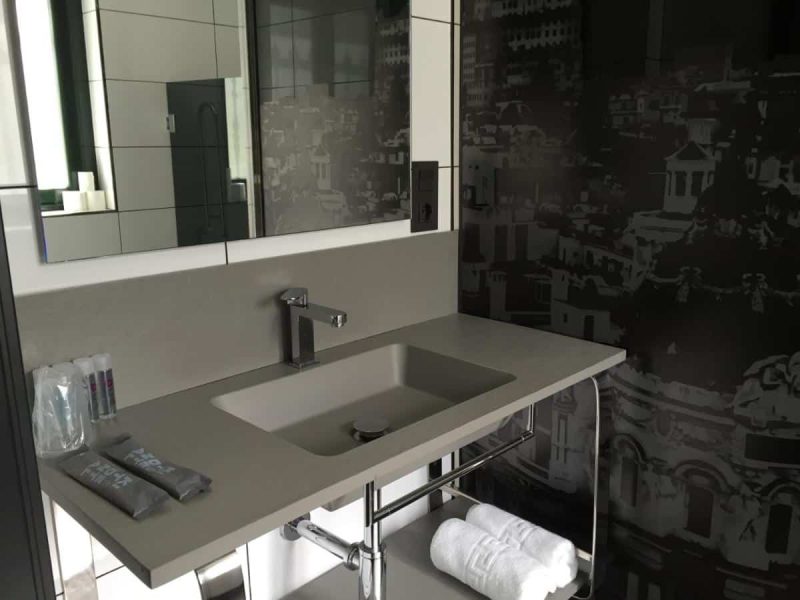
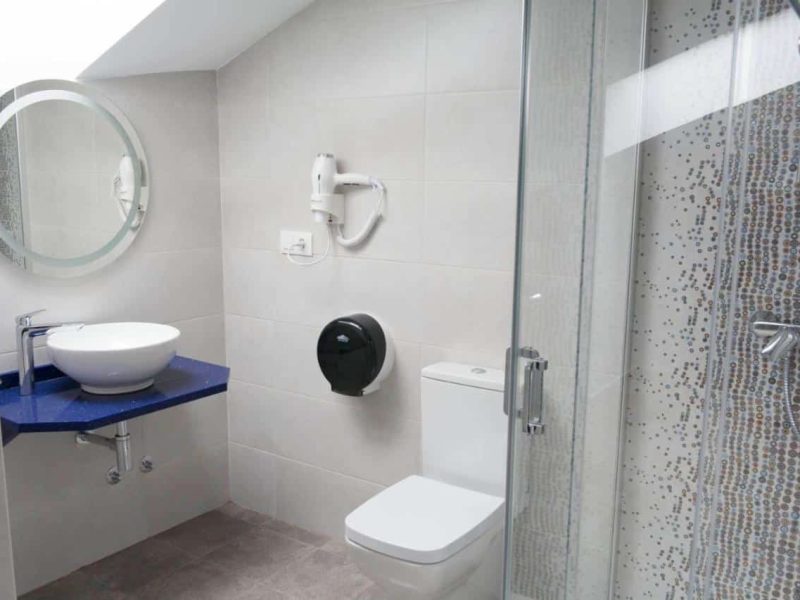
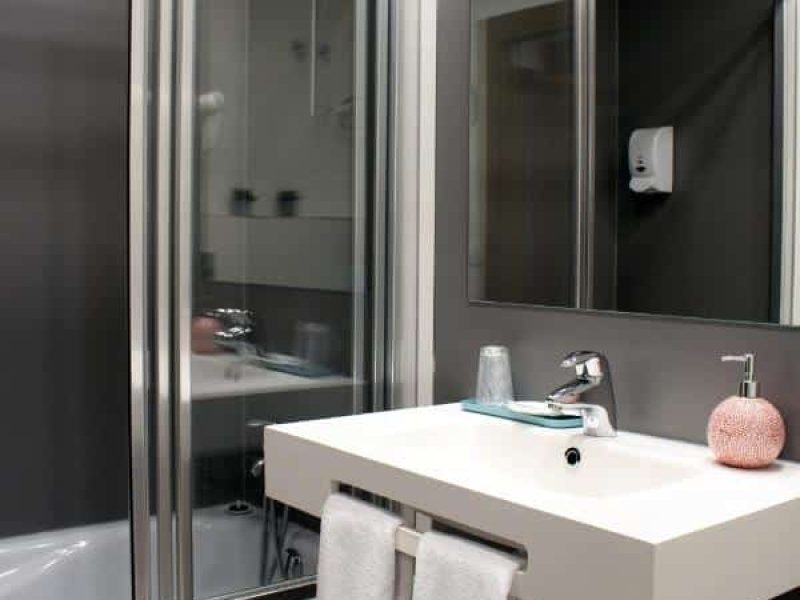
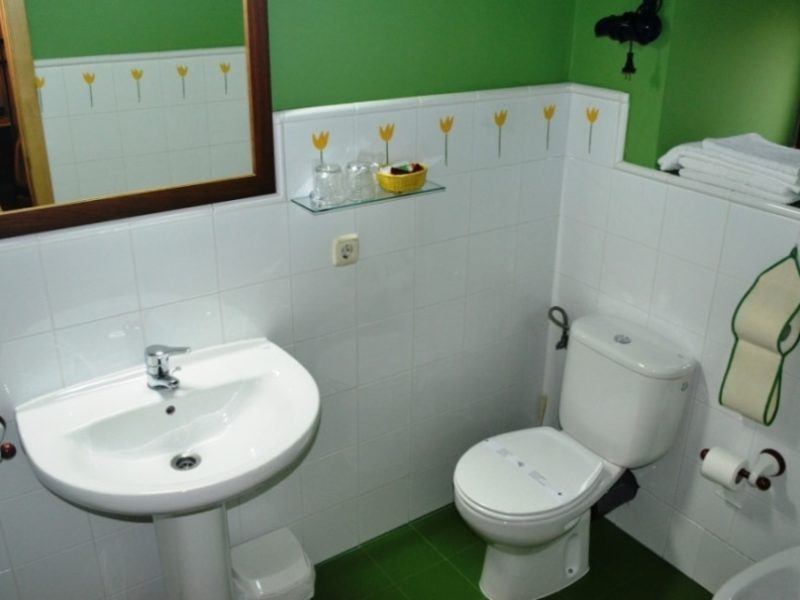
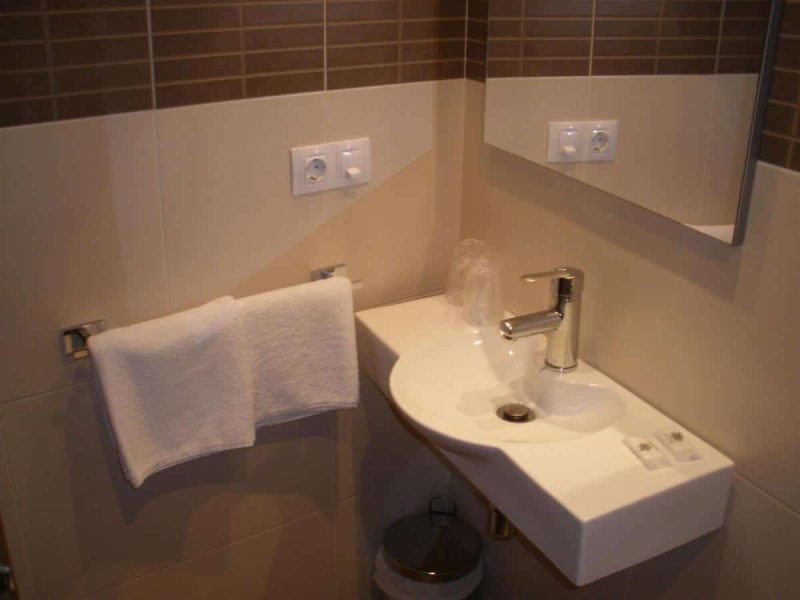
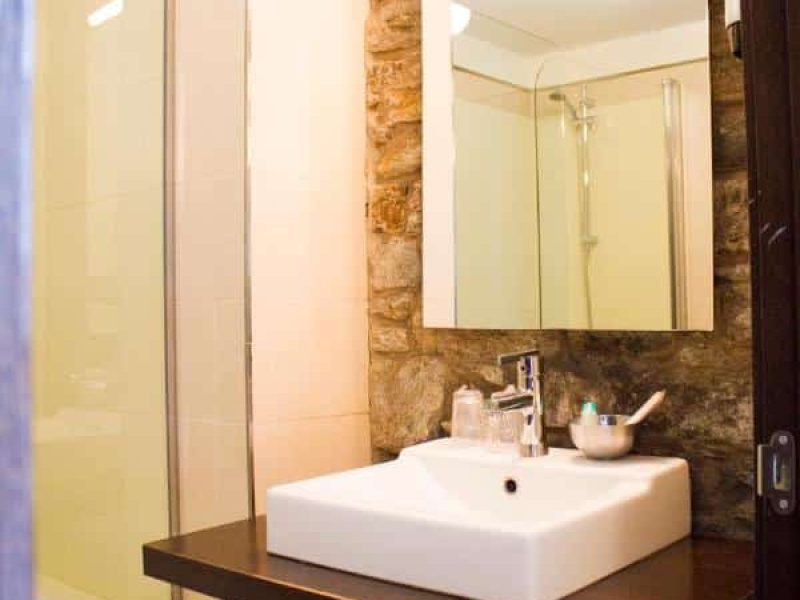
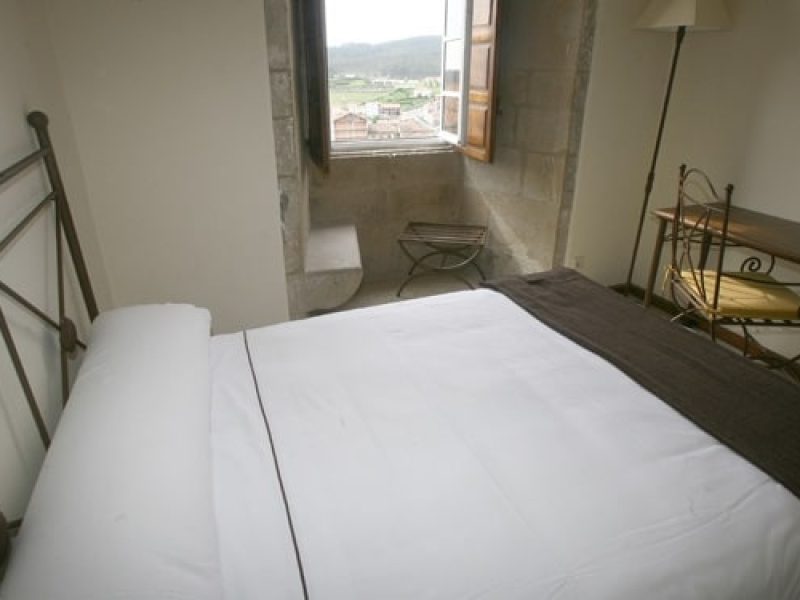
Rooms with private bathroom.
Special breakfast
Travel assistance insurance in Spain
Roadside assistance vehicle in case of emergency
Roadside telephone assistance
Luggage transfer at the stages
✓ 1 suitcase per person, maximum 20kg
Digital information dossier of the path
Special gifts, including the Pilgrim's Credential, the Pilgrim's Scallop, and a typical Galician product.
No cancellation fees
✓ Up to 10 days before starting the Camino
IVA
Single room supplement
✓ Consult
Dinner supplement
✓ Consult
Extra night in Santiago
✓ Consult
Additional luggage
✓ Check rates if you have more than 1 bag per person
Replace the Caldas de Reis-Padron Stage
✓ Make translatio (Boat+foot)
Day Trips (Bus)
✓ Finisterre (Costa da morte) and/or Rias Baixas.
Cancellation Insurance
Remember that the cost of the optional services chosen will be added to the base price of your route. We are committed to making your pilgrimage an unforgettable and carefree experience. Welcome to the Wey!
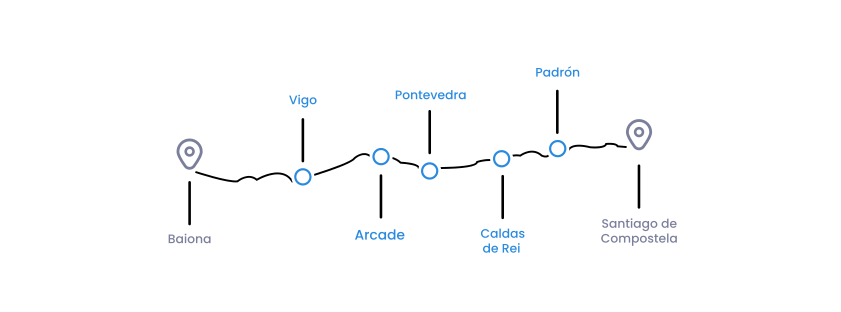
Discover the Wey of Santiago towards the majestic Santiago de Compostela.
Welcome to the beginning of your journey. Get ready for an unforgettable adventure!
Breakfast and start of the first stage of the Camino de Santiago from Bahia.
At the exit of Baiona, we will cross the Miñor River, through the Romanesque Bridge of Ramallosa, to then enter the Ría de Vigo. Along the Camino we will find numerous Pazos and wooded areas, quite leafy, from which we can observe in the distance the Cies Islands, as well as the Cruceiros de Mallón and O Pereiro.
In the vicinity of Vigo, we will walk the path of the Lagares River, Castrelos Park and the Pazo de Quiñones de León, to finish in Vigo, the most populous city in Galicia.
Arrival in Vigo. Lodging.
Breakfast and start of the stage.
Once we leave Vigo, the Way runs parallel to the coast until reaching Arcade.
We will travel this stage, through the Senda da Traida das Augas, from the exit of Vigo, at its beginning, to the middle of the stage, practically, with the lookout set, in the distance in the Cies Islands, as well as the Puente de Rande and the Ensenada de San Simón.
From Redondela, The route joins the one that links with the Central Portuguese Way. From here, We walk towards the town of Cesantes, with permanent views of the Vigo estuary, to reach Arcade, famous for its well-known oysters and excellent restaurants where you can taste its seafood, putting an end to our stage today.
Arrival at Arcade. Lodging.
Breakfast and start of the stage.
Short and well-marked stage. It does not present any major difficulties.
We highlight the medieval bridge of Pontesampaio, which is located at the exit of Arcade, famous for an important battle in the War of Independence, where the French troops were defeated and meant their withdrawal from Galicia). We have to be careful, because before entering Pontevedra, we have to take the river path of Rio do Gafos, just after the chapel of Santa Marta, a pleasant walk that will put us at the gates of Pontevedra.
Arrival in Pontevedra. End of the stage. Lodging.
Breakfast and start of the stage.
After the monumental Pontevedra, we enter right into small towns in deep Galicia that will transport us and take us away from the mundane noise of the big cities.
Caldas de Rei and its hot springs will be the culmination of the stage.
Llegada a Caldas de Rei. End of the stage. Lodging.
Breakfast and start of the stage.
Easy stage, where silence abounds, and which leads us to relax and meditate on the experience of the trip.
Arrival in Padrón. End of the stage. Lodging.
Spiritual Variant-Translatio
If you want your Camino to be even more complete, a boat can take you from Vilanova de arousa to Pontecesures, and then make 2.5 Kms on foot to Padrón where we will accommodate you.
Breakfast and start of the stage.
After our stay in Padrón and Iria Flavia, places of great Jacobean evocation – according to legend, here the boat ran aground with the remains of the Apostle, coming from Palestine, in a “Pedrón”, which is preserved in the cathedral of that city, we are on our way to the end of our Way.
Stage of asphalted tracks, where we lose the mysticism and the bucolic atmosphere of the past days, which will partially darn out of our stage until the arrival at the spectacular Cathedral of Santiago.
Arrival in Santiago de Compostela. End of our Camino de Santiago from Baiona. Lodging.
We’re coming to the last day of your trip! Enjoy breakfast and conclude this unforgettable experience with us.
Thank you for being part of this adventure!
This itinerary will take you through the most popular stages, allowing you to experience the beauty and culture of the Wey of Santiago. Be sure to book accommodation in advance, as it can get crowded, especially in the high season.
Safe travels and buen Wey!
In our constant effort to provide the best experience to our customers, we want to assure you that we are committed to your rest and comfort. The accommodations we offer have been carefully selected and provide private rooms with private bathrooms, along with all the necessary services to make the most of your stay. It is important to note that we will never put you up in hostels.
Since these accommodations have a limited capacity, we will provide you with the exact name once you confirm your reservation and we verify availability on the dates of your choice. Your satisfaction is our priority!
We know that one of the main attractions of doing the Camino de Santiago with organized trips in Galician lands is the opportunity to enjoy its varied gastronomic offer: Lacon with turnip greens, octopus, tetilla cheese, empanadas, stews, etc.
Doing the journey on the Camino Francés is an ideal alternative not only to learn about the customs of these history-marked towns. It is also the perfect excuse to taste a very varied gastronomy.
Additionally, as you may know, this is the most popular way of all those leading to the Cathedral of Santiago. What does this mean? You will find a multitude of gastronomic offers as you pass through any locality. So many that it is completely impossible to expose them all in these lines.
Therefore, we want to help a bit in a detailed way. If you don’t know where to eat from the Camino Francés from Sarria to Santiago, we will give you some suggestions. Of course, we will also talk about the typical dishes that characterize this way.
Eating well during this journey is as important as carrying good equipment or sleeping in comfortable hostels. Throughout the entire way, you can find different restaurants that have the Pilgrim’s Menu. The vast majority include bread, drink, two traditional dishes, and dessert.
Additionally, the dishes are very reasonably priced. Best of all, you will be able to taste characteristic products of these localities, among which stand out: cheeses, chestnuts, or honeys, as well as different typical dishes. The main ingredients include octopus, fish (eel), seafood, and game meats.
Similarly, do not miss the main desserts, among which stand out: the tender cakes of Samos and the tart of Portomarín. The latter is made with almonds and sweet melindres, similar to a glazed doughnut typical of many Galician regions.
It is normal that if you are planning to do such a long journey, you have thought about what to eat during this trek. And those few kilometers deserve a good gastronomic reward. Of course, in all the localities from Sarria to Santiago, you can find delicious products and typical dishes that you will love.
Among the typical dishes you can taste in Sarria, we can highlight octopus a feira, potato omelets, and padrón peppers. They also offer a wide variety of meats such as steak or grilled entrecôte.
Likewise, the homemade croquettes are delicious, as well as the game meats (partridge or wild boar). And if that were not enough, you can try the porco celta. This is a recovered native breed of pig with which they prepare excellent sausages (chorizo or pressed pork cracklings).
You should also consider visiting the bread museum and the tetilla cheese making. There you will have an unparalleled gastronomic experience.
In this town, you can taste quality Galician products such as chestnuts, bread, cheeses, pork, and beef. Additionally, you can taste the typical dish. This is made with eel, which is a teleost fish that lives between the sea and the river, so its meat is highly valued.
Likewise, you cannot miss the exquisite eel empanadas accompanied by orujo aguardientes. And for dessert, we recommend the typical tarta de paradela, made with flour, eggs, sugar, and almonds.
This is a well-known locality on the Camino de Santiago Francés. Undoubtedly, its typical dish is Padrón and Herbón peppers. Therefore, you must eat some fried peppers, toasted and crowned with coarse salt.
It also stands out for the wide variety of fish and seafood (crab, shrimp, clam, octopus, carioca, trout, lamprey). Likewise, it includes among its special dishes seasonal game meats and Galician beef.
It is important to mention that cheeses and pork-derived products are in high demand among its visitors.
The product par excellence of this locality is the Arzua-Ulloa cheese. It is made in the municipalities of Arzúa, Melide, O’Pino, Monterroso, and Palas de Rei. It is a soft cheese produced with cow’s milk matured with a thin and elastic yellow rind.
Its aromas are of butter and yogurt with hints of vanilla, cream, and walnut. Additionally, it has a sweet and sour taste at the same time. It is ideal for tasting alone or accompanied, as well as with quince jelly.
In this place, you can find products such as cheese, Ribeira del Ulla wine, honey, fresh garden produce, and of course beef and pork. Additionally, you can taste the rooster and hen of the Piñeira breed, as it is an exalted dish in the gastronomy of this locality.
Likewise, this locality offers typical Galician dishes such as octopus, Galician stew, and empanada.
In the capital of Galicia, you can taste a wide variety of traditional Galician gastronomy dishes. We highlight octopus, fish, seafood, assorted empanadas, raxo, lacón with turnip greens, and broths.
Additionally, you can enjoy the famous tarta de Santiago, adorned with the Cross of Santiago. Likewise, you must try the Monterroso ham, Cebreiro cheese, or Samos cakes.

Of course, on the Camino de Santiago, there are establishments that deserve a mandatory visit. For example, on the way from Sarria to Santiago, there are restaurants with a great variety of starters, wines, products, and a specialty in typical dishes with an unparalleled presentation.
You can find Pulpería do Luis, Roma, and A Travesia Dos Soños.
Highlights include O Mirador, Restaurante Pérez, and Posada del Camino.
You will find A Parada das Bestas, Mesón A Brea, and Pulpería A Nosa Terra.
We highlight its well-known Pulperías Ezequiel and A Garnacha.
There are restaurants with a wide menu to choose from, including Casa Nene, Fonte do Picho, and Casa Teodora.
Local favorites include O KM19 and Café-Bar O Pedrouzo.
You have Abastos 2.0, Damajuana, and O Gato Negro, one of the most popular establishments in Santiago.
We will show you the different options for getting to the Camino de Santiago from Sarria, the town that marks the minimum distance of 100 kilometers for obtaining the “La Compostela” certificate if you are walking the Camino.
Option 1: You can arrive by private car:
> and leave your vehicle parked in Sarria. You can park near the accommodation where you are staying. It is a very safe and small town where, to date, there have been no security issues. Another option is to request private parking. When you finish the last 100 km of the Camino Francés, you can return for your vehicle by bus or request our optional transfer service in an exclusive vehicle for you or your group.
Alternatively, you can drive directly to Santiago de Compostela and park in Santiago de Compostela in private parking, which has very affordable costs, and once parked, you can take a bus to Sarria (only one schedule available), or request our private transfer.
Option 2: Bus
Santiago>Sarria
From Santiago, you can go directly if you take the bus of the Monbus bus company that departs at 11 pm and arrives at 1:05 pm (2h 5′)
If you don’t catch this bus, you will have to go to Lugo and transfer to Sarria, with a total duration of both journeys being approximately 3h 15′.
– From Santiago de Compostela city or its airport to Lugo, you can travel with the bus company Freire.
– In Lugo, you will have to transfer to Sarria with the bus company Monbus.
Madrid>Lugo>Sarria
– From Madrid to Lugo with the company Alsa, with frequent departures from Madrid’s South Bus Station and from Madrid Airport (Terminal 4)
– From Lugo to Sarria with the bus company Monbus.
*We recommend spending a few hours visiting Lugo and its walls before heading to Sarria.
Option 3: Train (Renfe). Direct trains every day from Madrid and Barcelona. Currently, on the way from Madrid to Sarria, you travel by train to Ourense, and from there Renfe provides a bus from Ourense to Sarria (approximately 1h 15′). This is due to construction work until July 2023.
Option 4: Plane
The nearest airport to Sarria is Santiago de Compostela, approximately 1h 15′ by car.
From here, there are two options to get to Sarria:
– By bus, as seen previously.
– Private transfer with us: pickup at Santiago Airport and direct transfer to Sarria in approximately 1h 15′. Contact us for service rates.
Upon your arrival in Sarria, an experience you will never forget begins, and in the next point, we recommend what to see and do on your Camino de Santiago from Sarria.
STAGE FROM SARRIA TO PORTOMARIN
In Sarria, we can see, among other things, the Church of San Salvador, Romanesque with a Gothic façade, and the convent of A Magdalena. We will admire the tower of the old medieval castle, as well as Rúa Maior.
We leave Sarria through the Ponte Aspera to continue towards Barbadelo and Ferreiros, where we find two Romanesque churches, the Church of Santiago (Barbadelo) and the Church of Santa María (Ferreiros).
Portomarín is a beautiful town bathed by the Belesar Reservoir, in which the old city is submerged (visible in summer when the river flow is lower).
The town is divided into two neighborhoods: San Nicolas and San Pedro. A visit to the Chapel of the Virgen de las Nieves should not be missed, as well as the grand church-fortress of San Nicolás, erected by the knight-monks of the Order of St. John of Jerusalem in the 12th century. The church was built by a workshop of disciples of Master Mateo. Portomarín produces one of the most recognized aguardiente in Galicia and hosts an annual festival.
The Romanesque façade of the Church of San Pedro, the 17th-century Pazo de Berbetoros, and the 16th-century Pazo del Conde da Maza are other attractions you can find in this beautiful town.
This video will give you a more detailed and visual look at what to expect on your adventure. Don’t miss it!