The Camino de Santiago is a unique adventure that attracts thousands of young people from around the world every year. For many university students, it represents an opportunity to disconnect from academic routines, meet people from different countries, and challenge themselves physically and mentally. Moreover, you don’t need to be wealthy to be a pilgrim! With good planning, this experience can be enjoyed on a budget without sacrificing comfort.
In 2025, over 530,000 pilgrims reached Santiago (a historic record), and the largest age group was between 18 and 45. This indicates that a significant portion of pilgrims are young (many university students) who, like you, want to experience the Camino without overspending.
When planning your trip, the first step is to calculate a Camino de Santiago budget that suits your means. Traditionally, pilgrims are pictured as backpackers staying in public albergues and eating cheap menus. However, far from this classic image of a cash-strapped student, there is another more comfortable and organised option. It’s not a luxury reserved for older people, but an accessible alternative even for young travellers: an organised Camino where all logistical services are taken care of.
Let’s see how students can benefit from this approach and which strategies allow you to keep expenses under control.
Índice de contenidos
- 1 Independent Camino vs. Organised Camino (what suits a student?)
- 2 Pilgrim services that make your Camino easier (and prevent surprises!)
- 3 Ideal Camino routes for students (short, affordable, and memorable)
- 4 How much money will you need? Breaking down the 2026 budget
- 5 Final tips to save money (and enjoy to the fullest!)
Independent Camino vs. Organised Camino (what suits a student?)
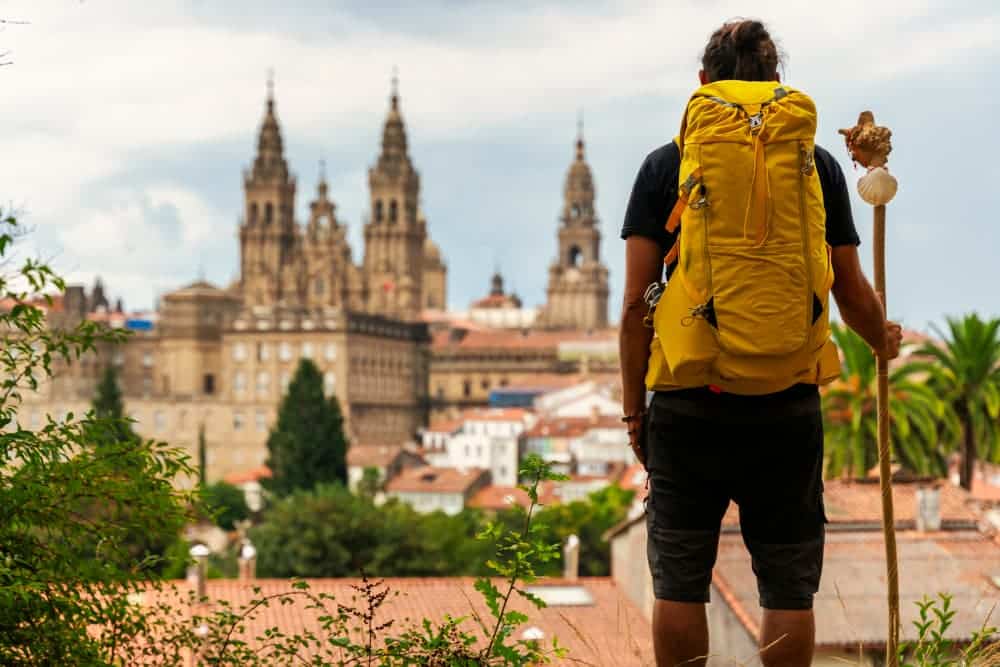
The first decision is how you want to undertake the pilgrimage: managing everything yourself or booking an organised route. Both options have pros and cons, but for a student on a tight budget, it’s worth analysing which provides the best balance between cost, comfort, and personal experience:
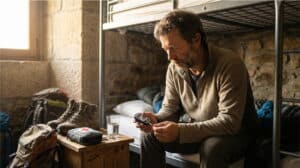
- Independent (traditional backpacker): means taking care of everything yourself: finding accommodation each day (often basic albergues), planning where to eat, and carrying your backpack throughout the journey. It is true that this can be cheaper in the short term, but:
- It requires significant effort and involves some uncertainty. During peak season, you might find no available beds in your intended village, forcing you to walk longer stages or pay higher last-minute accommodation costs.
- You will also carry all your weight, adding physical strain. For a young person with plenty of time and a desire for absolute adventure, this option can work; but you must be willing to sacrifice comfort and constantly deal with unforeseen events.
- Organised Camino: in this option, you delegate logistics to an expert agency. The result? Zero stress over reservations or carrying heavy luggage, and the assurance that each day ends in comfortable accommodation. Travelling in an organised manner does not mean losing the essence of the Camino; you still walk the stages at your own pace, meet other pilgrims along the way, etc. The difference is that you guarantee rest and well-being at the end of each day, which is very valuable when you have limited resources and want to make the most of every moment.
Many young people dismiss this option thinking it is expensive, but it doesn’t have to be prohibitive. In fact, it represents “buying peace of mind” and optimising your time: you can focus on the scenery, the people, and the experience while logistics are taken care of. For a student with only a few days off and some savings, this organised alternative can be the smartest choice.
Pilgrim services that make your Camino easier (and prevent surprises!)
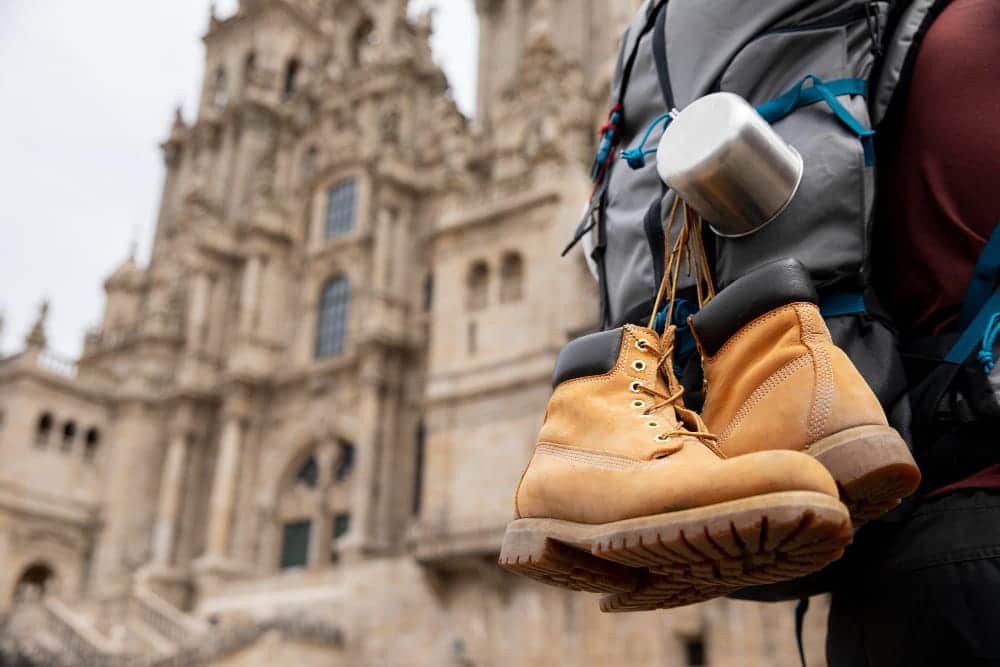
One of the advantages of choosing a Camino organised by an agency is the wide range of services included. Here is a list of typical services offered by specialised companies (such as Mundiplus) and how they help you save money or avoid mishaps on your adventure:
- Pre-booked private accommodation: no more struggling to find a bed in albergues. You will stay in carefully selected hotels, hostels, guesthouses, or rural homes, in private rooms with bathrooms. This guarantees a good rest and avoids unexpected costs if albergues are full. Additionally, having everything pre-booked means you know accommodation costs in advance, avoiding surprises.
- Luggage transport: each morning you leave your backpack or suitcase at reception, and a van takes it to the next accommodation. You only carry a small bag with water, a jacket, and daily essentials. This allows you to walk light and reduces the risk of injury. Arranging luggage transport independently would cost around €5–8 per day; in an organised package it’s already included, so it’s not an extra expense to add to your budget.
- Half-board (breakfast and some dinners): most packages include breakfast every day to start with energy. You can optionally choose half-board so that dinners are also covered. Is this suitable for a student? Yes, as pilgrim menus in restaurants cost between €12 and €18 per person. If dinner is included in the package, it’s probably a good deal or costs similar but saves you the effort of finding a restaurant or paying à la carte.
- Credential, maps, and information: as part of the package, you receive the Pilgrim Credential and a dossier with maps and useful advice for each stage. You won’t need to buy additional guides (saving money) or waste time figuring out what to see or where to stamp: the agency provides everything ready-made. This is excellent for those who haven’t experienced the Camino and want to maximise their cultural experience in each village without spending on tourist guides.
- 24-hour phone assistance and travel insurance: what if a problem arises mid-Camino? With an organised package, there is always a number to call for questions or emergencies. Additionally, a basic travel insurance covering medical contingencies is included.
- Support vehicle on route: at Mundiplus, we provide a sweep vehicle if you cannot complete a stage and need transport to the accommodation. It’s reassuring to know this option exists at no extra cost in case of injury or extreme fatigue. Independent alternatives (like taking a taxi) could be costly on the spot.
Ideal Camino routes for students (short, affordable, and memorable)
At this point, you might be wondering which Camino de Santiago route or section to choose, considering your available time and budget. The good news is there are multiple options, and you can do just the last 100 km (the minimum to receive the Compostela) or longer sections if you have extra days.
Here are several popular routes that fit well with a university schedule and a reasonable budget. All of these routes can be done in an organised format with Mundiplus or other agencies, providing the services mentioned without blowing your budget.
Recommended routes:
- French Way – Sarria to Santiago section: this is the most popular option for beginners. It covers ~115 km over 5 stages (6 days / 5 nights). Ideal if you have a week. Being popular with young pilgrims, you’ll make plenty of friends along the way.
- Budget: an organised package for this route costs around €595 per person (shared double room), including accommodation and services. Add your meals and transport to Sarria separately.
- French Way – Logroño to Burgos section: if you want to experience the legendary French route but already know Santiago or are looking for a different section, starting in Logroño is excellent. The French Way stages from Logroño cover about 125 km over 6–7 days, passing through La Rioja (wine country!) and ending in Burgos, with its famous Gothic cathedral. It’s a balanced itinerary for a week.
- Budget: similar to the previous route, around €595 per person for the package, due to the similar distance.
- French Way – Burgos to León section: for those with 10–12 days, the French Way route from Burgos covers ~180 km across the Castilian plateau to the mountains of León.
- Budget: an organised 10–11 night itinerary from Burgos usually costs around €895 per person. Although longer, the daily cost tends to be similar or even slightly lower than the shorter sections. You’ll enjoy the tranquillity of straight paths through wheat fields, an almost meditative experience, before reaching historic cities.
- Camino del Norte – Gijón to Santiago section: Fancy a mix of sea and mountains? Then you might want to do the Camino del Norte from Gijón. This route follows the Cantabrian coast with stunning views of the Cantabrian Sea, then moves into the lush landscapes of Galicia. From Gijón to Santiago it’s around 370 km in total, but many university pilgrims only do a portion (for example, up to Ribadeo) over 8–10 days.
- A typical package from Gijón to Ribadeo (~140 km in 7 stages) costs around €850–950 per person, as it includes more nights and is a slightly less busy route (accommodation may be rural). The Northern experience is more challenging due to elevation changes but rewards you with beaches, cliffs, and fishing villages worth visiting.
- Portuguese Way – Tui to Santiago section: another very popular option in recent years. From Tui (on the border with Portugal) to Santiago is ~118 km, completed in 5 stages (similar to Sarria). Portugal and Galicia offer forests, rivers, and delicious gastronomy. Many young people choose this route because it’s slightly less crowded than Sarria.
- Budget: around €620 per person for a 6-day/5-night package. It’s a reasonable price considering you cross two countries and experience the southernmost part of Galicia.
Note: There are more routes (Camino Primitivo, Vía de la Plata, English Way, etc.), but the ones mentioned above are most suitable if it’s your first time and you want a balance between duration, cost, and convenience. You can always complete the Camino in stages over different years depending on your availability (many university students do a section each summer until it’s complete!).
As you can see, duration and the chosen route affect the total price. A student usually has between one and two weeks for this (e.g., in summer or Easter), so choosing a short/medium section is typical.
The prices listed are per person based on double occupancy, meaning travelling with at least one friend to share a room. If travelling alone, agencies usually charge a single supplement (around +20% of the price) for a private room. The good news is that if you convince a uni friend to go together, both of you benefit from the lower per-person rate. Another reason not to go solo.
How much money will you need? Breaking down the 2026 budget
Now let’s get into concrete costs so you can do the math and see that an organised Camino can indeed fit a student’s budget. Let’s consider the main expenses:
- Organised route package: this is the main item, as discussed earlier. Depending on the section, budget between €600 and €900 per person for a week or slightly longer. For example, ~€595 for one-week routes and ~€800–900 for 10-day itineraries. This includes all accommodation and services (breakfast, luggage transfer, etc.).
If you book in advance, some agencies offer early booking discounts (Mundiplus offers ~€25 off for early reservations, which is great for a student).
Season: keep in mind that in summer (high season) prices may rise slightly due to demand. If you can travel in June or September (mid-season), you may save on the package and there will be fewer crowds.
- Daily meals and drinks: while breakfast is usually included, you should budget for lunches and dinners. You have some control depending on your preferences:
- The Pilgrim’s Menu (available in most bars and inns along the Camino) costs €12–18 and includes starter, main, dessert, bread, and drink. Hearty and economical, perfect for refuelling without overspending.
- If one day you fancy à la carte dishes, budget around €25–40 per person in typical restaurants (in large cities like Logroño, Burgos or León, eating à la carte is more expensive than in small towns).
- Snacks and hydration: during the stage it’s good to carry some fruit, nuts, or a sandwich for the trail. Allocate around €5–8 per day for coffee, soft drinks, water, bananas, etc.
- Overall, daily food expenses can range between €30–50 per person depending on whether you stick to cheap menus or occasionally splurge. Students usually prefer the menu del día (tasty and cheap!), so staying at the lower end is feasible.
- Transport to start point and return home: this is variable depending on where you live. Within Spain, getting to the start may involve bus or train (e.g., no direct train to Sarria, but connections via Lugo by bus, etc.) or possibly a flight if you live far away.
In general, for a student within Spain return transport costs can range €80–200 including all transfers. Examples: Madrid–Sarria round-trip train in standard class ~€120; bus Madrid–Logroño ~€30; flight Barcelona–Santiago ~€60–100 if booked in advance.
Mundiplus can advise you on how to reach the start point and even offers private transfers from airports or nearby capitals (optional paid service). You decide whether you need it or use public transport.
For international travellers costs are naturally higher (flight from your country to Spain), but many European students take advantage of exchange programmes or holidays to come.
- Personal equipment: if you already have gear, there’s practically no extra cost. But if it’s your first long walk, you may need quality trekking boots (€100–180) and a suitable backpack (€40–80), plus technical clothing, telescopic poles, etc.
No need to buy branded items; affordable options exist, and you can borrow some items from friends/family (raincoat, poles, backpack) to save. The key is not to skimp on footwear. Blisters can ruin your experience, so better to invest in good boots than in treatments or abandoning halfway. In any case, the equipment will be useful for future trips.
If you don’t want to include this in the “Camino budget” because you already have gear or will reuse it, perfect. If buying everything new, estimate around €200–300 in total (clothing + footwear + accessories). Many students already have some sportswear and just invest in 1–2 key items.
- Personal and extra expenses: souvenirs, monument entries, small treats like local wines, etc. Not obligatory, but good to have a small buffer. Example: Burgos cathedral ~€7 (student), a souvenir magnet or real scallop shell ~€5–10. Not huge sums, but plan for them.
Adding it all up, total money needed? For a one-week organised Camino, a student should consider roughly €1,000–1,300 in total.
Final tips to save money (and enjoy to the fullest!)
You’re almost ready to start the Camino. These last tips will help you stretch your budget without losing quality of experience:
- Book in advance: once you know approximate dates (e.g., “first half of July”), start looking and booking. Many agencies offer early-bird discounts. Plus, you’ll have more options for good, affordable accommodation before it sells out.
- Choose the right season: if possible, consider doing the Camino in mid- or low-season. May–June or September, even Easter, usually have fewer pilgrims than August. Accommodation and flight prices are also lower outside July–August. Avoid harsh winter, as some facilities close and weather can be tough.
- Share costs in a group: travelling with a friend or partner in a double room saves on accommodation versus two singles. You can also share taxis, first-aid kit, etc.
- Half-board vs. improvising dinners: consider adding half-board to the package. If the price difference is small, it may be worth it as eating dinner on your own every night can cost similar or more if you can’t find a menu. With half-board, you have dinner guaranteed daily, better controlling food expenses.
- Reuse and borrow equipment: Don’t buy things “just in case”. Make a list of necessities and check what you already have. You probably have sportswear, hoodies, etc. If you need something specific (good raincoat, light sleeping bag, etc.), ask friends or family first. Many are happy to lend rarely-used gear. Save money and practice collaborative economy.
- Use youth discounts: check for any available schemes. For example, Galicia launched the Bono Xove in 2023 offering €200 for young people with Carné Xove doing the Camino (conditions applied). Museums and monuments often have student discounts too (bring your university or international student card).
- Keep daily track: a simple trick is to note daily spending in a notebook or phone. This helps adjust if you overspend one day. Set a daily limit (e.g., “no more than €40/day on food and extras”) and try to stick to it. You’ll finish without overspending.
Finally, remember the Camino is an investment in yourself. Every euro spent returns in memories, learning, and friendships.
Even with a tight budget, choosing the comfort and safety of an organised trip is worthwhile: you can focus on enjoying the scenery, conversations with fellow pilgrims, and every magical moment, rather than worrying about logistics. Experts conclude that the extra cost compared to going independently translates directly into peace of mind and wellbeing during the journey.
Buen Camino, student! In 2026 the Camino de Santiago awaits you. With proper planning, attention to expenses, and support from pilgrim services, you can live this unforgettable adventure without hurting your bank balance. Prepare for an experience that will mark your university and personal life, proving that pilgrimage is possible on a student budget. Ultreia et suseia!