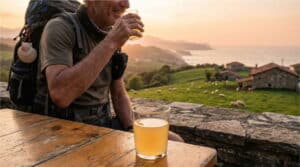
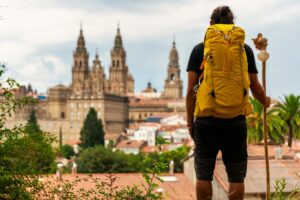
There are flavours that become forever linked to a particular route. On the Camino del Norte and the Camino Primitivo, that flavour often arrives with natural bubbles, the aroma of apple and a gesture that looks simple—until you try it: the escanciado (traditional pouring). I am referring, of course, to Asturian cider, where it is not “just a drink”, but a way of understanding the table, conversation and hospitality.
If you are planning stages along the Cantabrian coast and through the Asturian interior, make room (and keep a clear head) for this culture. In 2024, UNESCO recognised Asturian cider culture as Intangible Cultural Heritage of Humanity, highlighting not only the product itself, but also its spaces, rituals and social traditions.
In this guide to Camino de Santiago gastronomy, you will discover how cider is linked to the Camino, which traditions you can experience as a pilgrim, and the best times of year to enjoy it. We will also explain how to step into a sidrería (cider house) without feeling out of place.
Índice de contenidos
- 1 Cider and the Camino: why they are such a good match
- 2 What exactly is Asturian cider (and what makes it special)
- 3 Rituals and traditions you will see (and experience) along the way
- 4 Where to experience cider on the Camino del Norte
- 5 Where to experience cider on the Camino Primitivo
- 6 When is best: a cider calendar for pilgrims
- 7 How to enter a cider house without putting your foot in it
- 8 Cider houses on other Camino routes
- 9 Pilgrim tips: enjoy it without paying the price
- 10 Other details you should know
Cider and the Camino: why they are such a good match
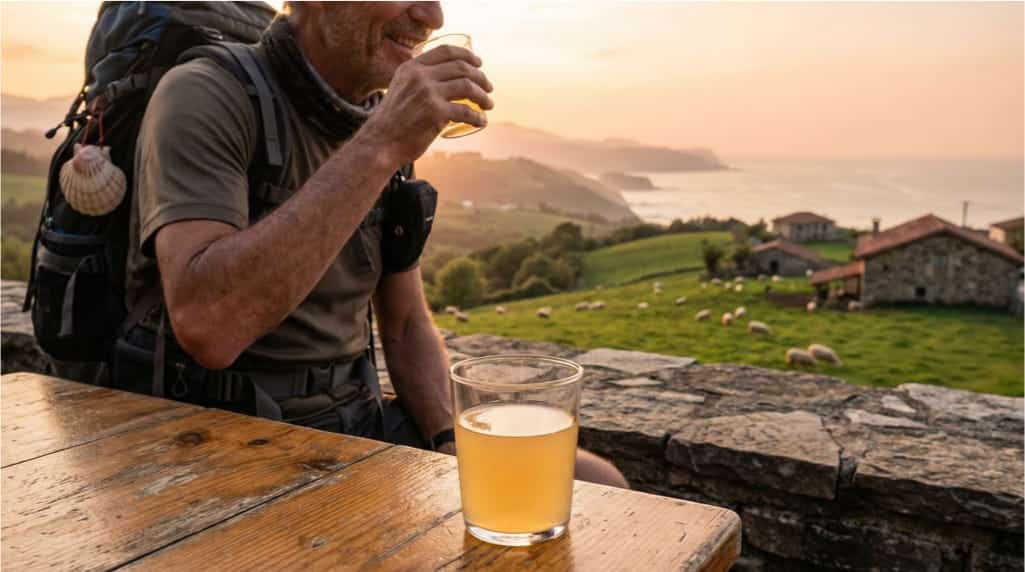
The Camino has something ritualistic about it: stamping your pilgrim passport, adjusting your rucksack, sharing a table, asking about the next hostel… Cider does too. In Asturias, drinking it usually involves time, conversation and community. Pilgrims often come across it at very specific moments of the day: at the end of a stage, over a set lunch menu, during a shared dinner or at a local celebration.
Moreover, both the Northern Way and the Primitivo cross territories where cider forms part of the local identity, especially in Asturias. UNESCO describes this culture as a network of spaces and processes for producing, serving and enjoying natural cider, closely connected to native apple varieties and to the relationship between communities and their environment.
In short: on these routes, cider is not a “tourist extra”. It is one of those elements that, if you understand and experience it respectfully, helps you better understand the place you are walking through.
What exactly is Asturian cider (and what makes it special)
To avoid confusion: in Asturias, when people speak about cider in everyday life, they usually mean natural cider. According to the specifications of the PDO Sidra de Asturias, it is the drink resulting from the fermentation of fresh apples or their must. It is produced following traditional practices, with no added sugars and with naturally occurring (endogenous) carbon dioxide.
The PDO broadly covers two main products: natural cider and naturally sparkling cider. The sparkling variety undergoes a second fermentation and also retains naturally occurring carbonation.
One important detail for pilgrims: in Asturias, there are several ways of drinking cider, and not all of them involve escanciado. Alongside the traditional natural cider (the one that is poured from height), you may also find filtered ciders (table cider or “new expression”) and naturally sparkling cider in cider houses, which do not require this ritual.
Rituals and traditions you will see (and experience) along the way
Escanciado: the gesture that “awakens” the cider
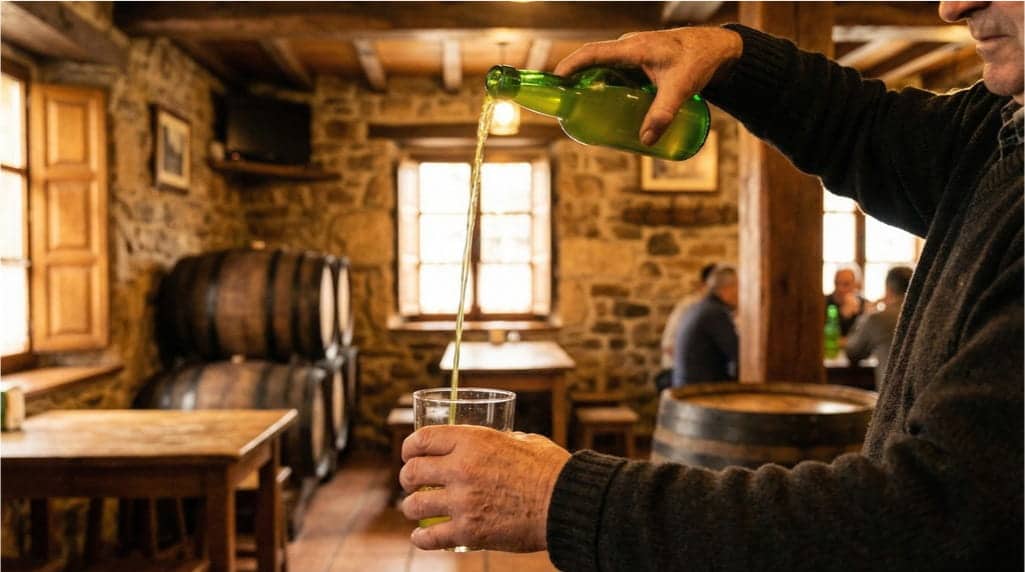
Escanciar means pouring cider from a certain height so that the stream hits the glass, aerating the drink, enhancing its aromas and activating the sensation of its natural carbonation. It is such a distinctive ritual that, even if you do not attempt it yourself, you will almost certainly see it happening around you as soon as you sit down in a cider house.
The “culín” (small pour): drink it straight away
Another key word is culín, which simply refers to the small amount of cider in the glass after pouring. It is also worth noting that the glass itself is specific to this drink. The idea is practical: only a small quantity is served so it can be drunk immediately, before it loses its liveliness.
Espichas: cider, barrels and food in a festive setting
An espicha is a deeply Asturian social tradition. It usually takes place in a llagar/lagar (the cider mill where it is produced), where the cider is drawn straight from the barrel into the glass, and accompanied by food and music. It is, quite literally, a way of celebrating around this unique drink.
Cider landscapes: apple orchards and cider mills
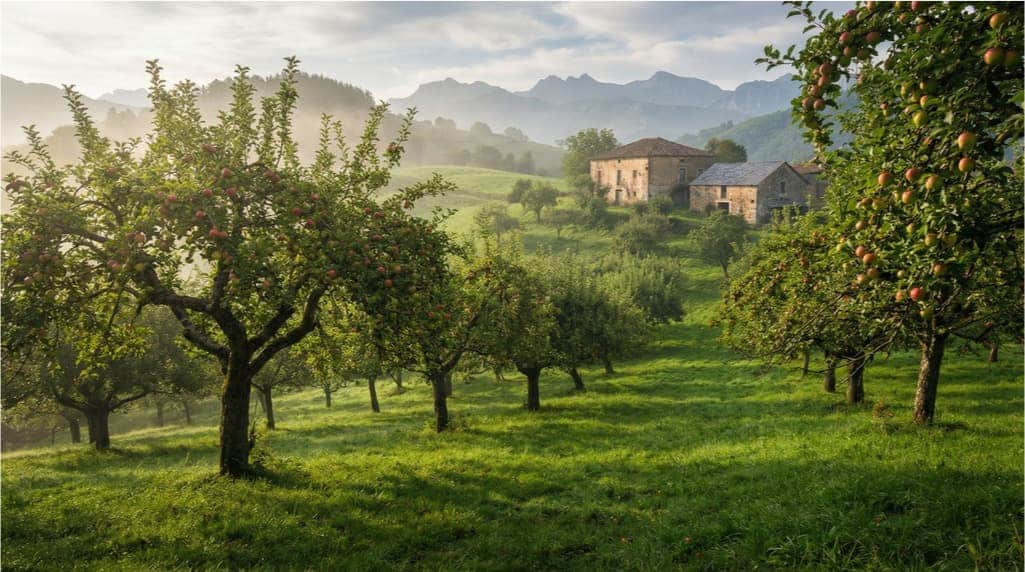
Cider culture is also about landscape: apple orchards (pomaradas), cider mills (llagares), villages with strong traditions, museums and festivals. The greatest concentration of cider mills and orchards is found in the so-called Cider Region (Comarca de la Sidra), particularly in municipalities such as Villaviciosa and Nava, both leading references in the sector.
Where to experience cider on the Camino del Norte
The Camino del Norte crosses Asturias and, along this stretch, there are places where cider appears especially naturally—due to local tradition, the density of cider houses or specific celebrations. If you are planning your itinerary, bear in mind that the Northern Way passes through towns such as Villaviciosa, Gijón and Avilés during its Asturian section.
If your plans include the city and you would like a concrete route reference, here is the Mundiplus guide for this section of the Camino del Norte from Gijón to Ribadeo.
Villaviciosa and the Cider Region: understanding its origins
If you are looking for the “why” behind cider (beyond simply drinking it), this region provides the perfect setting: a territory including municipalities such as Bimenes, Cabranes, Colunga, Nava, Sariegu and Villaviciosa, all sharing a clear common denominator: authentic, high-quality production. Villaviciosa stands out for its concentration of orchards and cider mills, as well as for hosting emblematic brands.
Gijón: urban cider, atmosphere and celebration
In Gijón, cider is enjoyed in a lively, popular atmosphere, with the cider house playing a central social role. If your dates coincide, the city hosts a major summer celebration: the Gijón Natural Cider Festival at the end of August (featuring activities such as pouring competitions and attempts at simultaneous pouring records).
Oviedo (though “Primitivo”): a logical detour if you connect routes or organise logistics
Oviedo is another city where cider has a strong presence, and it also has an explicit link to the historic departure point of the Primitivo from the cathedral.
Where to experience cider on the Camino Primitivo
The Primitivo is a route with character, and in Asturias it follows a clear thread: it begins in Oviedo and crosses municipalities that combine rural landscapes, mountains and tradition. The very explanation of the “start of the Camino” in Oviedo begins in Plaza de Alfonso II el Casto, at the foot of the cathedral, indicating the traditional departure direction of pilgrims along the Camino Primitivo.
Oviedo: start with a “culín” (or learn by watching)
Beginning the Camino Primitivo is, for many, a mixture of excitement and nerves. If you fancy a first introduction to cider, the wisest approach is a calm one: sit down, watch how it is poured, order something to eat and understand the rhythm. Remember: a “culín” is drunk immediately—it is not a large serving.
The Asturian interior: cider as part of everyday life
In inland areas, cider often appears without neon signs: it forms part of menus, celebrations and gatherings. Here, the idea that cider culture is a network of spaces and social practices (not just hospitality venues) makes perfect sense, as described by UNESCO.
When is best: a cider calendar for pilgrims
The “best time” depends on what you are looking for. Fortunately, there are very clear references regarding seasonality and festivals.
Summer: festivals and street atmosphere
- Nava Cider Festival: held in mid-July. It is one of the most renowned events, featuring preparation and pouring competitions, along with activities dedicated to all things cider-related. Turismo Asturias lists it as a festival of interest, and the Nava Town Council publishes its programme for each edition.
- Gijón Natural Cider Festival: usually celebrated in late summer (final week of August), with markets, competitions and pouring-focused activities.
Pilgrim advantage: if you walk the Camino del Norte in summer, you are more likely to coincide with events and with a very visible cider offering.
Autumn: apples, harvest and “mayar”
If you are keen to understand the production process, autumn is special. During the seronda (autumn), in October and November, the apples are harvested (“paña”) as the raw material for the following year’s production.
There are also organised initiatives linked to this period: “Mayando con Sidraturismo Asturias” takes place from mid-October to late November, coinciding with the pressing process and apple harvest, according to its official communications and calendar.
Winter and early spring (if starting the Norte in Irún): the Basque “txotx” tradition
If your Camino del Norte begins in the Basque Country, there is another well-known cider tradition: the txotx season in Basque cider houses runs from January to April. It makes for an interesting prelude before reaching Asturias: another cider culture, another ritual (tasting directly from the barrel), another way of socialising around the product.
How to enter a cider house without putting your foot in it
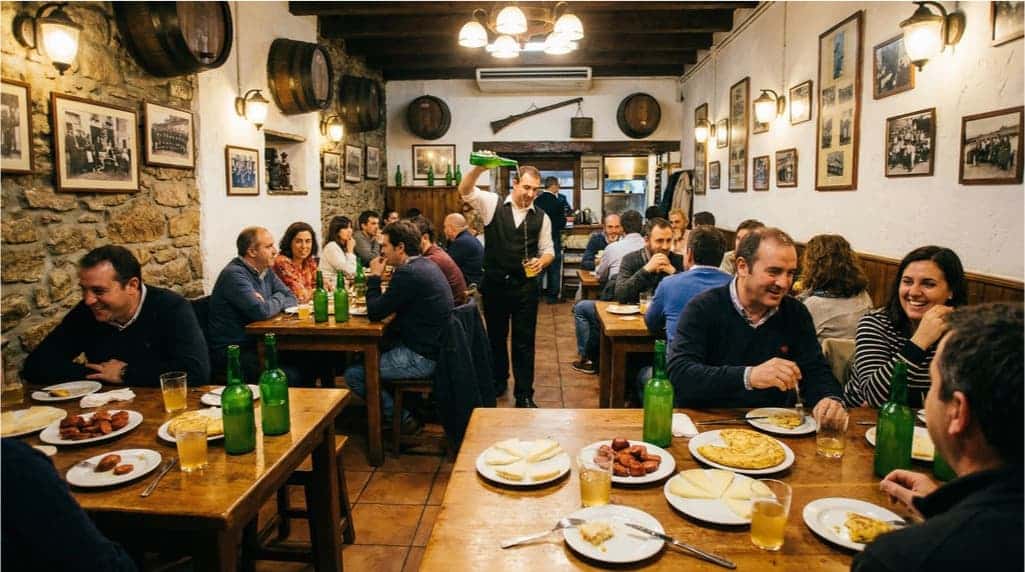
Of course, no one expects a pilgrim to be an expert, but observing and respecting local customs is always appreciated.
Practical tips (very simple)
- Observe first: watch how the waiter—or whoever is pouring at the table—does it.
- Never fill the glass: a “culín” is a small amount and is drunk immediately.
- If invited to pour, try it with good humour: it is normal to spill a little at first. The aim is to aerate and “awaken” the cider.
- Ask without hesitation: if there is table/new expression cider or sparkling cider available, remember that these styles are not poured from height.
Espicha: if you have the chance, it is a truly local experience
If you happen to attend an espicha (through the local calendar or an organised activity), you will quickly understand why cider is associated with community: it is drunk straight from the barrel, shared food is common and the atmosphere is festive.
Cider houses on other Camino routes
Although the cider heart of the Camino—due to its cultural and ritual density—is strongly linked to Asturias (Norte/Primitivo), it is common to find cider on other routes too, especially in northern regions of Spain where it is also produced or widely consumed. If you are comparing gastronomic plans beyond the Cantabrian coast, Mundiplus offers two Camino Francés guides to broaden your perspective:
Pilgrim tips: enjoy it without paying the price
Cider is part of the experience, but the Camino also demands that you take care of your body and safety. Here are some common-sense recommendations (no preaching):
- Best at the end of a stage: when you have finished walking for the day, especially after demanding terrain.
- Hydrate and eat: it is usually accompanied by food, which helps you enjoy it properly.
- If you are short on rest, prioritise sleep: the Camino del Norte and the Primitivo are unforgiving if fatigue builds up.
- Respect the local context: it is not a challenge or a “show”, but a living custom.
Other details you should know
Do I have to pour it myself to truly “experience” cider?
No. You can enjoy it by watching the ritual (and learning) or by ordering styles that are not poured from height. In many cider houses, it will be served already poured for you. And remember: table/new expression and sparkling ciders are not poured in this way.
What does it mean for the carbonation to be “endogenous”?
Within the PDO framework, it means that the carbon dioxide is naturally produced during the fermentation process, rather than being artificially added like in a soft drink. It is one of the defining characteristics included in the official specifications for “Sidra de Asturias”.