Embarking on the Camino de Santiago is a transformative experience, a journey that goes far beyond the mere act of walking. Among all the pilgrimage routes that wind through the Iberian Peninsula, there is one that stands out for its grandeur, deep historical heritage, and serene beauty: the Vía de la Plata.
This legendary route begins in Andalusia and stretches all the way to the Apostle’s tomb. It is an immersion into the roots of Hispania, a journey along an ancient Roman road that has shaped western Spain for more than two millennia.
If you are looking for a different way to experience this pilgrimage, away from the crowds but without sacrificing comfort and impeccable organisation, you’ve come to the right place. This guide is designed for the 21st-century pilgrim who wishes to explore the various Camino de Santiago routes with the assurance of the best accommodation, guaranteed luggage transport, and all logistics taken care of.
Before continuing, we should note that we do not operate the Vía de la Plata in its entirety at Mundiplus. Our service, if you wish, is limited to the final section, corresponding to the Camino Sanabrés.
Índice de contenidos
A journey through history: what really is the Vía de la Plata?
The first thing that surprises about the Vía de la Plata is its name. Despite what it suggests, this route was never intended as a silver trade route. Its name is, in fact, the result of a fascinating phonetic evolution. During the Andalusian period, the Arabs referred to this road as al-Balat (the paved road), a term that, over the centuries and with the Christian reconquest, evolved into the word “Plata” we know today.
The true origin of this route dates back to the Roman Empire. It was conceived as a road connecting Augusta Emerita (Mérida), the capital of Lusitania, with Asturica Augusta (Astorga) in the north. Its layout facilitated, for centuries, the movement of legions, goods, and culture, consolidating Roman control over western Hispania. Walking it is, literally, treading the same ground as emperors, soldiers, and Roman citizens did two millennia ago.
With the fall of the Empire and the onset of the Middle Ages, the Vía de la Plata did not lose its significance. On the contrary, it was repurposed. As the cult of the Apostle Santiago grew, pilgrims from the south of the peninsula and North Africa began to use this ancient infrastructure to direct their steps towards Compostela. They transformed a military and commercial road into a route of faith and spirituality.
The itinerary
The Vía de la Plata is usually divided into stages of between 20 and 35 km (although some are longer). Below is a clear and realistic outline of the section you would need to complete: from Zafra to Ourense and, in Galicia, the final stages of the Camino Sanabrés from Ourense to Santiago.
From Seville to Ourense
- Seville → Guillena (22.7 km)
- Guillena → Castilblanco de los Arroyos (18.2 km)
- Castilblanco de los Arroyos → Almadén de la Plata (28.2 km)
- Almadén de la Plata → Monesterio (33.6 km)
- Monesterio → Fuente de Cantos (20.7 km)
- Fuente de Cantos → Zafra (24.2 km)
- Zafra → Villafranca de los Barros (19.8 km)
- Villafranca de los Barros → Torremejía (26.7 km)
- Torremejía → Mérida (15.3 km)
- Mérida → Alcuéscar (35.9 km)
- Alcuéscar → Cáceres (37.4 km)
- Cáceres → Alcántara Reservoir (34.5 km)
- Alcántara Reservoir → Grimaldo (20.3 km)
- Grimaldo → Carcaboso (30.2 km)
- Carcaboso → Aldeanueva del Camino (38.3 km)
- Aldeanueva del Camino → La Calzada de Béjar (21.8 km)
- La Calzada de Béjar → Fuenterroble de Salvatierra (20.2 km)
- Fuenterroble de Salvatierra → San Pedro de Rozados (27.9 km)
- San Pedro de Rozados → Salamanca (23.6 km)
- Salamanca → El Cubo del Vino (36.4 km)
- El Cubo del Vino → Zamora (31.6 km)
- Zamora → Montamarta (19.2 km)
- Montamarta → Granja de Moreruela (22.6 km)
- Granja de Moreruela → Tábara (25.1 km)
- Tábara → Santa Marta de Tera (22.9 km)
- Santa Marta de Tera → Mombuey (36.1 km)
- Mombuey → Puebla de Sanabria (31.7 km)
- Puebla de Sanabria → Lubián (28.1 km)
- Lubián → A Gudiña (23.7 km)
- A Gudiña → Laza (34.0 km)
- Laza → Xunqueira de Ambía (33.0 km)
- Xunqueira de Ambía → Ourense (21.8 km)
Final stages: Camino Sanabrés from Ourense to Santiago
- Ourense → Cea (22.3 km)
- Cea → Lalín Station (27 km)
- Lalín Station → Silleda (15.7 km)
- Silleda → Ponte Ulla (19.7 km)
- Ponte Ulla → Santiago de Compostela (21 km)
When is the best time to walk it?
To enjoy the Vía de la Plata in all its splendour, the shoulder seasons are undoubtedly the best choice.
- Spring (April to June): the ideal season. Fields are in full bloom, temperatures are mild, and long days invite unhurried walking. Extremadura and Castilla dress in an intense green that will captivate you.
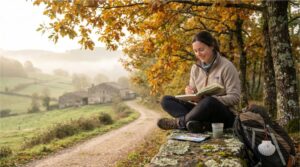
- Autumn (September to October): offers magical light and very pleasant temperatures. Ochre colours tint the landscapes, creating a nostalgic and serene atmosphere. In addition, there are fewer pilgrims than in spring, ensuring greater tranquillity.
Summer, especially July and August, is very hot in the south and on the plateau, with temperatures exceeding 40°C. It is only recommended for very experienced pilgrims or if walking is planned exclusively in the early morning hours, something good organisation can make much easier.
The most detailed route: a mosaic of landscapes and cultures
With almost 1,000 kilometres from Seville to Santiago, the Vía de la Plata is a long-distance journey crossing four autonomous communities and an astonishing diversity of landscapes and cultures.
Andalusia and Extremadura: the legacy of Rome
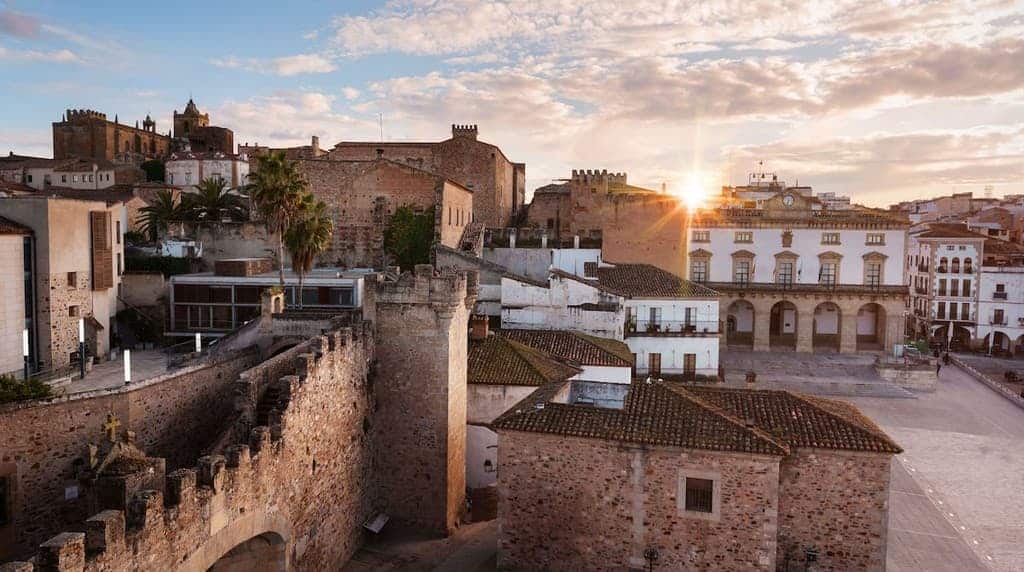
The route begins at the foot of the Giralda in Seville and quickly enters the Andalusian landscape to reach the dehesas of Extremadura. This first section is an open-air museum. You will pass the ruins of Itálica, cradle of emperors, and immerse yourself in a horizon of holm oaks and cork trees. The main jewels of this stage are, without doubt, the UNESCO World Heritage cities:
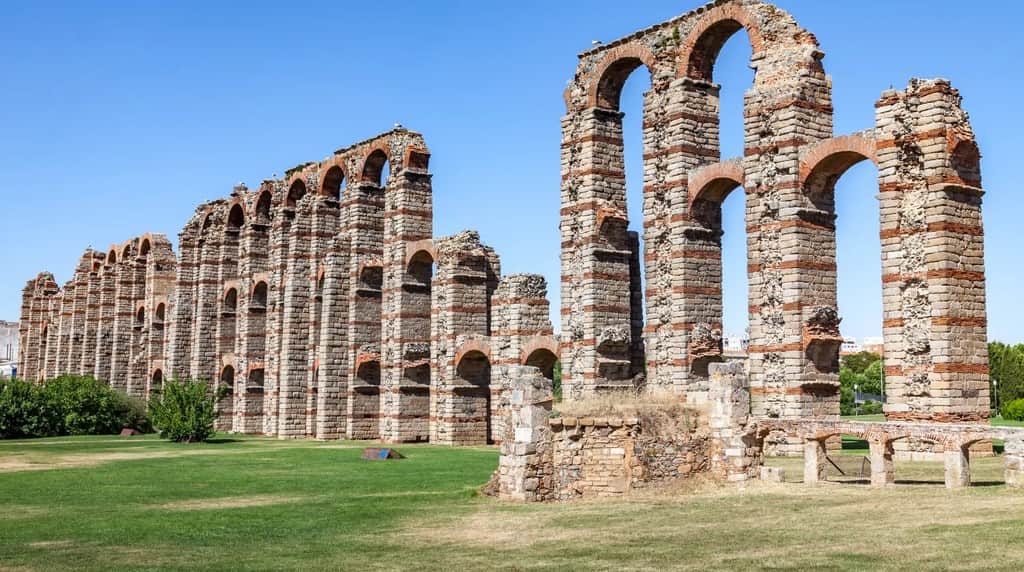
- Mérida: ancient Augusta Emerita will leave you breathless. Its Roman theatre and amphitheatre, the Temple of Diana, the bridge over the Guadiana, and the majestic Aqueduct of the Miracles are must-see stops.
- Cáceres: its monumental city is one of the best-preserved medieval and Renaissance urban ensembles in the world. Getting lost in its cobbled streets, palaces, and towers is like travelling through time. Another essential landmark is the Arco de Cáparra, a unique four-faced Roman arch standing solitary and evocative in the countryside. It is one of the most iconic symbols of this route.
Castilla y León: the endless plateau and the Golden Cities
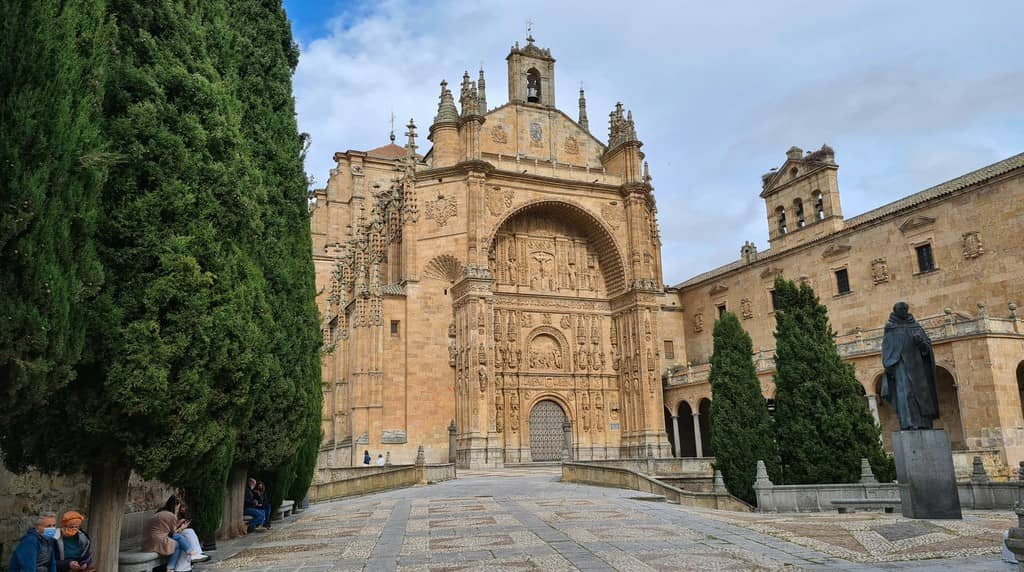
Leaving Extremadura behind, the landscape transforms. We enter the vast plain of Castilla y León. Here, the journey becomes more austere, but no less fascinating. Infinite horizons and immense skies invite contemplation as you advance towards cities rich in history and art.
- Salamanca: the university city par excellence welcomes you with the splendour of its Villamayor golden stone. Its Plaza Mayor, considered one of the most beautiful in Spain, its two cathedrals (Old and New), and its vibrant atmosphere are a gift for the pilgrim.
- Zamora: known as “the Romanesque capital”, this city on the banks of the Duero boasts one of the largest concentrations of Romanesque churches in Europe. Its cathedral, with its unique Byzantine dome, is an architectural gem.
The Crossroads: Astorga or the Camino Sanabrés
Upon reaching the town of Granja de Moreruela in the province of Zamora, the Vía de la Plata faces a historic fork. Here, the pilgrim must make an important decision:
- Continue towards Astorga: this is the original Roman route, heading north to join the Camino Francés in Astorga. From there, it shares the path with the more popular route to Santiago. It’s an interesting option if you want to experience the atmosphere of the Camino Francés, although it means straying from the more solitary spirit of the Vía.
- Take the Camino Sanabrés: this is the choice most pilgrims make today and the one that Mundiplus specialises in. It veers westward towards Galicia, through the Sanabria region. It is the natural continuation of the spirit of the Vía de la Plata: spectacular landscapes, tranquility, and authentic experiences.
The Camino Sanabrés: the gateway to the magic of Galicia
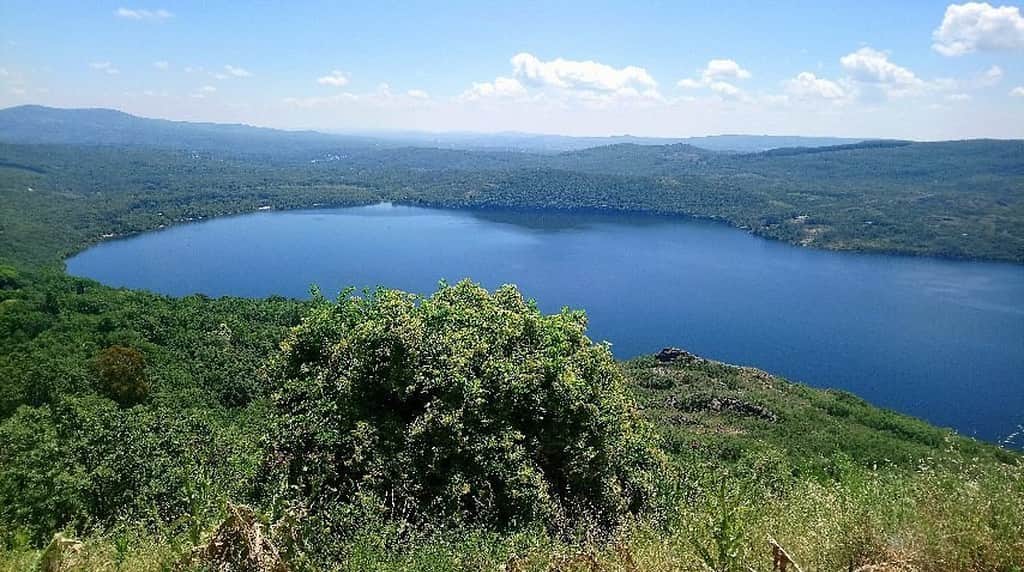
As we mentioned, at Mundiplus we have specialised in its most spectacular and sought-after section: the Camino Sanabrés. We believe it offers the quintessence of pilgrimage, condensing in its final stages the beauty and spirituality that every pilgrim seeks.
Officially starting at Granja de Moreruela (our service begins from Ourense), it immerses you in a landscape of pure nature. The highlight of this section is the Sanabria Lake Natural Park, the largest glacial lake on the Iberian Peninsula. Its crystal-clear waters and surrounding forests create a setting of breathtaking peace.
After crossing the mountains separating Castilla y León from Galicia, you enter the province of Ourense. This city, famous for its thermal waters (with the burgas in the very historic centre), is a perfect starting point for those with less time who still want to experience the pilgrimage. From here, only around 100 kilometres remain to Santiago, the minimum distance required to obtain the Compostela.
The final section is a delightful journey through rural Galicia, dotted with oak groves, medieval bridges, stone villages, and the iconic cruceiros that mark the path. It’s a journey’s end that connects you with Galicia’s most authentic side before the thrilling arrival at the Plaza del Obradoiro.
What does Mundiplus offer on the Camino Sanabrés?
At Mundiplus, we specialise in providing a complete and worry-free experience on the Camino Sanabrés from Ourense to Santiago.
We help you cover the last 5 stages (approximately 100 kilometres) over 6 nights, all-inclusive: charming selected accommodations, breakfasts, luggage transport between stages, travel insurance, 24-hour phone assistance, and, of course, the pilgrim’s credential. It’s the perfect way to experience the essence of this route without sacrificing comfort.
Practical tips for walking the Vía de la Plata
Before lacing up your boots and setting off on the adventure, it’s essential to consider a few practical aspects that will make your experience much more enjoyable. The Vía de la Plata, due to its length and characteristics, requires specific preparation that differs from shorter or more crowded routes.
Physical preparation: a manageable challenge
You don’t need to be an elite athlete to complete this route, but it is advisable to have a solid fitness base. The stages are long (many exceed 30 kilometres) and the terrain, although mostly flat, can be demanding under the Extremaduran or Castilian sun.
We recommend beginning training at least two to three months before your departure, taking progressive walks that simulate the conditions of the route. Start with 10-15 kilometres and gradually increase to 25-30 kilometres with your loaded backpack.
Luggage: less is more
One of the great advantages of travelling with an organised service is that your luggage travels for you. This means you can carry a light daypack (maximum 5-8 kg) with essentials: water, some food, sun protection, a waterproof layer, and your documents. The rest of your luggage (change of clothes, toiletries, etc.) will be waiting for you each evening at your accommodation.
This system transforms the experience, allowing you to enjoy the journey without the exhausting weight of a 10-15 kg backpack on your shoulders.
The Pilgrim’s Credential
To obtain the Compostela upon arrival in Santiago, you will need the pilgrim’s credential properly stamped. In this case, as it is a route of over 100 kilometres on foot, you will need at least two stamps per day in the final stages.
The credential can be obtained at the Seville Cathedral, at churches along the route, in albergues, or through Jacobean associations. Mundiplus provides the credential as part of the service, ensuring you arrive in Santiago with all the paperwork in order.
Gastronomy along the way: a feast for the senses
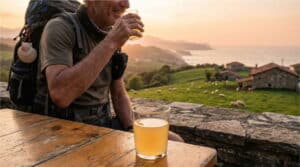
Walking the Vía de la Plata is also a first-class gastronomic journey. Each region you cross has its own culinary identity, and it would be a shame not to indulge in it.
- In Extremadura, don’t miss the acorn-fed Iberian ham, Torta del Casar (a creamy, intensely flavoured cheese), migas extremeñas, or gazpacho.
- In Castilla y León, roasted lamb and suckling pig are legendary, as well as the cured meats from the Guijuelo area.
- In Galicia, pulpo á feira, lacón with turnip greens, empanadas, and fresh seafood await as the ultimate reward.
And, of course, the wines: from Ribera del Duero reds to Galician whites like Godello or Albariño.
A route for every pilgrim
The Vía de la Plata and its continuation via the Sanabrés offer flexibility few routes can match. You can take on the challenge of completing it over more than a month, or choose the sections that appeal most. For pilgrims seeking an organised, comfortable, and culturally enriching experience, starting in key cities (Salamanca, Zamora, or especially Ourense) is ideal.
At Mundiplus, we offer you the opportunity to experience this adventure without worries. If the idea of a historic, monumental, and peaceful route appeals to you, we encourage you to explore the options the Camino Sanabrés offers. It’s the perfect way to complete the legendary Vía de la Plata and arrive in Santiago with a renewed spirit.
Remember that, although this route is more demanding in terms of distance and duration than others like the Camino del Norte from Gijón to Ribadeo, the Camino Francés from Logroño to Burgos, or the Camino Francés from Burgos to León, its historical and scenic richness makes it a hidden gem to discover. Are you ready to be one of the fortunate pilgrims walking the ancient Roman road in 2026?.