Planning a long Camino does not always mean doing it all at once or sticking to a single itinerary from start to finish. In fact, one of the great advantages of the different Camino de Santiago routes is that several of them meet, overlap, or continue together at certain points. This makes it possible to design highly varied, realistic multi-stage journeys that are well adapted to the time available.
This combination can respond to many objectives: seeking greater landscape diversity, avoiding repeating sections, adjusting the difficulty, linking two trips in different seasons, or even building a pilgrimage in stages without losing geographical coherence.
The key is to distinguish between “changing routes” and “breaking continuity”. Changing itinerary is possible when two routes officially converge; what is not advisable is improvising arbitrary jumps between disconnected sections if your intention is to maintain an organised pilgrimage and, where applicable, ensure that this continuity can be properly reflected in the pilgrim credential.
The Pilgrim’s Office indicates that stages can be completed at different times, but they must follow a chronological and geographical order. We also remind you that in order to obtain the Compostela you must complete 100 continuous kilometres towards Santiago on the same route recognised by the system of the International Pilgrim Reception Centre.
Índice de contenidos
What “combining routes” on the Camino really means
Combining routes does not simply mean starting one itinerary and finishing another. In practice, there are several different ways to do it.
- The first, and the clearest, is to link two routes that officially converge before reaching Santiago, as happens with:
- The Camino Primitivo and the Camino Francés in Melide.
- The Camino del Norte and the French Route in Arzúa.
- The Portuguese Coastal Camino and the Portuguese Inland Camino in Redondela.
- The Camino de Invierno and the Vía de la Plata in Lalín.
- The second option is to complete a route to Santiago and extend it afterwards towards Fisterra and/or Muxía. It is not a “change of route before the finish”, but it is a very common combination within a longer multi-stage journey.
- The third is to split the same route into several trips and, at a later point of convergence, continue along the main route.
This approach makes a lot of sense for those who already know a main route and want to enrich the experience. For example, you might complete an initial section with a more mountainous or coastal character and, once you reach the junction point, continue along a more classic stretch with greater infrastructure.
It can also be a good decision when you are looking to balance heritage, logistics, and physical challenge: some itineraries are more solitary while others are better supported; combining them allows you to adapt the journey without distorting the spirit of the pilgrimage.
Practical rules before designing a multi-stage journey
Before deciding where to link routes, it is worth keeping four criteria in mind.
- The first is the official convergence. Not all routes “pass near” each other in a way that is actually useful for pilgrims. For a combination to make sense, ideally the connection should be recognised within the official Camino route itself.
- The second is geographical continuity. If you enjoy the experience during different holidays or weekends, you should resume where you left off. Official information about the pilgrim credential and the Compostela stresses that it does not have to be completed continuously in time, but it must be geographically continuous. This is particularly important if you plan to build a journey in two or three phases throughout the year.
- The third is the goal of the journey. Planning a combination aimed at reaching Santiago is not the same as planning a broader experience that includes continuing on to Fisterra or Muxía. In the latter case, you will need to plan for more days, a different pace, and possibly a second credential or enough space to continue collecting stamps.
- And the fourth is seasonality. Early September is often recommended as an ideal time thanks to the pleasant climate and still-long days. Although the analysis depends on each route, that official reference reinforces something many pilgrims already consider: for a combined journey it is usually more comfortable to travel in late spring or early autumn than in the height of summer or during the harsher stretches of winter.
Where routes can be combined before reaching Santiago
Camino Primitivo + Camino Francés in Melide
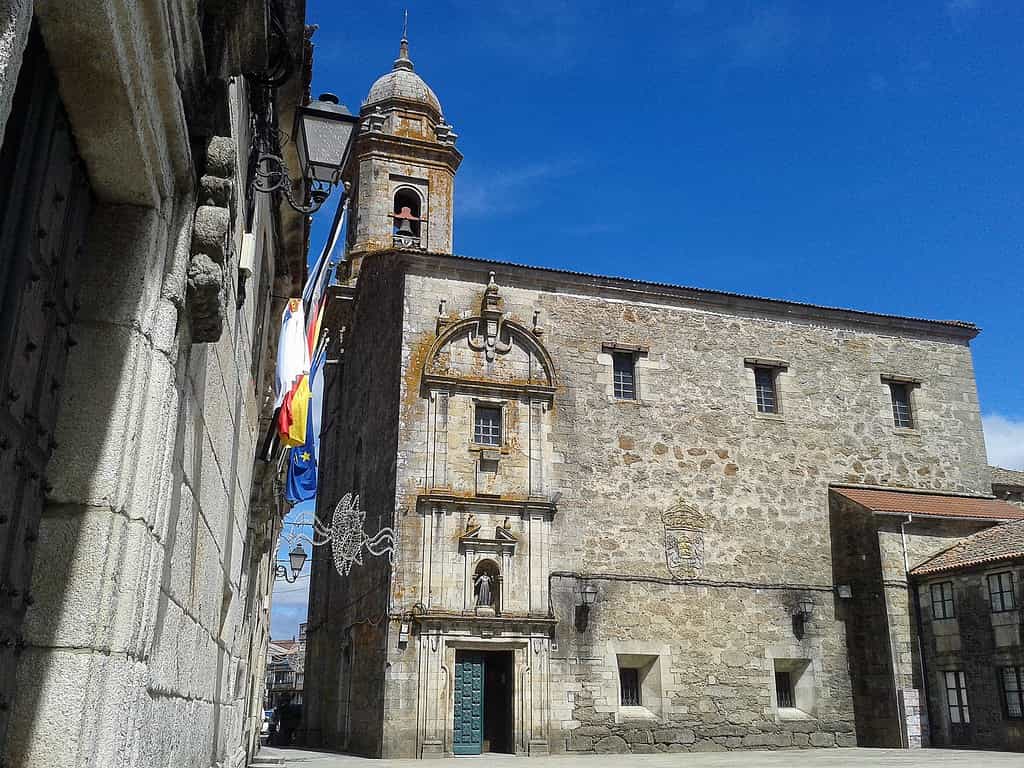
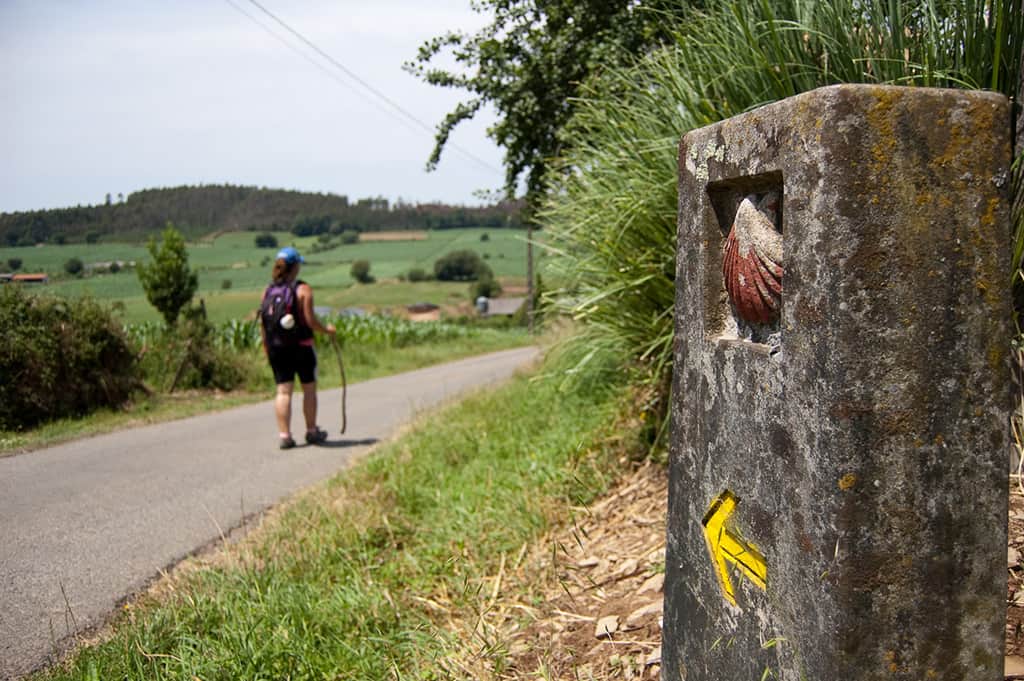
It is one of the clearest and most natural combinations. The official website expressly states that the Camino Primitivo joins the Camino Francés in Melide, and from there continues along the French Route to the cathedral, a distance of 53 kilometres. This makes Melide an excellent point from which to design a mixed pilgrimage: a first section along the Primitivo, with its more mountainous and demanding character, followed by a final stretch along the most classic Jacobean route.
This option is particularly attractive for those who want an intense experience in the first half and a more social and recognisable arrival in the second. It is also a good formula if the aim is to complete a short trip ending in Santiago without taking on the full accumulated effort of the Primitivo from Oviedo in a single attempt.
From a planning perspective, Melide also works as a very clear point to “close” one phase and resume another later. The junction between both routes does not depend on ambiguous detours but on the official route itself.
Yes, if you walk the Camino Francés from Logroño or the Camino Francés from Burgos, there will come a point where you meet pilgrims who began their journey from somewhere around Oviedo.
Camino del Norte + Camino Francés in Arzúa
Another major combination point is Arzúa. In this town, the Camino del Norte and the Camino Francés converge, and the Primitivo had already joined earlier in Melide.
For a multi-stage journey, this junction offers many possibilities. You can travel along the Cantabrian coast and the interior of Galicia via the Northern Route and, once in Arzúa, merge into the final flow of the French Route. It also fits well within a block-based plan: one season to complete the Asturian-Galician section of the Northern Route and another to finish from Arzúa, knowing that you are entering a very well-established section.
For those who prioritise logistics, signage, and a higher density of services in the final days, this ending usually proves particularly convenient. Walking the Camino del Norte from Gijón does not involve any change. The route is always the same. The only thing you need to bear in mind is that during the final two stages you will be walking alongside those who have chosen the French Route.
Portuguese Coastal Camino + Portuguese Inland Camino in Redondela
If what you are looking for is to combine the sea, urban heritage, and a more central final section, Redondela is a key point. The official Vigo–Redondela stage of the Portuguese Coastal Camino indicates that this variant converges there with the inland route. In other words, you can start along the coast and then join the traditional Portuguese route without needing to invent connections.
This combination works very well for those who want a coastal entry through southern Galicia but prefer not to maintain the same route profile throughout the entire journey. It is also useful if you wish to split the route into two moments of the year: a first stage along the coastline and a second from Redondela onwards along the main route towards Pontevedra, Caldas, Padrón and Santiago.
From the narrative point of view of the journey, moreover, it is a very natural transition between two different environments of the Portuguese Camino.
Camino de Invierno + Vía de la Plata in Lalín
It is a less well-known combination among the general public, but a very interesting one for those seeking a less crowded experience. This route joins the Vía de la Plata in Lalín and continues together to Compostela; the Rodeiro–Bendoiro stage even specifies that this convergence takes place next to the Pontiñas River.
Here the logic of the multi-stage journey is different: it is not so much about “lightening” a well-known route, but about creating a journey with its own character before joining another historic itinerary from the south of the peninsula. It is a very attractive option for repeat pilgrims who want to vary the experience without giving up a coherent arrival in Santiago.
It can also be a good way to explore an alternative route before entering a path with greater historical tradition and more practical references for the final stretch.
Can two routes be joined without reaching Santiago?
Yes, and in fact this is one of the most interesting aspects of the topic. Not all combinations require entering Compostela first. The cases of Melide, Arzúa, Redondela and Lalín are precisely examples of routes that join before the finish. This makes it possible to design completely valid hybrid journeys without “waiting” until Santiago to change itinerary.
However, it is worth making an important clarification: the fact that two routes can join does not mean that any change of route works in the same way for the purposes of the minimum continuity required for the Compostela. The official rule refers to 100 continuous kilometres on foot along the same recognised route.
Therefore, if your absolute priority is the certificate, the final stretch must respect that logic without questionable combinations. On the other hand, if your priority is the travel experience and the coherence of the route, you can indeed consider combinations before Santiago as long as the connection is real and officially recognised.
What are the best dates for a combined Camino?
There is no single date that works for every route, but there are sensible guidelines. On a multi-stage journey, the most practical approach is usually to avoid the extremes: the intense heat of summer, which complicates the management of effort and daily schedules, and the winter periods when some routes become more uncomfortable due to weather conditions, mud, or the reduced availability of certain services.
In practice, this means that spring and early autumn are particularly favourable windows for combining routes. This is especially true if the plan includes coastal stretches, long stages, or a second section from Santiago to Fisterra/Muxía.
They are also good options if you want to divide the journey into two parts during the year: for example, a first stage in May or June and the second in September. The important thing is to maintain the continuity of the route and always review the real conditions of the chosen section before setting off.
How to plan it so it truly makes sense
The best way to build a single multi-stage journey is not to think first in terms of kilometres, but in terms of nodes. In other words, places where one phase logically ends and the next begins without forcing the narrative of the journey: Melide, Arzúa, Redondela, Lalín or Santiago if you plan to continue to Fisterra/Muxía. When you choose that node well, everything else falls into place more easily: transport, bookings, number of days and the continuity of the pilgrimage project.
It is also advisable to decide from the beginning what exactly you are looking for.
- If you want landscape diversity, the coast + inland combination usually works best.
- If you prioritise Jacobean symbolism and classic heritage, the French Route is the great structural backbone.
- If you prefer less travelled routes, Invierno and Primitivo offer very interesting connections before merging with busier sections.
- And if what you are looking for is to extend the experience after arriving, the continuation to Fisterra/Muxía is probably the most complete option.
Combining different Camino de Santiago routes within a single multi-stage journey is not only possible, but can also create particularly rich, personalised and coherent itineraries. The key condition is to do it through real route junctions while maintaining the geographical continuity of the journey.
Melide, Arzúa, Redondela and Lalín are currently some of the clearest points for linking routes before Santiago. Once the city is reached, Fisterra and Muxía offer a natural extension for those who do not want the experience to end in the Plaza del Obradoiro.
When well planned, a multi-stage Camino allows something that a linear journey often cannot: to adapt the effort, spread holidays across different periods, change landscapes and build a very personal pilgrimage without losing the thread of the experience. And that, in the end, is one of the greatest strengths of the Jacobean world: that it allows many ways of arriving, as long as it is planned with good judgement and with respect for the logic of each route.