The Camino de Santiago is much more than a hiking trail. It is a life-changing experience that crosses cities, villages, landscapes, and diverse cultures. However, there is a logistical aspect that, if not planned properly, can cause inconvenience: knowing how to carry and manage money during the route.
Over hundreds of kilometres, you will find everything from ATMs and shops with contactless payment to bars where they only accept coins. Knowing when to use cash and when to pay by card on the Camino de Santiago is key to avoiding unpleasant surprises and enjoying the journey.
In this guide you will discover:
- What expenses you should plan for on the Camino.
- Advantages and disadvantages of each payment method.
- Actual availability of ATMs depending on the route you choose.
- Tips to avoid fraud and losing money.
- Strategies for both domestic and international pilgrims.
Índice de contenidos
- 1 How much does a day on the Camino de Santiago cost?
- 2 Using cash on the Camino de Santiago
- 3 Using a card on the Camino de Santiago
- 4 ATMs and availability by route
- 5 Strategies for combining cash and card
- 6 Where and when to withdraw cash
- 7 Security and fraud prevention
- 8 Tips for international pilgrims
- 9 Checklist before departure
How much does a day on the Camino de Santiago cost?

Before deciding how to carry your money, it’s worth knowing the average daily expenditure. Obviously, this depends on the type of pilgrim: those staying in public hostels spend less than those booking hotels or dining in restaurants.
Approximate daily expenses:
- Accommodation:
- Public hostel: €5–€10
-
- Private hostel: €10–€20
-
- Hotel or guesthouse: €25–€60
Doing the Camino de Santiago with Mundiplus can help you forget the stress of searching for accommodation and comparing prices every night. We take care of booking accommodation in hotels, manor houses, rural homes, and hostels at the best available price, optimising your daily budget.
This means that instead of facing variations from €10 to €60 per night, you can enjoy set, stable rates tailored to your needs. That way, you can plan your expenses in advance and focus on what really matters: experiencing the Camino.
In addition, some traditional hotels can dramatically increase prices during high season. With Mundiplus, you secure comfortable and affordable options, some even with included services such as breakfast, laundry, or luggage transfer, without having to worry about unexpected charges.
- Food:
- Simple breakfast at a bar: €3–€5
-
- Pilgrim’s menu: €10–€15
-
- Light dinner bought at a supermarket: €5–€7
- Other expenses:
- Laundry: €3–€5
-
- Occasional transport (taxi or bus): €5–€15
-
- Cultural visits: €3–€10
In short, a pilgrim can spend between €25 and €50 per day, although some travellers opting for more comfort exceed €70.
Using cash on the Camino de Santiago

Although digital payments are on the rise, cash is still king in many areas of the Camino.
This is because much of the route passes through small villages, family-run bars, and local businesses that don’t always have card terminals or prefer cash to avoid fees. Even in large cities, having some cash on hand can save you when a card machine isn’t working or the connection fails.
For this reason, even if you carry a card, cash is your lifeline at key moments.
Advantages
- Universal acceptance: from a coffee in a village bar to shopping in a large city, this option is always accepted.
- Speed for small payments: remember you will pass through places without card machines or with weak connections.
- Visual control of spending: seeing your wallet get lighter helps you avoid overspending.
Disadvantages
- Risk of theft or loss: once it’s gone, there’s no way to get it back.
- Dependence on ATMs: on rural routes, it can take hours to find one. And carrying too much cash isn’t an ideal solution either.
Tips for carrying cash safely
- Divide your money into three or four different hiding places: an inner money belt, hidden pocket, backpack compartment, and waterproof pouch. This way, in the event of theft or loss, you won’t lose it all.
- Always use small denominations: easier to use and less risky in case of loss.
- Always carry coins for donations or vending machines.
- Avoid counting money in public or showing large amounts. Nothing is likely to happen, but it’s always wise not to broadcast to the world how much cash you have on you.
Using a card on the Camino de Santiago
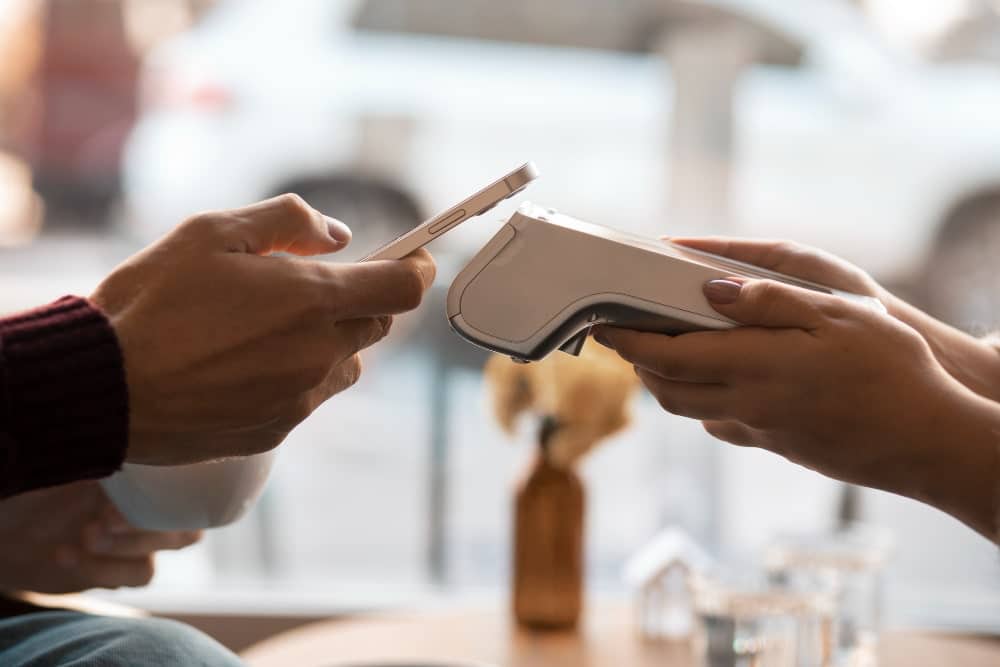
A debit or credit card is becoming increasingly useful, especially in towns and cities with regular tourism.
Advantages
- Security and protection: you can block it if lost. You won’t be able to use it, but neither will anyone who finds or steals it.
- Less cash on you: reduces theft risk.
- Contactless payments: increasingly faster and more secure.
Disadvantages
- Not always accepted: particularly in small villages or for low-value purchases.
- Unexpected fees: both for withdrawals and payments if you’re coming from abroad.
- Dependent on signal: some card machines don’t work without coverage.
Recommendations for paying by card
- Carry at least two cards (for example, one debit and one credit) and store them separately.
- Check with your bank about fees and limits before leaving.
- If you’re a foreigner, consider cards like Revolut, N26 or Wise, which offer good exchange rates and low fees.
ATMs and availability by route
Planning your cash withdrawals according to your route is essential, as not all stages have banks or ATMs.
Camino Francés
The most popular route with the best infrastructure. From Roncesvalles to Santiago, you will pass through cities such as Pamplona, Burgos, León and Ponferrada, where ATMs are plentiful. Even in medium-sized towns there are quite a few bank branches. It’s rare to walk more than 15 km without finding at least one ATM.
Camino del Norte
This option, especially the section of the Camino de Santiago from Santander to Gijón, passes through towns with good banking coverage, such as those mentioned or Llanes. However, here you will find less populated rural coastal stretches, where you could walk up to 25 km without finding an ATM, so it’s wise to carry cash for a whole day.
Portuguese Coastal Way
This itinerary combines coastal cities with small fishing villages, making ATM availability highly variable.
In larger towns such as Porto or Vigo, you will easily find banks and ATMs, whereas in villages and rural areas the infrastructure is much more limited. Therefore, it’s best to plan withdrawals and carry enough cash to cover at least a full day.
- On the Portuguese Coastal Way from Porto to A Guarda you will pass through cities such as Viana do Castelo or Caminha, where you’ll have no problem finding ATMs. In contrast, in small fishing villages banking facilities may be non-existent, so it’s advisable to withdraw cash in the main towns.
- Later, on the Way from A Guarda to Santiago, the route crosses rural and less urbanised areas. In some stretches you could go more than 30 km without finding an ATM, so it’s wise to carry enough cash to cover two days, especially if your accommodation or meals are paid in cash.
Central Portuguese Way
This route, which passes through cities such as Lisbon, Coimbra, Porto, Ponte de Lima, Tui and Pontevedra, has good ATM availability on most stages. However, there are stretches between small villages without branches, especially in the more rural Portuguese section. It’s best to withdraw cash in the main cities and carry enough for one or two days.
Camino Primitivo
Although in cities like Lugo or Oviedo ATMs are plentiful, in intermediate villages and hamlets availability is scarce. It’s recommended to carry cash for at least two days.
Camino Inglés
A shorter route alternating urban sections with rural areas. In Ferrol, Pontedeume and Betanzos you’ll find several ATMs, but in small intermediate villages the offer is very limited. Although it’s usually not necessary to carry large amounts, it’s still advisable to have enough cash to cover at least one full day.
Camino de Finisterre and Muxía
It passes through towns such as Negreira, Olveiroa, Cee and Finisterre. In larger towns you will find ATMs, but in some intermediate stretches there are no banking services. As many rural houses and small accommodations still prefer cash payments, it’s best to carry enough cash for two days.
Camino Sanabrés
In cities such as Ourense and Lalín you won’t have trouble finding ATMs, but between small mountain villages availability is limited. It’s advisable to carry enough cash for 1–2 days, especially if doing long stages or travelling off-season.
Strategies for combining cash and card
The best option for most pilgrims is to use both methods:
- Always carry a cash reserve of €30–€50 for emergencies.
- Use your card for larger, planned payments (for example, dinners in restaurants).
- Withdraw cash in large cities to avoid fees.
- Keep a small emergency fund in a different location from your usual one.
Where and when to withdraw cash
- In large cities: more options and lower fees.
- At banks in your network: if your bank has agreements with Spanish institutions, you may withdraw for free.
- Avoid independent ATMs (like Euronet) in tourist areas: they often charge high fees.
Security and fraud prevention
- Use hidden belts or money pouches for cash and cards.
- Always keep your most valuable belongings with you.
- At ATMs, cover the keypad and check for unusual devices. Be wary of anyone offering “help” at the ATM.
Tips for international pilgrims
- Exchange some currency before arriving for initial expenses.
- Avoid paying in your home currency: always choose euros to avoid double conversions.
- Consider online banks with no withdrawal fees for use in Spain.
- Keep a digital copy of your documents and cards.
Checklist before departure
Cash:
- Small denominations.
- Coins for machines and donations.
Cards:
- Two or more, stored separately.
- Bank’s emergency phone number.
Security:
- Hidden belt or anti-theft pouch.
- Digital copies of documents.
Managing money on the Camino de Santiago is a key logistical aspect. Combining cash and card, planning withdrawals according to the route, and taking safety precautions will allow you to enjoy the experience with peace of mind.
Although we’ve talked about precautions and safety measures, it’s important to stress that theft on the Camino de Santiago is very rare. The atmosphere among pilgrims is usually one of trust and camaraderie, and most routes are travelled without incident. This information and these tips are offered in general terms, as common-sense measures that can just as easily be applied to everyday life.
And if you’re planning your adventure, at Mundiplus we are specialists in the Camino de Santiago trip. We will advise you in detail regarding routes, tips, and resources so you can experience the Camino with everything under control.