Every year, thousands of pilgrims set out on the Camino de Santiago, either independently or through an organised Camino Santiago, driven by spiritual, cultural, or personal reasons. They all share a common experience once they begin: the natural wealth along the route is a treasure in itself, just as valuable as its historic monuments.
Along the different Jacobean routes, walkers traverse spectacular landscapes that provide equal measures of physical challenge and visual reward. In this article, we explore the most outstanding natural settings along the Camino de Santiago, focusing on pilgrims who seek to connect with nature on their journey.
Índice de contenidos
- 1 Natural settings along the Camino de Santiago routes
Natural settings along the Camino de Santiago routes
French Way
The French Way is the most famous and busiest Camino route, and also one of the most diverse in terms of natural surroundings.
It begins by crossing the Pyrénées between Saint-Jean-Pied-de-Port and Roncesvalles, one of the most demanding stages. On this alpine ascent, pilgrims traverse mountains covered in forests and high-altitude meadows, enjoying breathtaking views of valleys and peaks stretching into the horizon.
After the Pyrenean challenge, the route passes through oak and beech forests in Navarra, before opening up onto the vast Castilian plateau across Burgos and Palencia provinces. Although the plains may seem monotonous at first glance, many pilgrims find a serene beauty in these wheat fields under endless skies, offering a unique experience of reflection.
Finally, as the route approaches Galicia, the landscape changes again, giving way to mountainous terrain and lush valleys.
Atapuerca Mountains
In Burgos province, the route crosses the Atapuerca Mountains, a natural area designated a World Heritage Site due to its extraordinary archaeological and scenic significance. Besides hosting unique prehistoric sites, the area offers pilgrims trails that wind among holm oaks, cork oaks, and pastures, with panoramic views over the Burgos plains.
Ancares Mountains
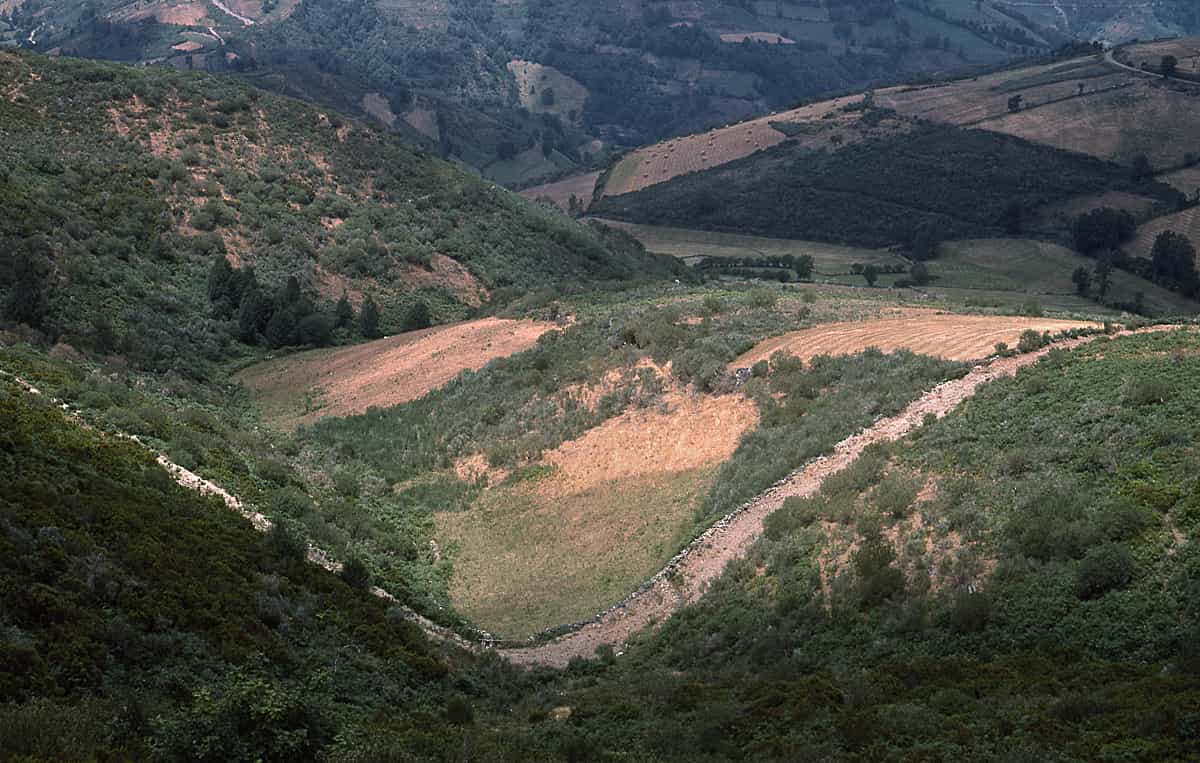
The Ancares Mountains, on the border between León and Lugo, offer sweeping views of peaks and forests, representing one of the greatest natural challenges of this route. At the summit of O Cebreiro (1,300 m above sea level), pilgrims can admire a landscape of towering mountains dotted with small stone villages and traditional Celtic pallozas.
This section, part of the Ancares Biosphere Reserve, marks the entrance to Galicia and rewards the effort with stunning views and pure mountain air. For its scenic beauty and cultural value, O Cebreiro is considered one of the must-see landscapes on the French Way.
Camino del Norte: the Cantabrian coast
The Camino del Norte skirts the Cantabrian coast from the Basque Country to Galicia, offering pilgrims a constant maritime spectacle.
In particular, the section of the Camino de Santiago from Santander to Gijón crosses some of the most beautiful coastal landscapes of Cantabria and Asturias. This stretch alternates between almost untouched sandy beaches, coastal dunes, and steep cliffs dropping into the Cantabrian Sea, always with green meadows and forests on one side and the deep blue sea on the other.
Oyambre Natural Park and the Sella River
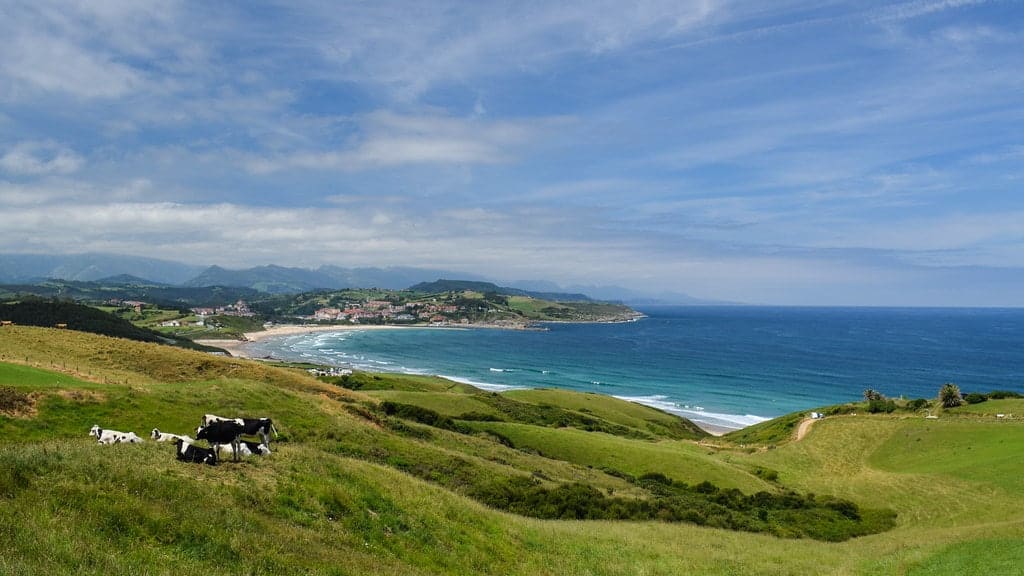
Among the outstanding natural settings are Oyambre Natural Park in Cantabria, a protected coastal strip with mobile dunes, marshes, and long beaches.
The estuary of the Sella River in Asturias, near Ribadesella, where the river meets the sea, forming marshes rich in wildlife.
The route also passes through charming fishing villages, such as San Vicente de la Barquera (surrounded by beaches and with the Picos de Europa outlining the inland horizon) and Llanes, whose surroundings feature numerous bufones (marine geysers) and hidden beaches tucked between cliffs.
Beach of the Cathedrals
Upon entering Galicia, many pilgrims make a slight detour to visit the famous Beach of the Cathedrals in Ribadeo, considered one of the most spectacular spots on the Spanish coastline. This natural monument owes its name to the enormous stone arches sculpted by the sea, some over 30 metres high, reminiscent of the flying buttresses of a Gothic cathedral.
Seeing these rock formations on the sand, accessible only at low tide, leaves a lasting impression on anyone who loves nature.
Camino Primitivo: mountain trails in Asturias
The Camino Primitivo is considered by many the route with the closest contact with nature. In fact, it is often seen as the “wildest” Camino due to its isolated, high-mountain stretches.
The first half of the route through Asturias is simply spectacular, crossing the Oviedo basin and venturing into the Tineo, Palo, and Rañadoiro mountain ranges, often above 1,000 metres. For entire days, pilgrims follow ancient mountain paths through brañas, beech and pine forests, and remote valleys dotted with small livestock villages.
One iconic section is the Route of the Hospitals, which follows the Asturian mountain ridge past the ruins of old medieval shelters; on clear days, the views extend for kilometres without a trace of civilisation.
Portuguese Coastal Way
In recent years, the Portuguese Coastal Way, a variant of the traditional Portuguese Way that runs along the Atlantic Ocean, has grown in popularity.
On the Portuguese Way from Porto to A Guarda, pilgrims enjoy kilometres of pristine Atlantic coastline, passing endless golden beaches, dune systems, and estuaries teeming with seabirds.
Our Portuguese neighbours have created coastal paths and wooden walkways, allowing walkers to follow the sea almost continuously from the Douro River mouth to the Minho River mouth.
Along the way, pilgrims pass charming coastal towns and fishing ports, such as Póvoa de Varzim, Esposende, and Viana do Castelo, always accompanied by the sea breeze.
One of the most emblematic natural areas on this stretch is the Litoral Norte Natural Park in Portugal, a protected strip of wetlands, pine forests, and pristine beaches between Esposende and Viana, where herons and other birds are commonly seen in the coastal marshes.
After walking alongside waves and dunes, the coastal Portuguese Way reaches the picturesque village of Caminha, from where a traditional ferry crosses the Minho River. This magical river crossing marks the entrance to Galicia: on the other side lies A Guarda, dominated by Monte Santa Trega (famous natural viewpoint and Celtic archaeological site) and the open ocean at its feet.
In Galicia, the Way from A Guarda to Santiago continues to offer stunning coastal scenery before joining the inland route.
From A Guarda, the route runs parallel to the Atlantic: the trail climbs the granite cliffs that protect the coast, accompanied by the sound of the waves at every step, until reaching the isolated Monastery of Santa María de Oia (12th century), built in a breathtaking seafront setting. Few places convey the sense of walking on the boundary between land and ocean as strongly as this stretch along the Oia cliffs.
Further on, the Camino leaves the cliffs behind to embrace the Ría de Vigo, a sea inlet with the character of an Atlantic fjord. As it approaches Baiona, the landscape softens: golden beaches appear sheltered in the bay, along with lively promenades and marinas.
Off the coast, the silhouettes of the Cíes Islands emerge on the horizon, protected as a national park and home to some of Galicia’s most beautiful beaches. Dolphins are often seen playing in the waters of the ria, especially on calm days.
English Way: Galicia’s estuaries and forests
The English Way starts from the Galician Atlantic coast and reaches Santiago in just a few days, passing through picturesque green and maritime landscapes.
Starting in Ferrol, the route follows the inner coastline of the Rías of Ferrol and Betanzos, with tides that reveal marshes and sandy areas, gradually moving inland.
Fragas do Eume Natural Park
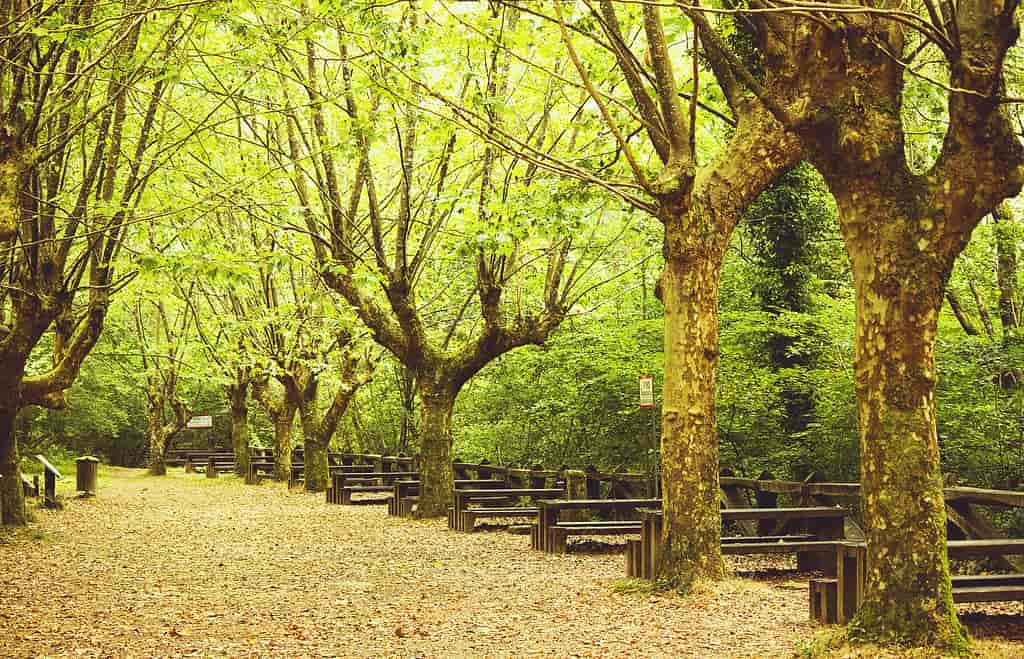
In the crown jewel of natural scenery, the route passes through Fragas do Eume Natural Park, one of Europe’s best-preserved Atlantic forests. This dense riverside forest, with centuries-old moss-covered trees, hidden waterfalls (like Caaveiro), and medieval bridges, immerses pilgrims in an almost magical atmosphere.
Walking along its shady paths, listening to the river murmuring among the lush vegetation, is like stepping back in time and experiencing Galicia’s most mysterious and profound side.
Vía de la Plata: southern dehesas and natural parks
The Vía de la Plata is the Camino route that comes from the south (Seville), crossing all of Extremadura and Castilla to Galicia, offering a remarkable variety of ecosystems along the way. In the Andalusian and Extremaduran stages, pilgrims traverse endless Mediterranean dehesas dotted with holm and cork oaks, where Iberian livestock graze beneath open skies.
Cornalvo Natural Park
Near Mérida, the route passes through Cornalvo Natural Park. This protected area houses a historic Roman horn-shaped dam (which supplied Emérita Augusta) and wetlands rich in waterfowl.
It is a striking landscape for its combination of heritage and nature: among its oak forests still live elusive species such as the wildcat, symbolising the area’s ecological health.
Sanabria Lake Natural Park
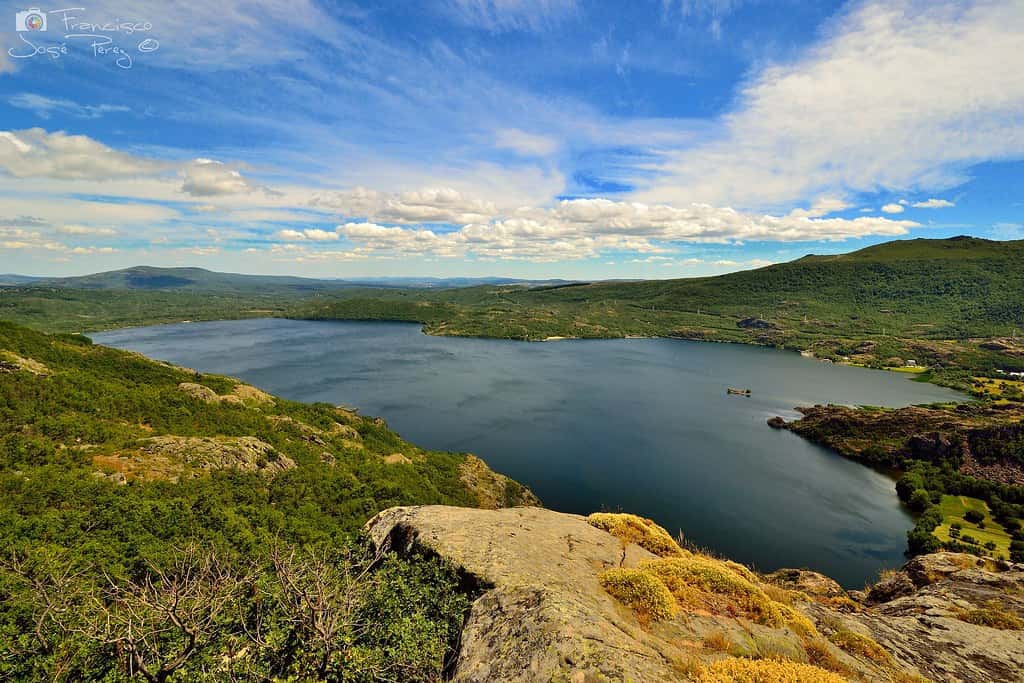
Further north, the route continues across the cereal plains of Castilla y León and then enters the mountains of Zamora and Ourense via the so-called Camino Sanabrés. In this final stretch, the landscape turns green and mountainous again, with rivers and reservoirs nestled in deep valleys.
Of particular note is Sanabria Lake Natural Park, home to the largest glacial lake in the Iberian Peninsula. If time allows, pilgrims should visit its high-mountain shores, surrounded by oak forests and legends (it is said the waters cover a sunken ancient village), for an unforgettable natural experience.
A natural epilogue: Finisterre and the Costa da Morte
The final kilometres lead to the legendary Cabo Finisterre, a windswept rocky promontory where the continent abruptly ends in cliffs over the open sea. Historically considered the “end of the known world,” it offers breathtaking sunsets and panoramic views over the vast Atlantic.
Together with the nearby Ría de Corcubión, this coastal area forms a unique natural landscape, full of symbolism for the pilgrim who reaches the edge of the land. It is the perfect finale for those seeking a final communion with nature after arriving in Compostela.
The Camino de Santiago is not just a journey to a cathedral, but a voyage through a remarkable variety of landscapes: from snow-capped Pyrenean peaks to Atlantic beaches, through ancient forests, rushing rivers, and silent plains. Each Camino route gives pilgrims the chance to marvel at the natural beauty of the Iberian Peninsula in all its diversity.
Walking through these landscapes on foot allows pilgrims to form a special connection with the surroundings, appreciating the simplicity of a countryside sunrise or the majesty of a mountain storm. For this reason, it is everyone’s responsibility to care for and respect these environments so they remain the treasures they are: preserving the natural wealth of the Caminos is every pilgrim’s duty.