Doing the Camino after 60 isn’t about “toughing it out”; it’s about walking wisely: choosing the right route, adjusting stages, taking care of your feet and joints, and managing breaks to arrive in Santiago with energy (and a desire to do it all over again).
Índice de contenidos
- 1 Pre-trip preparation: health, training, and realistic expectations
- 2 Daily planning for senior pilgrims: schedule, breaks, and recovery to finish with a positive feeling
- 3 Camino routes: which ones suit those over 60 (and how to choose without making mistakes)
- 3.1 Camino Francés: the most “user-friendly” due to infrastructure (but watch out for crowds)
- 3.2 Camino Portugués (Central): balance between comfort and tranquility
- 3.3 Camino Portugués de la Costa: more landscape, slightly more exposed
- 3.4 Camino Inglés: ideal if you want “a few days” and simple organisation
- 3.5 Camino del Norte: spectacular, but more demanding on the joints
- 3.6 Camino Primitivo: very authentic, usually the least “friendly” if you’re looking for smoothness
- 3.7 Vía de la Plata and Sanabrés: heat, distance, and long stages (not for those in a hurry)
- 3.8 Camino de Invierno: beautiful, but more physical
- 3.9 Fisterra and Muxía: the perfect “bonus” if you’re still eager (and can adapt it)
- 4 How to adapt the stages: pace, kilometres, and rest days
- 5 Smart packing and footwear: less weight, fewer injuries
- 6 Foot care and blister prevention
- 7 Nutrition, hydration, and medication on the route
- 8 Safety, weather, and small unexpected situations
- 9 How to enjoy more: mental strategy and social life on the Camino
Pre-trip preparation: health, training, and realistic expectations
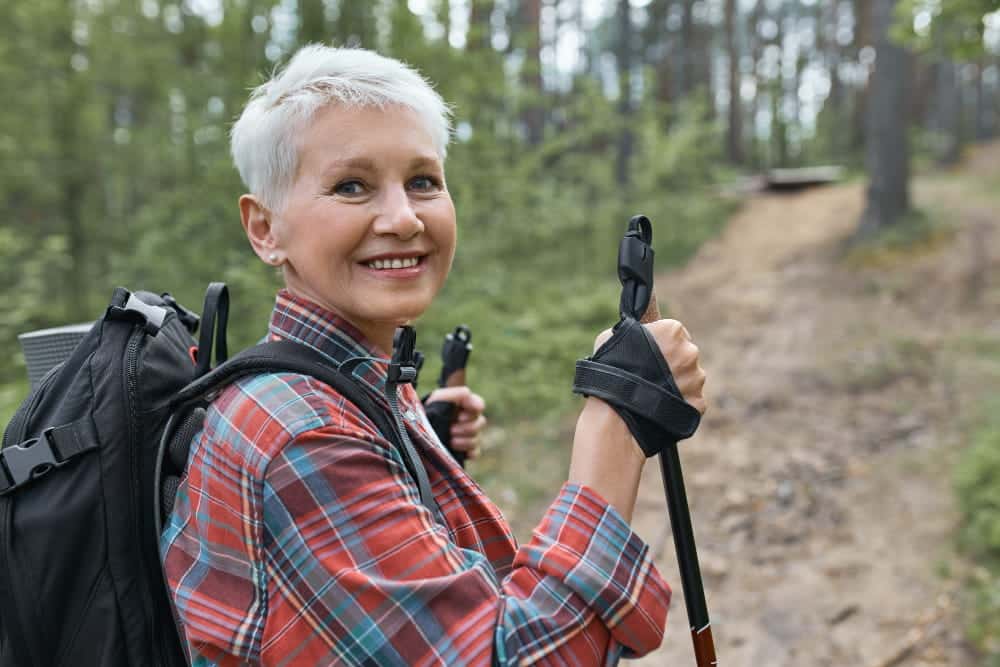
If you’ve been walking for years, you have a huge advantage. If not, don’t worry: your body adapts surprisingly well when given time. For senior pilgrims, the key isn’t “getting fit,” but getting your joints and feet ready.
Useful check-up (without dramatics)
- Check your medication: schedules, potential dizziness, photosensitivity, need for gastric protection, etc.
- If you have a history (cardiovascular, respiratory, diabetes, prosthetics, osteoarthritis), ask for specific guidelines: recommended pace, limits, warning signs.
- Insoles / footwear: if you already use them, don’t try anything new on this trip.
“Realistic” training in 4–6 weeks
What works best is usually simple:
- 3–4 walks a week (start with 40–60 minutes and gradually increase).
- 1 long walk per week (increase to 2–3 hours at a steady pace).
- Gentle strength training 2 days a week: chair squats, calves, glutes, core, balance.
- If possible, try walking on small hills with poles.
Senior rule to avoid quitting: the first day on the trail should feel “easy.” If you start at your limit, it’s likely that the second or third day will take its toll.
Daily planning for senior pilgrims: schedule, breaks, and recovery to finish with a positive feeling
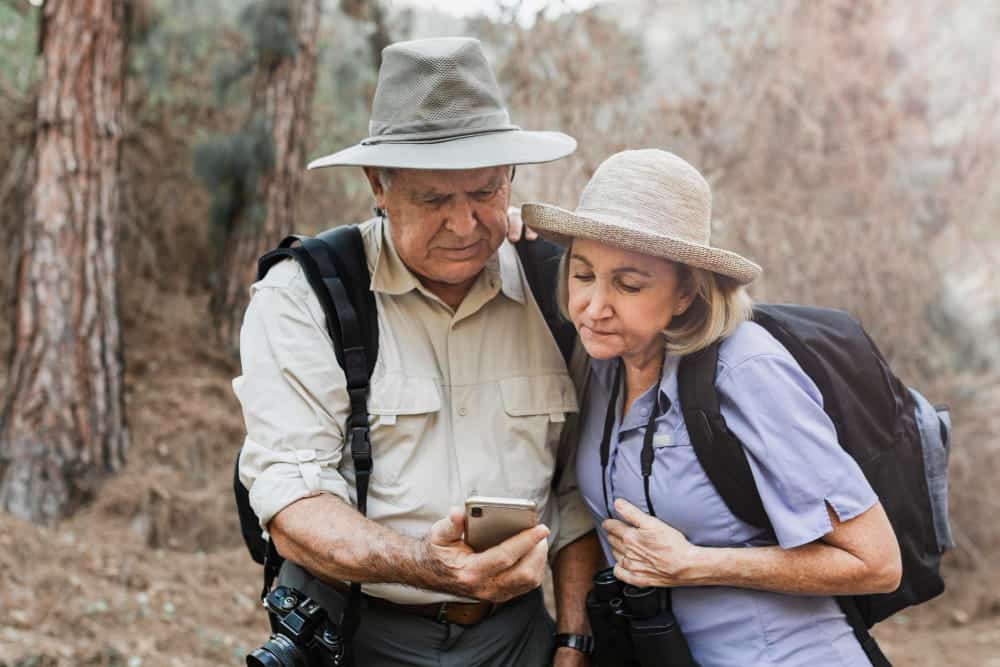
If there’s a “secret” to making the Camino enjoyable after 60, it’s not about doing more kilometres, but about organising your day well. A simple (but consistent) plan reduces accumulated fatigue, takes care of knees and feet, and gives you room for the unexpected without turning them into a crisis.
The perfect start: begin gently and build momentum
The first 20 minutes are crucial. Your body needs to “warm up,” especially if you feel stiff when getting up.
- Start slowly, with a short stride and comfortable breathing. If you go all out from the beginning, it’s easy to experience premature fatigue.
- Warm up by walking: no need for an elaborate ritual, but do move your ankles, knees, and hips as you walk.
- Control your pace with a sentence: you should be able to speak without getting out of breath. If it’s difficult, slow down a notch.
The “45/10” strategy: breaks that really help
Many pilgrims take breaks too late, when the pain sets in. For seniors, it works better to prevent: take a break before your body protests.
- Every 45–60 minutes, stop for 3–5 minutes: drink, have a bite to eat, and check in with how you’re feeling.
- A longer break (10–20 minutes) halfway through the stage can make all the difference: it lowers your heart rate and prevents you from arriving “empty.”
- On descents, rest more frequently: they are the most punishing terrain for joints if done continuously.
How to decide whether to maintain or shorten your stage (without guilt)
Cutting back isn’t failure: it’s about managing the Camino intelligently. These criteria can help you decide quickly:
- “New” mechanical pain (knee, hip, ankle) that worsens with walking: reduce your pace and distance that same day.
- Foot discomfort like a “hot spot”: stop, protect it, and consider finishing early if it reappears after 15–20 minutes.
- General fatigue + poor sleep for two consecutive nights: plan a short stage or take a rest day. Your body will thank you more than any act of heroism.
The end of the stage: a short routine to recover faster
What you do when you arrive affects how you’ll feel when you get up tomorrow. A simple routine can greatly improve your recovery:
- Shower and change immediately: remove moisture and avoid chilling if it’s windy or rainy.
- Elevate your legs for 10 minutes (on a backpack or cushion): helps to unload and reduces the feeling of heaviness.
- Gentle stretches (no bouncing): calves, quadriceps, glutes, and back. If there’s pain, less is more.
- Hydration and a “recovery” dinner: something with protein and carbohydrates helps repair and sleep better.
Practical tips for difficult days (heat, rain, or wind)
- In heat: leave early, protect your head, drink in small sips, and seek shade during breaks.
- In rain: prioritise keeping your feet dry (use gaiters or footwear that drains well) and avoid rushing due to discomfort: that’s when slips happen.
- In wind: dress in layers and adjust your pace; wind “drains” more energy than it seems.
Camino routes: which ones suit those over 60 (and how to choose without making mistakes)
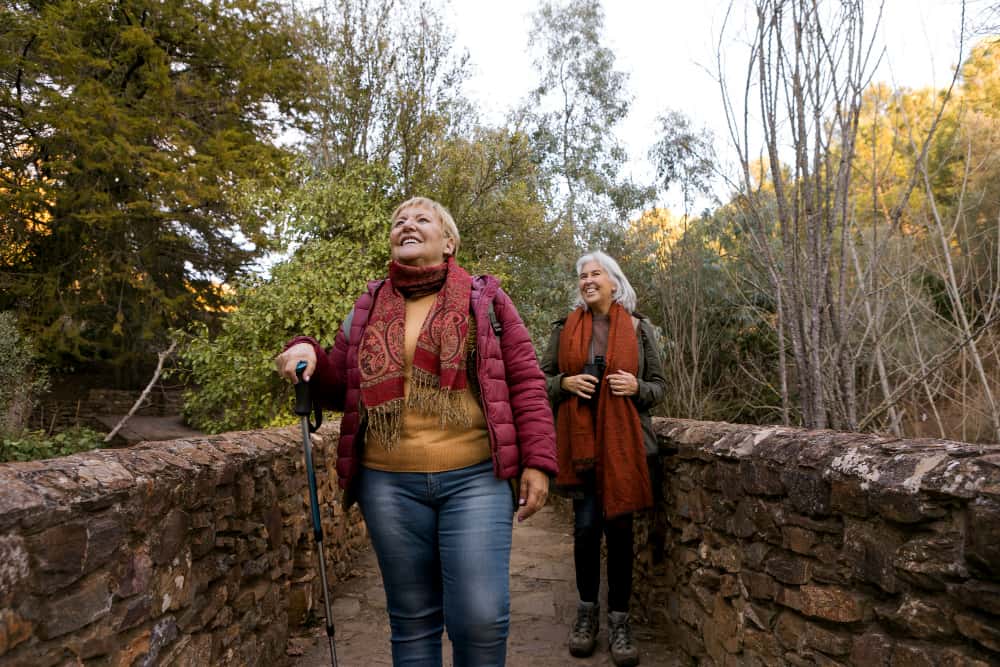
Before getting into routes, one key idea: there is no “best Camino,” there is the best Camino for your moment (knees, back, experience, tolerance to heat/rain, preference for solitude or social life).
If your goal is to obtain the Compostela, it’s worth reviewing the current requirements (minimum distance and credential). Currently, the reference is at least 100 km on foot, or 200 km by bike, with the credential stamped. If you want to expand on planning ideas, here’s a general guide of Camino de Santiago tips.
Camino Francés: the most “user-friendly” due to infrastructure (but watch out for crowds)
For many people over 60, the Francés is the easiest to adapt for one practical reason: there are plenty of services and accommodations, and logistics are usually simple. It can be considered an affordable option, especially if you start from Sarria, the minimum distance required to receive the Compostela.
- Solution to make it more manageable: split stages, avoid long days, and book in advance during peak seasons. If it’s your first time, prioritise sections with frequent towns and avoid “pushing” yourself on the first two days.
Camino Portugués (Central): balance between comfort and tranquility
This is a very popular option among senior pilgrims because it typically combines reasonable stages, good terrain on many sections, and towns with services. The Galician section from Tui is about 118.8 km, with a “medium-low” difficulty level.
If you’re drawn to the full experience from Portugal, the Camino from Porto is usually considered a multi-day experience (around 240 km).
- Senior tip: if you notice strain on your knees or plantar fascia, the Portuguese route usually allows you to adjust stages without “breaking” the experience, as there are frequent stopping points.
Spiritual Variant: a cultural “extra” that may suit seniors very well
The spiritual variant for pilgrims is an alternative within the Portuguese route that adds something different (monasteries, estuary landscapes, and the tradition tied to transport by sea and river). In Galicia, there’s an official route linked to this story: the Route of the Sea of Arousa and River Ulla.
- When it’s suitable for those over 60: when you’re looking for stages that can be “split” and an experience with strong cultural motivation. When to avoid it: if you feel insecure about logistical changes (for example, combining walking with maritime-river sections) or if you prefer the most linear route possible.
Camino Portugués de la Costa: more landscape, slightly more exposed
It’s beautiful and often a “rewarding” route if you enjoy the sea. However, for seniors, it can have a catch: more exposure to wind/rain and, depending on the section, less shade. In Galicia, the route from A Guarda is rated with a “medium-low” difficulty level and is about 163.1 km.
- Practical solution: choose the time of year wisely (spring and early autumn tend to be more comfortable) and prioritise really effective rain gear.
Camino Inglés: ideal if you want “a few days” and simple organisation
For those over 60 who want a short experience, the Inglés route can work very well as it has a “medium-low” difficulty and is only 112.4 km (from A Coruña, it’s 72.8 km).
- Senior tip: if your goal is the Compostela and you’re counting kilometres, double-check your starting point (Ferrol usually aligns better with the minimum distance).
Camino del Norte: spectacular, but more demanding on the joints
The Norte is a marvel, but it usually involves more elevation and “up-and-down” (which can strain the knees). If you opt for a lighter experience, already in its Galician section (from Ribadeo), it’s rated with a “medium” difficulty level, with reference lengths depending on the entry variant.
- How to make it feasible for seniors: trekking poles are a must, shorter stages, and avoid chaining multiple long days. If you have meniscus problems or patellofemoral pain, consider other gentler routes.
Camino Primitivo: very authentic, usually the least “friendly” if you’re looking for smoothness
Without a doubt, one of the most beautiful and with a lot of character… and also one that deserves respect if you want to walk without overexertion. In Galicia, it appears with a reference section (up to Santiago) and a low difficulty on its profile, but overall, the complete route from Oviedo is described as long and with demanding stages in pilgrimage guides (around 313 km).
- Honest recommendation: if you have a good mountain base, go ahead. If you’re looking for an “easy” first experience, it’s better to start with the Francés/Portugués/Inglés and save the Primitivo for a second pilgrimage.
Vía de la Plata and Sanabrés: heat, distance, and long stages (not for those in a hurry)
The Vía de la Plata is an impressive experience, but for seniors, it requires planning due to long distances and, during many seasons, heat. As a reference, it’s described as around 963 km from Seville to Astorga.
If you’re looking for a more “manageable” version in a few days, some focus on the Galician section of the Sanabrés from Ourense. For orientation, this section is typically around ~110-115 km, depending on the itinerary and variants. Here’s more information about the Camino from Ourense.
- Senior solution: avoid summer if you don’t tolerate heat well, and plan for water, shade, and real breaks (not just “what’s on the map”).
Camino de Invierno: beautiful, but more physical
Less crowded and very attractive, but with “medium-high” difficulty and significant length.
- When it fits: if you’ve already done other routes, have experience with elevation stages, and want peace and quiet. When not to do it: if you’re returning to walking after an injury or looking for the easiest experience possible.
Fisterra and Muxía: the perfect “bonus” if you’re still eager (and can adapt it)
If you arrive in Santiago with good feelings, the extension to Fisterra/Muxía is very special. The routes are around 120 km depending on direction and variant.
- Senior key: do it as an epilogue, without pressure. If you feel accumulated fatigue, rest one or two days in Santiago and resume with shorter stages.
How to adapt the stages: pace, kilometres, and rest days
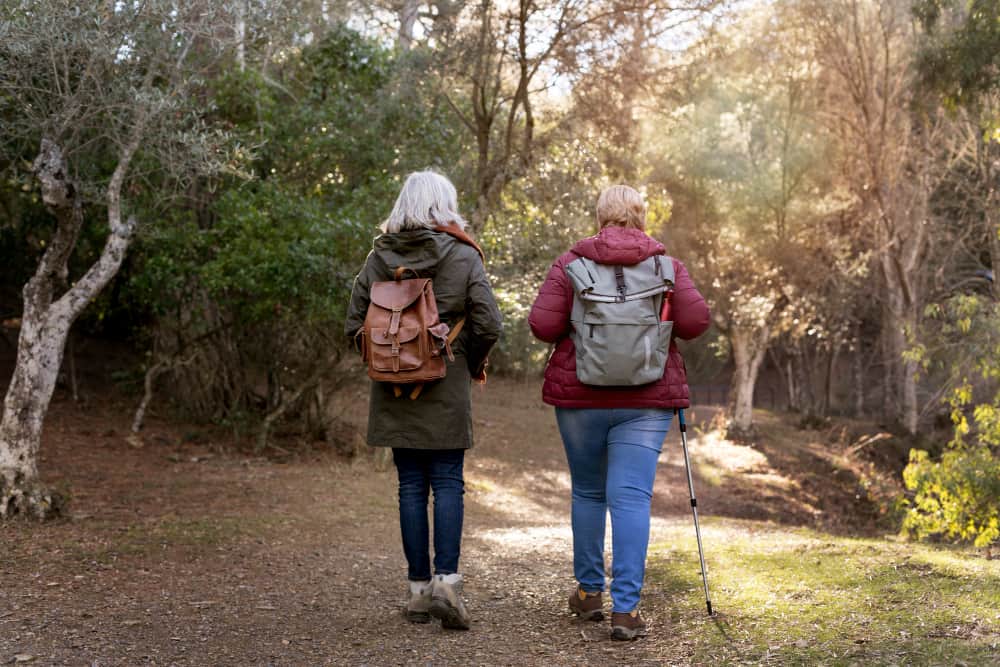
The most typical (and costly) mistake for those over 60 is trying to copy someone else’s plan, especially from someone who’s 35. Your Camino should be designed to arrive well and in 100% of your condition, not to “save days”.
Practical guide for pace:
- Days 1-2: start with comfortable stages (many seniors do better with 10-15 km if they haven’t trained).
- Days 3-4: increase slightly if you wake up without any “strange” pain (tendon, knee, fascia).
- Scheduled rest every 4-6 days if doing long routes (or mini-rest: very short stage).
- If it hurts “sharp” or your walking style changes, don’t push through: shorten the stage and recover.
- Trick that works: schedule your day as “leave early + two long breaks”. This allows you to arrive earlier, stretch, shower without rushing, and sleep better (which is when the body repairs itself).
Smart packing and footwear: less weight, fewer injuries
The difference between enjoying and suffering is often measured in kilos. From a certain age, every extra kilo takes a toll on your ankles, knees, and lower back.
Senior packing checklist (without “just in case”)
- 2 technical t-shirts + 1 light thermal layer.
- 1 proper raincoat (not a “emergency poncho”).
- 2 walking socks + 1 for resting.
- 1 comfortable pair of trousers + 1 pair of shorts/leggings if it’s hot.
- Minimal first aid kit (specific plasters/dressings, anti-chafing, elastic bandage).
- Medication + prescription copy + important phone numbers.
- Trekking poles (if there’s elevation: they’re an investment in your knees).
Footwear: what matters is the fit, not the brand
- It should be broken in.
- Room for your foot to “expand” (swelling) without your toes hitting.
- Stable sole: for seniors, stability is usually better than extreme lightness.
Foot care and blister prevention
On the Camino, your feet are “your engine.” And for those over 60, it’s especially important to pamper them because recovery can be slower if deep abrasions appear.
3-minute routine upon arrival
- Wash and dry thoroughly (especially between the toes).
- Check for hot spots (heel, bunions, toes).
- If you feel “heat” in any area: act before it becomes a blister (specific dressing + vaseline/anti-chafing depending on tolerance).
Warning signs not to ignore
- Pain that changes your gait.
- Persistent tingling or numbness.
- Swelling that increases day by day.
In these cases, the smartest move is to shorten the stage, apply cold if necessary, elevate your legs, and sleep. The Camino is not “won” by suffering: it’s completed by persistence.
Nutrition, hydration, and medication on the route
For senior pilgrims, the goal is not to eat “a lot,” but to eat at the right times and avoid energy dips (fatigue, cramps, dizziness).
- Proper breakfast: some protein + carbohydrates (and not just coffee).
- Pre-emptive hydration: don’t wait until you’re thirsty, especially in heat or wind.
- Simple snacks: fruit, nuts, yoghurt, small sandwich.
- If you take chronic medication: set an alarm on your phone and carry a “mini dose” as a backup.
Safety, weather, and small unexpected situations
Most scares come from small things: mismanaged rain, long descents without trekking poles, ignored blisters, or heat without water.
Practical tips
- Leave early: it saves you from heat, rush, and gives you time for breaks.
- Layers: three thin layers are better than one “thick” garment.
- On descents: short steps, poles, and don’t “let yourself fall”.
- Daily Plan B: know where you could end up if you need to shorten the day.
And remember: the Camino is alive. There may be sections with detours due to weather or incidents; that’s why it’s important to pay attention to local signage and route alerts.
Many older pilgrims discover something wonderful: walking at a calm pace allows you to see more and compare less. Hurrying spoils conversations, landscapes… and knees.
3 ideas that often change the experience
- Walk always at your own pace from minute one, even if others pass you.
- Set “micro-goals”: the next village, the coffee, the shade… and that’s it.
- Connect: talking to other pilgrims (even for just 10 minutes) improves your mood and reduces the feeling of effort.
Adapting the Camino for those over 60 doesn’t mean giving up: it means choosing wisely. The right route, sensible stages, well-cared-for feet, and well-managed rest usually make the difference between “I arrived somehow” and “I arrived enjoying.” And if you finish thinking “I’d come back tomorrow”… then you’ve done it perfectly