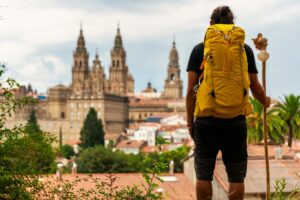
The Camino de Santiago is much more than a pilgrimage route: it’s a transformative journey that connects people, cultures and landscapes. Every year, thousands of pilgrims with different abilities embark on this adventure, proving that above all, the experience is inclusive.
People with visual impairments also find in this journey an opportunity to overcome challenges, reconnect with their senses and discover a unique environment step by step.
Thanks to improved infrastructure, the development of assistive technologies and growing social awareness, it’s now possible to enjoy the Camino safely and fully – even when sight isn’t the primary sense. If you’re considering taking this step, here’s everything you need to know to walk the Camino with confidence.
And if you need support with planning, you can check out some Camino de Santiago companies that specialise in logistical organisation for pilgrims.
Índice de contenidos
- 1 Accessibility and visual impairment: an increasingly present reality on the Camino
- 2 Preparation: essential tips for walking the Camino with low vision
- 3 Stages, pace and adapted sensory experiences
- 4 Camino de Santiago routes and their suitability for people with visual impairment
- 5 Technology and support on the Camino for people with visual impairments
- 6 Real-life stories from pilgrims with low vision
Accessibility and visual impairment: an increasingly present reality on the Camino
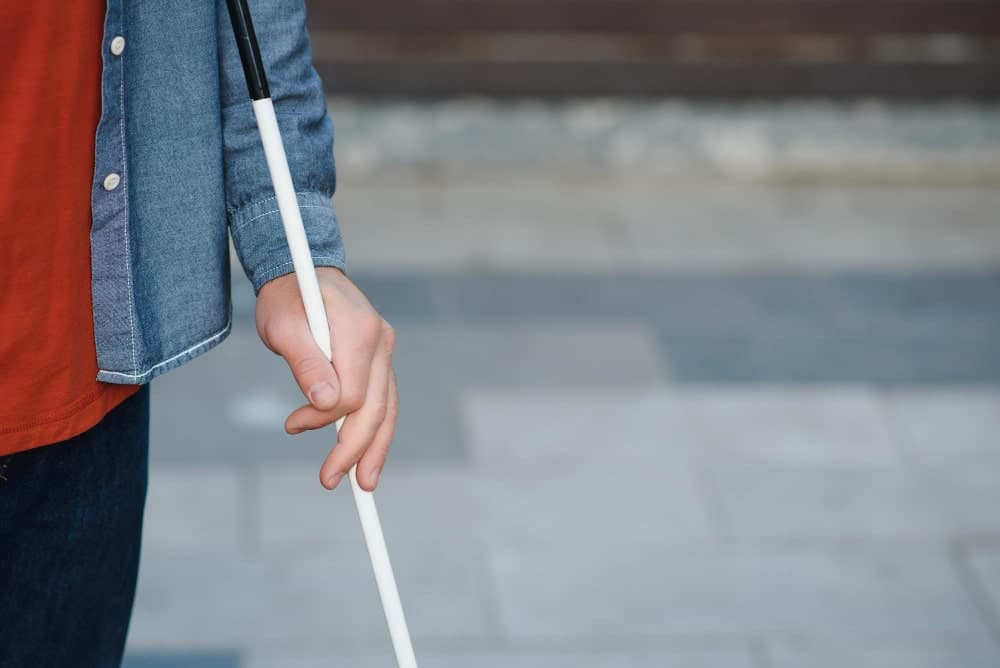
Visual impairment, which includes total blindness as well as reduced or low vision, affects millions of people worldwide. In Spain, it’s estimated that over one million people have some degree of visual impairment, and more and more of them are choosing to take on routes like the Camino de Santiago.
Fortunately, the Camino has come a long way in terms of accessibility. Pilgrim associations, public entities and tourism platforms are introducing specific measures: from better-marked trails to adapted accommodation and specialised guides.
In addition, accessible tourism enjoys institutional support across the European Union. Regulations such as the Web Accessibility Directive (2016/2102) and universal design guidelines promote more inclusive environments. This translates into safer and more enjoyable experiences for all walkers, regardless of their visual ability.
Preparation: essential tips for walking the Camino with low vision
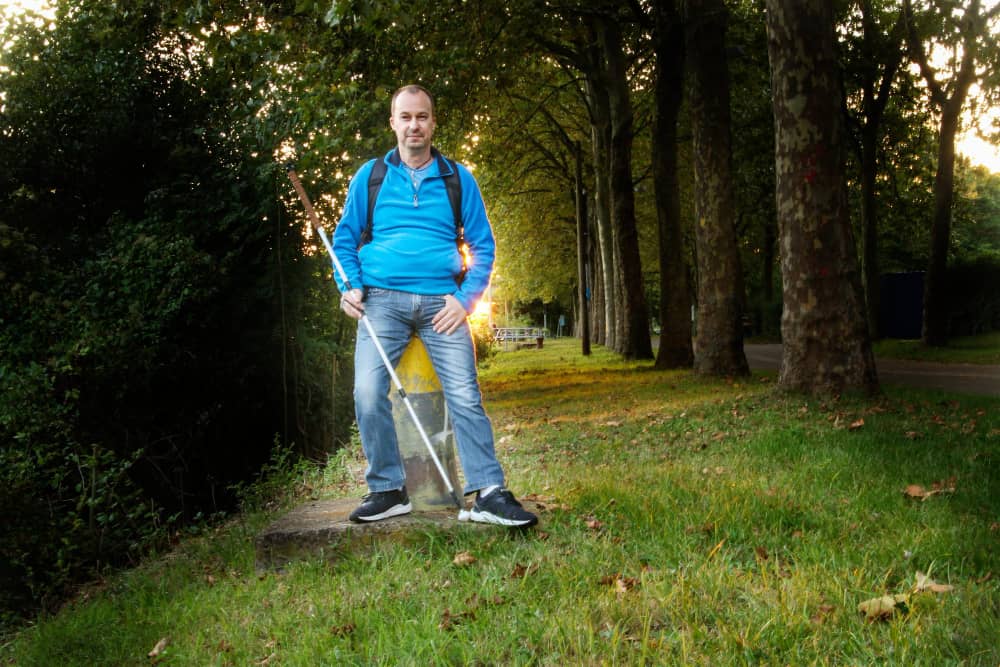
Before setting off on your journey, good preparation makes all the difference. Here are some key steps we recommend you follow:
- Specialist medical consultation. While not mandatory, a visit to your ophthalmologist and GP can help ensure you’re fit to take on the challenge. Discuss your plans to receive personalised guidance.
- Stage and route planning. Knowing in advance about the terrain, elevation, accessibility of hostels and weather conditions will help you make safer decisions. Avoid improvising, especially if you’re travelling alone or have severe visual impairment.
- Technological support. There are apps tailored for people with visual impairments, such as Lazarillo App, BlindSquare or VoiceVista, which provide voice guidance and key point recognition. You can also use braille or raised maps if you’re familiar with the system.
- Adapted equipment.
-
-
- White cane or guide if you’re used to using one.
-
-
-
- Comfortable technical footwear with good grip.
-
-
-
- Backpacks with easy access to essential items.
-
-
-
- Special hats or sunglasses for those with photosensitivity.
-
- Walk with a companion. Travelling with a friend, family member or experienced guide is one of the safest options. Plus, sharing the Camino with others enriches the emotional experience and makes navigating poorly marked areas easier.
Stages, pace and adapted sensory experiences
One of the Camino’s most meaningful aspects is how it encourages you to reconnect with your senses. For someone with a visual impairment, hearing, smell, touch and intuition become key allies along the way.
- Listening to the Camino. The murmur of rivers, birdsong or the wind rustling through trees creates a unique soundscape. People with low vision often develop heightened auditory sensitivity, allowing them to fully enjoy their surroundings in a different way.
- Personalised rhythm. The key is to listen to your body and walk at your own pace. Adjusting each stage to your energy and visual needs is essential. There’s no rush: every day is an achievement.
- Tactile and olfactory surroundings. Touching the bark of an ancient tree, feeling the damp moss or smelling the earth after rain adds a rich sensory dimension to the experience.
- Mindful pauses. Taking time to enjoy the silence or a chat with fellow pilgrims can lead to unique moments. The Camino isn’t just physical – it’s also emotional and spiritual.
Camino de Santiago routes and their suitability for people with visual impairment
Choosing the right route is essential if you have a visual impairment. Below, we explore the main walking routes in terms of accessibility, terrain and sensory richness. We’ve also included links to specific options to help with your research:
French Way
This is the busiest and best-marked route. It features an extensive network of accommodation, well-maintained paths and villages with available services. The large number of fellow pilgrims can be helpful for those who may need spontaneous support. Ideal for beginners.
Portuguese Coastal Way
This variant blends sea and countryside, with peaceful paths and accessible natural settings. Starting in Portugal, consider the Portuguese Way from Porto to A Guarda, with stages along the Atlantic offering sea breeze, ocean scents and flat terrain.
There are also intermediate options within Galicia that maintain a stimulating natural and cultural setting. The Route from A Guarda to Santiago offers a balance between rural stretches and urban areas, with decent signposting and fewer crowds.
Northern Way
This is one of the most beautiful and challenging routes. From Cantabria, the Camino de Santiago from Santander to Gijón offers sea, mountains and charming villages. It’s less crowded, but also more uneven, so it’s advisable to do it with a companion if you have low vision.
English Way
A short route, ideal as a first introduction. Although it includes some demanding stages, its short length (starting from Ferrol or A Coruña) allows for a complete experience in just a few days.
Primitive Way
Known for being the oldest and most demanding route, it passes through mountainous areas and rural trails. It is not the most recommended option if accessibility is a priority, although its natural and spiritual richness is undeniable.
Route to Finisterre and Muxía
A mythical extension for those who wish to continue after reaching Santiago. Ideal for those seeking introspection. Some stretches lack tactile or audio signage, so good planning is essential.
Technology and support on the Camino for people with visual impairments
Technological innovation is a key ally in making natural environments like the Camino more inclusive for people with visual impairments. These tools can make a significant difference in safety and independence:
- Accessible mobile apps
-
- Lazarillo App: voice guidance with real-time information.
-
- BlindSquare: integrates Foursquare and GPS data to identify points of interest.
-
- VoiceVista: ideal for route planning and receiving voice directions.
- Tactile and vibrating devices. These include:
- Wristbands that vibrate to indicate direction of travel.
- Headphones that leave the ear canal open to hear surrounding sounds.
- Even smart glasses that transmit information via audio.
- Supportive networks. Organisations such as ONCE or local volunteer groups sometimes organise assisted Caminos. There are also platforms to connect with other pilgrims willing to accompany someone with a disability.
- European projects. Initiatives such as “Accessible Camino de Santiago” and plans from the Jacobean Council, in collaboration with foundations and regional governments, are underway to improve infrastructure and information for all.
Real-life stories from pilgrims with low vision

Each year, people with varying degrees of visual impairment successfully complete the Camino. Their stories are powerful testaments to effort, resilience and the beauty experienced from a different perspective.
“Even though I couldn’t see the sunrise, I could feel the change in temperature, hear the birdsong, sense the shared silence. It was an incredible experience.” shared Alberto, a pilgrim with retinitis pigmentosa, in an interview with accessibility-focused media outlets.
There are also organised group experiences led by associations, where groups of blind people have been able to complete the Camino in tandem, accompanied by volunteer guides.
These accounts all agree on one thing: you don’t need to see the Camino to live it. The hospitality, sense of community and spiritual essence can be felt through all the senses.
Walking the Camino de Santiago with a visual impairment is not only possible – it can become one of the most rewarding experiences of your life. With the right preparation, assistive tools, adapted routes and a pilgrim spirit, every step becomes a personal and collective triumph.
Inclusion, now more than ever, is part of the Camino’s DNA. Because it’s not about how much you can see, but how much you’re willing to feel, share and keep moving forward. The Camino is there, waiting – for everyone.