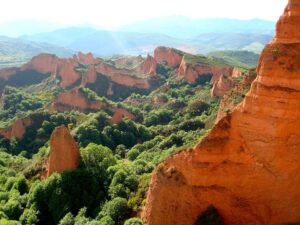
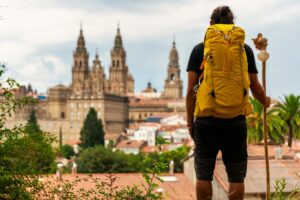
The Camino Primitivo is the original route of the Camino de Santiago – a path of high physical demand that connects Oviedo with Santiago de Compostela through the mountains of Asturias and Lugo.
Over approximately 310–320 km divided into around 13 to 15 stages, pilgrims face continuous ascents and descents, remote trails, and ever-changing weather. Its toughness is well-known, even among the different Jacobean routes: crossing high and isolated areas, this trail has earned its reputation as one of the most challenging.
As a result, relatively few pilgrims (barely 5% of the annual total) choose it, despite its spectacular scenery and unique historical character. In this article, we’ll explore what makes the Camino Primitivo so demanding, compare its difficulty with other routes, and detail the hardest (and also the easiest) stages of this legendary itinerary.
Índice de contenidos
How difficult is the Camino Primitivo compared to other Camino de Santiago routes?
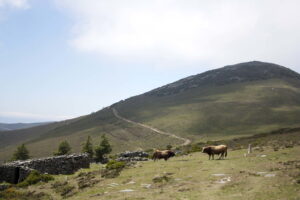
As mentioned, it’s considered one of the toughest routes in the Jacobean network—if not the toughest. Its mountainous terrain and steep gradients make it more challenging than flatter or more developed routes.
- For example, compared to the popular French Way (Camino Francés), the Primitivo is shorter (around 313 km versus ~800 km) but concentrates greater physical effort into fewer days. The French Way includes some tough sections (the Pyrenees climb to Roncesvalles, O Cebreiro in Galicia) but generally runs along easier paths.
- In contrast, it shares a “leg-breaking” profile with the Northern Way (Camino del Norte): constant climbs and descents. Both are physically demanding; however, the Primitivo reaches higher altitudes (up to ~1,150 m at Puerto del Palo) concentrated in certain key stages.
- The Portuguese Way, on the other hand, is noticeably gentler. The Portuguese Way from Porto to Tui is mostly flat terrain. Once in Galicia, you’ll find gentle hills. Moreover, the climate is milder and the altitude modest (highest point ~400 m at Serra da Labruja), making this route more manageable for most pilgrims.
-
- A popular variant, the Spiritual Variant Route, adds a touch of adventure (including a steep climb to the Monastery of Armenteira), yet it still doesn’t reach the physical demands of the Primitivo.
- The English Way (from Ferrol or A Coruña) is short and moderately difficult, with some hills but no major mountains.+
- The Sanabrés Way Ourense–Santiago crosses mid-mountain terrain, with notable climbs (for instance, Alto do Poio, 1,335 m) but relatively short stages and good infrastructure, making it overall more accessible.
- Finally, the extension to Finisterre and Muxía (around 90 km from Santiago) features gentle gradients and is typically completed in 3–4 stages, so it’s not as hard as the Primitivo, aside from accumulated fatigue.
In short, this route stands out for its physical demands and mountainous landscapes. Only the Northern Way comes close in terms of sustained effort, and even longer routes such as the Vía de la Plata don’t involve so many steep climbs. It’s no surprise that many pilgrims believe the Primitivo is the hardest of all – a true challenge for those seeking a more demanding pilgrimage.
That said, its difficulty comes with rewards: stunning mountain scenery, solitude and authenticity. Facing this Camino with proper preparation (and with the logistical support of Mundiplus, the best Camino de Santiago agency for booking accommodation and luggage transport) can help overcome the challenges and enhance the experience.
Main challenges of the Camino Primitivo
Although every pilgrim experiences the effort differently, there are several objective factors that make this route demanding. Below is a summary of the main challenges of this trail:
- Elevation and altitude: this is the defining feature. The route crosses the Cantabrian Mountains, entering high areas between Asturias and Galicia. Twice it rises above 1,000 metres altitude: at the Puerto del Palo (1,146 m, the route’s highest point) and the Alto del Acebo (around 1,030–1,050 m on the Asturias–Galicia border). These climbs are long and steep, representing some of the toughest stretches of any Camino route.
-
- Throughout the itinerary, steep climbs and sharp descents are frequent, punishing the legs. The total elevation gain is considerable compared to flatter routes.
- Physical effort and fitness: the combination of relatively long stages and mountain terrain demands good fitness or at least stamina. Several days on the Primitivo exceed 25 km through mountains, equivalent to 7–8 hours of walking.
-
- Training beforehand, especially uphill with a backpack, is highly recommended to tackle these stages comfortably. Less prepared pilgrims may find it very demanding from the first days, quickly accumulating fatigue.
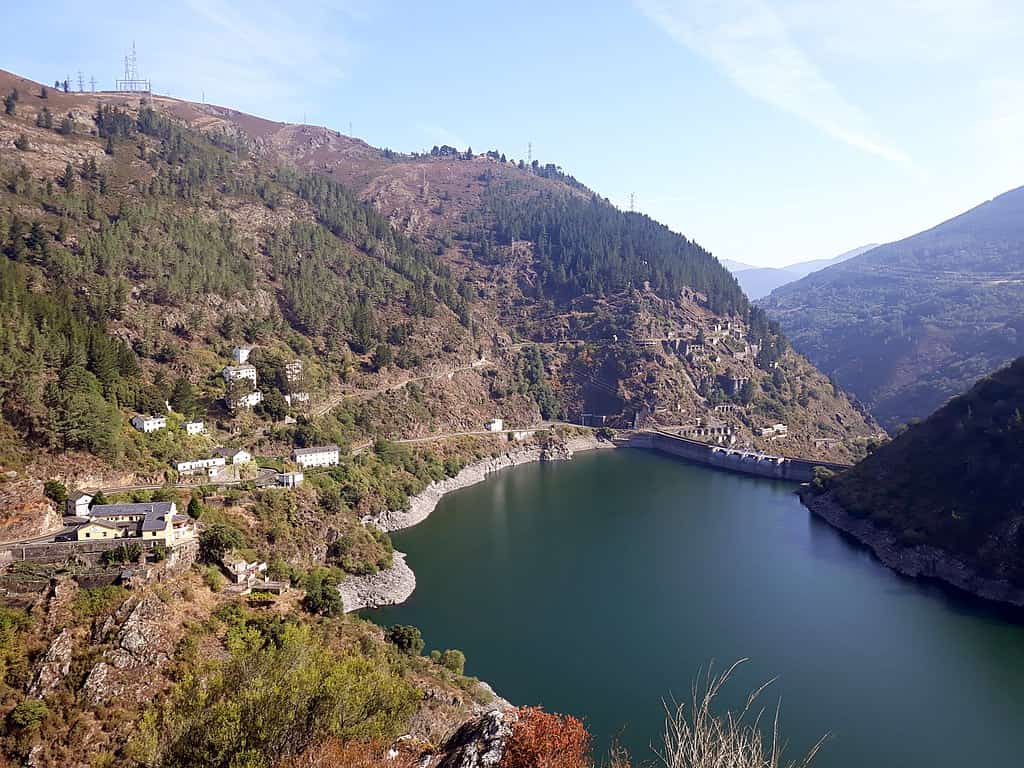
- Weather and terrain conditions: another challenge is the northern Spanish climate. In Asturias and Galicia, rain is common even in summer, and at high altitudes there may be thick fog, strong winds or even snow in early spring or late autumn. Such conditions can make the route tougher: muddy paths, slippery descents (for example, the downhill section to the Grandas de Salime reservoir becomes tricky when wet), and reduced visibility in areas like Hospitales.
-
- There are exposed stretches where bad weather can pose a risk, so checking the forecast and taking extra caution in the mountains is vital. On clear days, however, the views are breathtaking and well worth the effort.
- Signposting and navigation: fortunately, the Camino Primitivo is well-marked today. Stone waymarkers with the yellow scallop shell indicate the direction in Asturias and Galicia, complemented by the classic painted yellow arrows. Only occasionally (perhaps leaving cities or at a confusing junction) might you hesitate about which way to go. Still, given the solitude of many sections, it’s important to stay alert so as not to miss the signs.
-
- A particularly remote variant, the Route of the Hospitals, is perfectly signposted despite its isolation, but has no intermediate villages or immediate assistance available, so orientation and prudence are crucial.
- Services and accommodation: the network of facilities here is sparser. The Primitivo passes through rural regions with few large towns (Lugo and Oviedo are the only major cities along the way). This means fewer bars, shops, and hostels per stage.
-
- According to one estimate, between Oviedo and Melide there are 36 locations with services (roughly one every 7 km), which isn’t bad, but there are long stretches with no villages where it’s essential to carry water and food. For instance, the stage between La Mesa and Grandas de Salime (15 km) has none, and the San Román da Retorta – Melide section (30 km) offers only a couple of refreshment stops.
-
- Good daily planning is key: knowing where water sources are, buying supplies the night before if the next stage is isolated, and so on.
The hardest stages of the Camino Primitivo
After analysing the route, three key stages stand out for their difficulty. These days combine the steepest gradients, significant distances, and tough terrain. Below we describe the 3 hardest stages of the Camino Primitivo, explaining why they’re challenging and what the pilgrim can expect on each one:
Stage Tineo – Pola de Allande (Asturias)
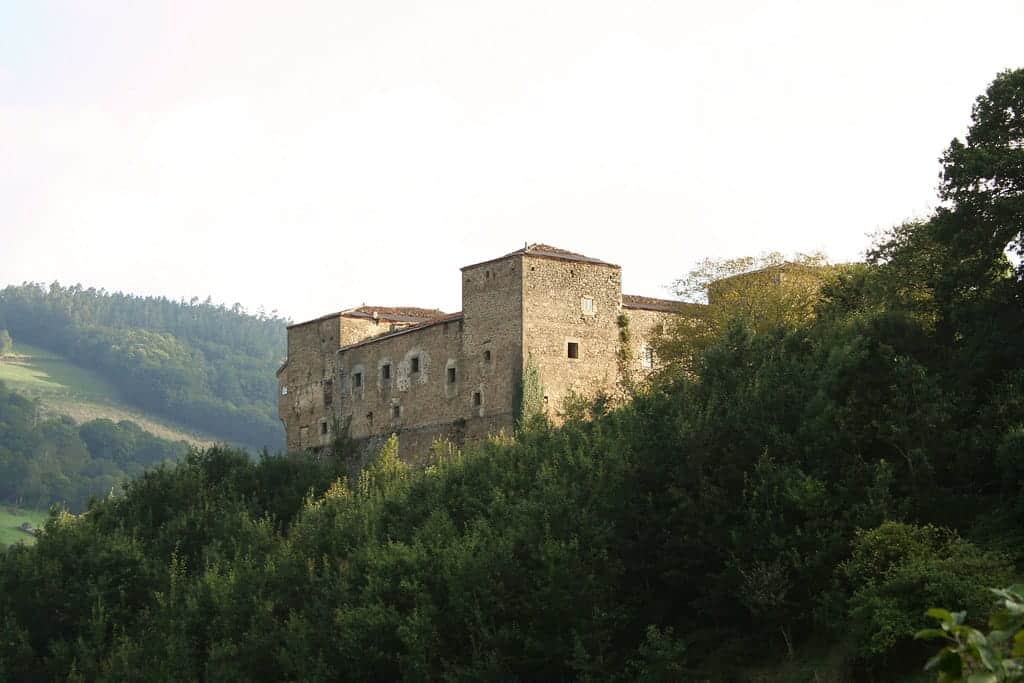
- Distance: ~27–28 km.
- Total elevation gain: ≈ +750 m / -850 m.
- Difficulty: it holds the honour of being known as the toughest stage of the Camino Primitivo. This is a long day crossing the western Asturian mountains, with continuous ascents and descents. Although it follows rural trails without technical complications, the “leg-breaking” profile takes its toll: several climbs (Alto de Porciles, ~880 m; Alto de Lavadoira, ~810 m) are linked by descents, preventing a steady rhythm.
The start in Tineo (680 m above sea level) already presents a prolonged climb up to almost 800 m in the first 5 km, with beautiful views if the fog allows. Afterwards, the stage alternates between forested sections and mountain meadows, passing through small villages like Campiello, where many pilgrims take a break.
After about 20 km, one of the challenges appears: the ascent to Alto de Porciles (~970 m above sea level) followed by a steep descent and another climb to the Alto de Lavadoira. None of these individual hills are extreme on their own, but their combination is exhausting. The final descent towards Pola de Allande is also steep, putting strain on the knees.
In total, several significant elevation changes are tackled in a single day, with nearly 1000 m of cumulative ascent and a similar amount of descent. It is not unusual to spend 7 to 8 hours completing this stage. It is crucial to pace yourself, take breaks to eat (there are bars in intermediate villages), and protect your feet, as this day often causes blisters due to the distance and uneven terrain.
Stage Pola de Allande – Berducedo (Asturias)
- Distance: ~16 km.
- Cumulative elevation: ≈ +600 m / -300 m.
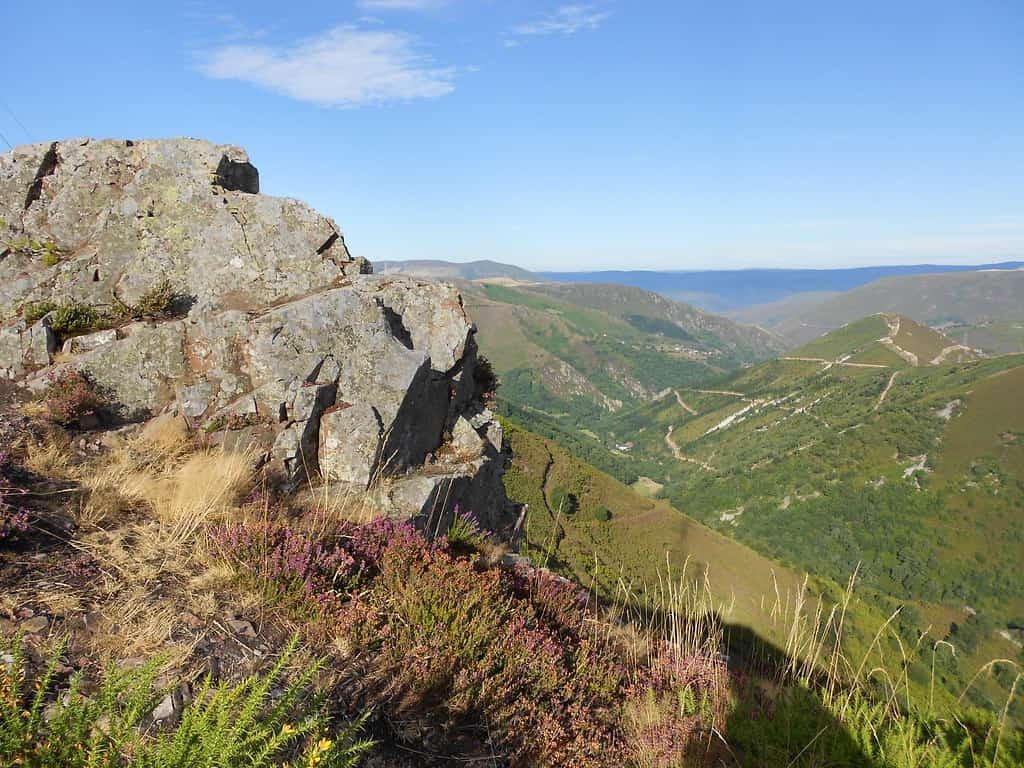
- Difficulty: although shorter in kilometres, many consider this stage as challenging as the previous one. The reason is the ascent to Puerto del Palo, the highest point in the stage.
The stage begins in Pola de Allande (540 m) and over the next 8-9 km climbs to 1,146 m above sea level, gaining around 600 metres of elevation. Some stretches are steep and prolonged, so it is advisable to maintain a steady pace and use walking poles to relieve the legs.
The climb to Puerto del Palo is considered one of the most difficult sections of the entire route due to its length and gradient. This mountain pass, historically feared by medieval pilgrims, now offers an unparalleled reward: a 360º panorama of Asturian peaks and valleys that takes your breath away.
It is worth noting that two variants converge in this section: the traditional route via Pola de Allande and the famous “Route of the Hospitals”, which climbs to the same point from the opposite side. Both routes meet precisely at Alto del Palo.
In any case, after a rest at the summit, the second part of the stage remains: the descent and route to Berducedo. The initial descent from the pass is steep but then eases, turning into a ridge walk among the hills. Although most of the physical effort is in the ascent, caution is needed on the descent (especially in poor weather or fog, common in the high areas).
Stage Grandas de Salime – A Fonsagrada (Asturias → Galicia)
- Distance: ~26-27 km.
- Cumulative elevation: ≈ +650 m / -350 m.
- Difficulty: this stage marks the entry into Galicia and involves another long day with a significant ascent: the climb to Alto del Acebo.
After departing from Grandas de Salime (approx. 550 m above sea level) and covering the first few kilometres along the valley, the path begins to climb towards Acebo, reaching around 1,050 m. The ascent to the pass is relatively gradual, without extreme ramps, but it is long and comes towards the end of the stage, when energy starts to wane.
The complete climb is about 600 m of positive elevation spread over 8-10 km. Many pilgrims find it tiring, especially after carrying over the effort from previous days. As you climb, the landscape changes: the forests are left behind and views of green mountains open up. A profound silence usually prevails in this section, interrupted only by the wind and the bells of grazing cows, giving a very special atmosphere to the physical challenge.
At the summit of Alto do Acebo, it is common to stop and celebrate reaching Galicia. After the pass, around 12 km remain to Fonsagrada, fortunately mostly downhill or on gentle slopes. First, the path descends to the village of Acebo/Paradavella and then winds through the mountains of Lugo.
The prevailing sensation is accumulated fatigue: by this point, the pilgrim has already been walking for seven or eight days. The profile of constant gentle ascents and descents can feel tiring, though less demanding than the Asturian climbs.
The Easiest Stages of the Camino Primitivo
Not all of the route is equally tough. There are also shorter or flatter stages that allow the pilgrim to rest relatively and enjoy the walk without excessive physical effort. These easier days serve as a break between the mountains, or mark the start and end of the route where the terrain is more benign. Below, we mention three stages considered the easiest or most manageable of the Camino Primitivo:
Stage Oviedo – Grado (Asturias)
- Distance: ~25 km.
- Difficulty: Low.
This is the first stage and, although not trivial in length, its profile is quite manageable. Starting from Oviedo Cathedral, you leave the city and traverse peri-urban and rural areas without major elevation changes.
The only significant climb of the day is the hill at Escamplero, about 300 m above sea level, covered in the first 10 km. After the summit, the rest of the route to Grado alternates between dirt tracks and asphalt on gentle descents or flat sections, passing meadows, chestnut trees, and small villages.
Overall, it is a comfortable day to warm up. Many novice pilgrims complete it without difficulty in around 5-6 hours.
Stage Grado – Salas (Asturias)
- Distance: ~20 km.
- Difficulty: Low.
This second stage is even shorter, passing through river valleys and low hills. The route initially follows the Cubia River valley and then the Narcea River, so there are no steep inclines. It is a very pleasant stretch, with landscapes of fertile plains, riparian forests, and traditional villages. Cornellana (with its historic San Salvador monastery) is encountered midway, a good spot to pause.
Overall, it is one of the gentlest days: the terrain is mostly flat with minor climbs, and the rural surroundings provide shade and fountains for water. Salas, the town where the stage ends, is just 240 m above sea level (similar to Grado), indicating minimal net elevation change.
Stage Melide – Arzúa (Galicia)
- Distance: ~14.5 km.
- Difficulty: Low.
This stage occurs in the final stretch, once the Primitivo joins the Camino Francés in Melide, and is the shortest of the entire route. After the efforts in Asturias and Lugo, the stretch between Melide and Arzúa feels very manageable. The profile is gently undulating terrain, with small continuous hills but no major climbs or long uphill sections.
Walking is along comfortable dirt paths and secondary asphalt roads, crossing eucalyptus forests, green meadows, and several rural villages. Although there are frequent ups and downs, their low height means they are not exhausting, providing more variety to the walk.
In rainy days, mud may add difficulty, but under normal conditions, it is an easy stretch. It can be completed in about 4 hours at a relaxed pace, allowing the pilgrim to enjoy the surroundings. In fact, many consider Melide-Arzúa a recovery stage, ideal for resting the legs after longer previous days.
The Camino Primitivo is a route of contrasts: on one hand, it demands physical and mental strength to overcome its toughest stages, while on the other, it offers moments of peaceful enjoyment on the easier stages.
We have seen how the Asturian mountains impose the greatest challenges – with stages such as Tineo-Pola de Allande or Pola de Allande-Berducedo challenging pilgrims with steep climbs – while in Galicia the route gradually eases, offering breaks and short stages towards the end.
Overall, the Primitivo stands out as one of the most difficult routes of the Camino de Santiago, something widely recognised in the Jacobean world. However, every tough section comes with its rewards: unparalleled panoramas, the satisfaction of conquering each pass, camaraderie forged in the solitude of the mountains, and the sense of reliving history itself.
If you are thinking of undertaking the Camino Primitivo, do not be discouraged by its reputation as a tough challenge. With proper planning, some prior training, and respect for your own limits, you can tackle it stage by stage. Alternate days of maximum effort with calmer ones, stay well hydrated, and listen to your body. Remember that even medieval pilgrims took breaks in the old mountain hospitals when needed.