Talking about rural depopulation in Spain usually leads us to a stark diagnosis: fewer inhabitants, an ageing population, reduced services, and greater (both real and symbolic) distance from major urban centres. Yet in recent years, signs have emerged that invite nuance: the rural world is not a homogeneous block, and there are territories that, with favourable conditions and coherent projects, are finding ways to sustain themselves and grow.
In this context, the Camino de Santiago is particularly interesting: it is not a “laboratory plan”, but a living network that crosses regions, connects villages with visitors from around the world, and generates local economic activity. In 2025, the Pilgrim’s Office recorded 530,987 people who completed at least one recognised Jacobean route, with more than 297,000 pilgrims coming from abroad.
If managed carefully, the Camino can serve as a corridor of opportunities for local development: it helps sustain small businesses, maintains services that would be unviable elsewhere, and reinforces the identity of places that often feel “off the map”.
And all this without losing a positive focus: the challenge is not to “turn villages into theme parks”, but rather to make local life compatible with an activity that already exists and can deliver distributed, long-lasting benefits.
Índice de contenidos
- 1 Quick summary (get up to speed in 60 seconds)
- 2 Rural depopulation in Spain: what it is (and why simplifications should be avoided)
- 3 Why the Camino de Santiago is a “different” local engine
- 4 Economic impact on villages: real opportunities
- 5 Social and cultural benefits: identity, pride, and continuity
- 6 Routes, population and infrastructure: where capacity is greatest and where improvement is needed
- 7 The Camino as a tool aligned with policies addressing the demographic challenge
- 8 What municipalities and regions can do to turn the Camino into development
- 9 What local businesses can do (without “touristifying” the village)
- 10 The pilgrim’s role: how to support villages (without complications)
- 11 A positive opportunity (if managed with balance)
Quick summary (get up to speed in 60 seconds)
- Depopulation is uneven: there is a “dual rurality”, with areas gaining population and others continuing to lose it.
- In 2024, municipalities with fewer than 5,000 inhabitants increased their population by 22,020 people. Rural areas recorded seven consecutive years of growth, according to the Padrón review (INE) cited by MITECO.
- In 2025, the Camino reached 530,987 pilgrims, consolidating it as a stable cultural and economic flow. A recent report on the French Route warns of strong asymmetries: 5 out of 115 municipalities concentrate around 80% of tourism employment.
- The opportunity lies in redistributing benefits (overnight stays, local consumption, services) and strengthening governance and sustainability.
Rural depopulation in Spain: what it is (and why simplifications should be avoided)
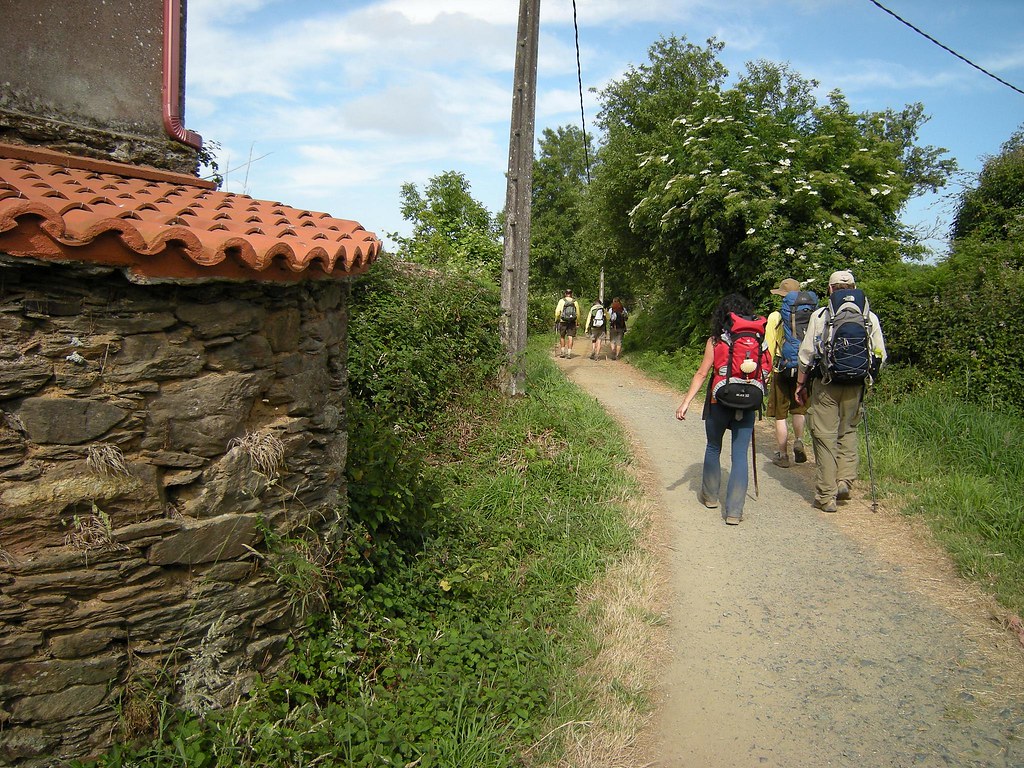
Rural depopulation usually refers to the ongoing loss of inhabitants in small or low-density municipalities, but it is almost always accompanied by other processes: ageing, low birth rates, youth outmigration, closure of services, poor transport, and difficulties in attracting stable economic activity. That is why many experts prefer to speak of a demographic challenge: not only “how many people live there”, but “how life is lived” and “what conditions allow people to stay”.
An official diagnosis from MITECO itself (depupulation axis) indicated that between 2001 and 2017, 61.9% of Spanish municipalities lost population, with varying intensity depending on the territory. Such data explains why the problem is perceived as structural and long-term.
However, there are also recent trends that invite a more proactive approach. In December 2025, MITECO reported—based on the Padrón review (INE)—that in 2024 municipalities with fewer than 5,000 inhabitants grew by 22,020 people, and since 2018 had added 163,027 residents. This does not mean that “everything is solved”, but it does highlight windows of opportunity: if bottlenecks are addressed (housing, employment, services), the return or arrival of new residents could consolidate.
Indeed, in recent public debate, one of these bottlenecks is frequently emphasised: housing. Some municipalities see demand from new families but suffer from a lack of habitable supply or mechanisms to mobilise vacant housing and facilitate affordable rental.
This point connects directly with the Camino: where there is flow and activity, the incentive to renovate, maintain, and open homes and accommodations increases, but so does the challenge of balancing uses (residents vs short-term stays).
Why the Camino de Santiago is a “different” local engine
The Camino de Santiago is not just tourism: it is pilgrimage, culture, landscape, heritage, and social interaction. But it also has a feature that is golden for local development: capillarity. Pilgrims do not spend in a single “hub”; they consume stage by stage, village by village.
In 2025, the Camino set record figures again: 530,987 pilgrims according to the Pilgrim’s Office. When a territory receives such a sustained flow (and increasingly international), opportunities are generated for:
- Hospitality and accommodation (bars, menus, guesthouses, rural homes).
- Everyday services (laundry, pharmacy, local transport, bike repair, small shops).
- Local products (bread, cheese, cured meats, preserves, crafts, wines, etc.).
- Family or self-employed entrepreneurship: key in low-density areas.
Moreover, the Camino holds a long-standing European cultural “seal”: it was recognised by the Council of Europe as the First Cultural Route in 1987 and awarded the status of Major Cultural Route in 2004, according to Spain’s Ministry of Culture. This recognition brings legitimacy and international projection, helping to sustain its appeal over time.
For an accessible entry point from your own editorial environment, here is a reference that fits naturally with the topic: impact of the Camino de Santiago on villages.
Economic impact on villages: real opportunities

Let’s be honest: the Camino does not replace industrial policy, rural healthcare, or a regional transport system. But it can act as a catalyst for the local economy where there is a minimum capacity to serve pilgrims and convert their passage into value for the territory.
Why pilgrim spending particularly benefits the local economy
In general terms, spending linked to the Camino goes to sectors where added value is more likely to stay in the territory: food, accommodation, small purchases, personal services. Therefore, even if the aggregate impact varies by section and season, its effect can be very significant for local businesses that would otherwise struggle to survive.
Employment and “microeconomy” (what keeps villages alive)
An important point is that the Camino tends to boost local employment: small teams, families, self-employed, and shared services. Here, a key lesson emerges: if benefits concentrate only in large centres, the impact on depopulation is reduced.
Indeed, a recent report on the socio-economic sustainability of the French Camino de Santiago (led by the Association of Camino de Santiago Municipalities and funded by the State Secretariat of Tourism, according to the document) highlights a strong asymmetry across 115 analysed municipalities. Media summaries report: five municipalities capture around 80% of tourism employment.
This evidence is crucial because it does not invalidate the opportunity; on the contrary, it clarifies it: the major challenge is to distribute positive effects more widely and effectively. It involves strengthening intermediate stages, route variants, regional services, and local product offerings that encourage stops, purchases, and overnight stays along more points of the trail.
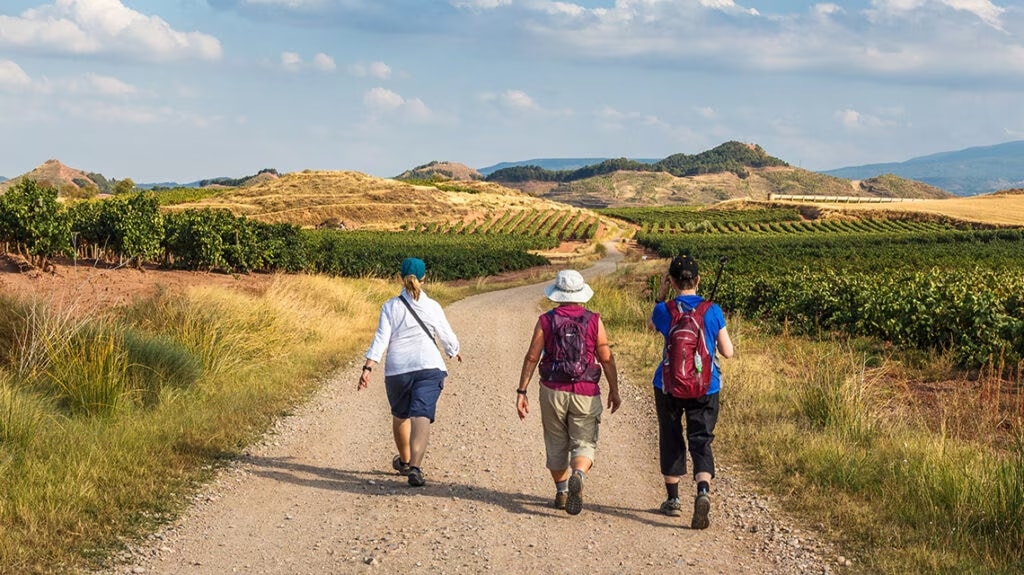
Depopulation is also a matter of community fabric. When a village loses inhabitants, it loses associations, festivals, schools, and street life. The Camino, without idealising it, can provide:
- Visibility: the village “exists” in the story of thousands of people.
- Hospitality as a value: volunteering, welcome, memory.
- Living heritage: signage, bridges, churches, fountains, traditional routes preserved because they are used.
- Cultural exchange (languages, stories, personal networks): social capital.
This cultural component aligns well with policies and management plans that emphasise preserving the values and uniqueness of each route, and promoting Jacobean heritage sustainably.
For example, the 2022–2027 Master Plan for the Caminos de Santiago in Galicia outlines strategic lines including research/dissemination, value promotion, and public–private collaboration.
Routes, population and infrastructure: where capacity is greatest and where improvement is needed
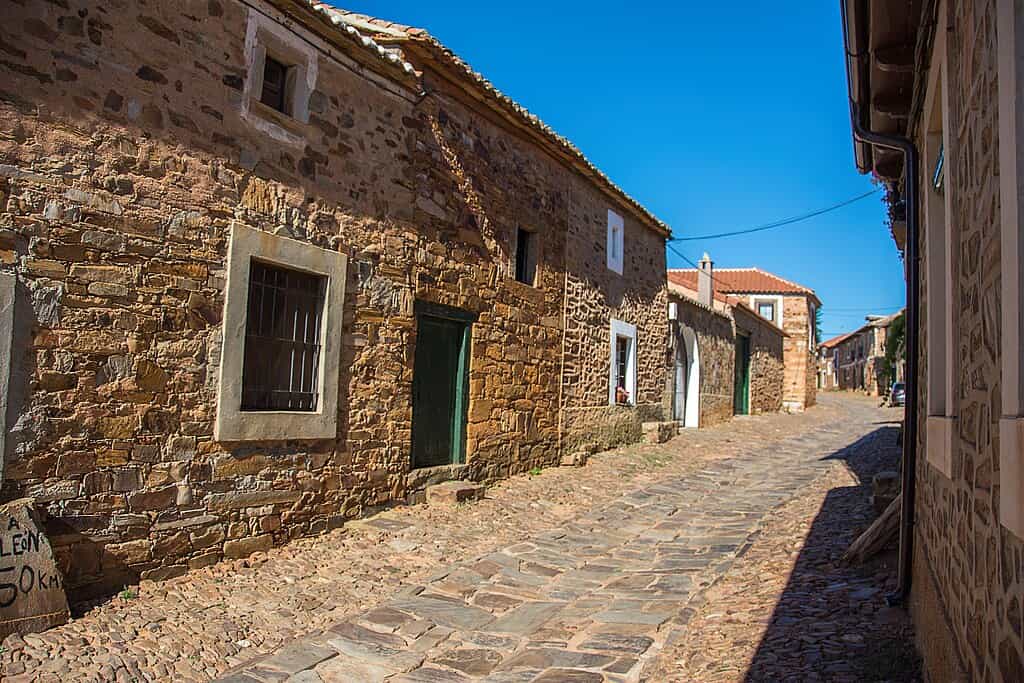
To integrate the Camino into strategies against depopulation, it is useful to examine each route through three simple questions:
- What density of services exists? (accommodation, dining, pharmacy, transport).
- What types of settlements does it pass through? (medium-sized towns, villages, hamlets, very dispersed sections).
- How is the flow distributed? (concentration in certain points vs. a more spread-out route).
| Route | Typical territorial profile | Infrastructure (trend) | Opportunity against depopulation |
| French Camino | Major historical axis; alternates between medium-sized towns and villages. | Extensive offering, but with notable concentration in certain municipalities. | Very high potential if asymmetry is corrected and local economies are boosted in intermediate stages. |
| Northern Camino | Coastal and green sections; mixes general tourism with pilgrimage. | Good offering in tourist areas, more irregular in some sections. | Opportunity to reduce seasonality, diversify stops, and connect villages near hubs with more services. |
| Less crowded routes | More specialised (profile, distance, difficulty, or logistics). | Variable; sometimes limited. | Large scope for development if minimum services and local coordination are strengthened. |
On a practical level (and to integrate your links naturally), a reasonable interpretation is that:
- The Northern Camino from Gijón benefits from the Cantabrian coast with a tradition of tourist services and good connectivity in many points, which makes it easier to sustain infrastructure. The rural opportunity lies in enabling less visible villages to capture value with simple proposals: well-managed accommodation, good food, clear logistics, and local products.
- On the French Camino, sections such as the French Camino from Logroño often combine heritage, access, and historical flow. This means more competition, yes, but also more demand: differentiation through authenticity and good service is key.
- Stages such as the French Camino from Burgos illustrate the “city–region effect”: a city provides services and transport, while the surrounding rural area can gain overnight stays and consumption if complementary, calm offerings are organised.
The Camino as a tool aligned with policies addressing the demographic challenge
A very useful point for a “comprehensive” approach is to connect the Camino with existing public policy frameworks. The National Strategy against the Demographic Challenge (published in 2019) proposes action lines such as ensuring territorial functionality, improving competitiveness, promoting new activities, and favouring settlement and population retention.
Similarly, MITECO summarises on its strategies and plans page that the action plan (130 measures) is organised into 10 axes: economic diversification, innovation, digital connectivity, rural-urban links, territorial enhancement, provision of basic services, and incorporating a demographic perspective into decisions, among others.
Where does the Camino fit in? In several points at once:
- Economic diversification: boosts local employment in sectors compatible with rural scale (hospitality, services, local commerce).
- Territorial enhancement: heritage, landscape, culture, historic routes.
- Connectivity and services: constant flow reinforces the case for maintaining and improving minimum services.
- Rural-urban links: the pilgrim acts as a “bridge” between worlds and creates networks (sometimes even new residences).
What municipalities and regions can do to turn the Camino into development
Here it is important to be very concrete. The Camino is already there; the question is how to “land” opportunities without losing territorial balance.
Objective: ensure benefits are not concentrated in a few points
If we accept the diagnosis of asymmetry on the French Camino, the response must be strategic: more stops in more places, with more reasons to stay a night, shop, or dine. Typical (realistic) actions to help redistribute:
- Better signage and maintenance of variants and access to settlements near the main route.
- Regional cultural calendars (micro-events, markets, guided tours) in mid-season.
- Coordinated service network: regional taxi, basic assistance, information, emergencies, rest points.
- Promotion of alternative stages to relieve congested points and stimulate others.
Housing and rehabilitation: the major bottleneck
Many villages have closed houses, empty second homes, or deteriorated dwellings. Attracting population (or even sustaining Camino services) may depend on mobilising this supply: renovation, facilitating rentals, advising owners, and seeking public-private arrangements. Recent debates on rural repopulation stress that the challenge is not only attracting people: it is keeping them, and without housing and jobs this is difficult.
Governance and roadmap: learning from existing plans
Galicia, for example, has a 2022–2027 Master Plan as a management tool and roadmap for the Caminos in its territory, emphasising public-private collaboration, sustainability, accessibility, and research/dissemination. This type of framework helps ensure action is not improvised and aligns investment, maintenance, promotion, and local coexistence.
What local businesses can do (without “touristifying” the village)
For a bar, shop, or small accommodation, the key is rarely to invent big proposals: it is doing the basics very well and connecting with what pilgrims value.
- Clarity: opening hours, visible prices, simple options.
- Friendly and efficient service: pilgrims arrive tired; the experience matters.
- Authentic local products: authenticity works better than “dressed-up” versions.
- Collaboration: agreements with other businesses (breakfasts, laundry, backpack transfer, etc.).
An essential point: social sustainability. If the Camino is experienced as “everyone’s” (and not as a seasonal invasion), the experience improves for both pilgrims and residents.
The pilgrim’s role: how to support villages (without complications)
Depopulation is tackled with policies, yes; but also through small decisions repeated thousands of times. Pilgrims can contribute very simply:
- Stay overnight in intermediate stages when it makes sense (distribute overnight stays).
- Spend in small businesses (bakery, grocery, pharmacy, local products).
- Choose mid-season (if possible) to sustain activity beyond peak periods.
- Respect rural life: schedules, rest, agricultural work, coexistence.
- Care for the environment: waste, fountains, heritage, paths.
When this behaviour becomes widespread, the route ceases to be just transit and becomes a distributed local economy.
A positive opportunity (if managed with balance)
Rural depopulation in Spain is a profound and uneven phenomenon. Official data show that many municipalities have suffered population losses over long periods. However, they also indicate that in recent years, small municipalities have recorded growth and positive migration balances in many cases.
In this context, the Camino de Santiago offers something very valuable: stable movement, international projection, and local consumption distributed along stages. In 2025, it reached 530,987 pilgrims, confirming its strength as a cultural and social phenomenon.
The main lever lies in turning this force into local development with three clear priorities:
- Reduce asymmetries (ensure benefits are not concentrated in 4 or 5 points).
- Strengthen housing and services to sustain population and entrepreneurship.
- Plan and cooperate (governance, sustainability, public-private collaboration).
Thus, the Camino is not just a route to walk: with a modern and human approach, it can be an ally for the territory. A realistic instrument for villages to maintain activity, regain pride, and find new ways forward without giving up what makes them unique.