The Camino de Uclés is a lesser-known pilgrimage route that nonetheless shares the Jacobean spirit and has a strong historical connection to the tradition of the Camino de Santiago. It is an itinerary that links the city of Madrid with the Monastery of Uclés (in Cuenca), following in the footsteps of the Apostle Saint James, although it does not lead to the cathedral of Santiago de Compostela.
Índice de contenidos
What is the Camino de Uclés?
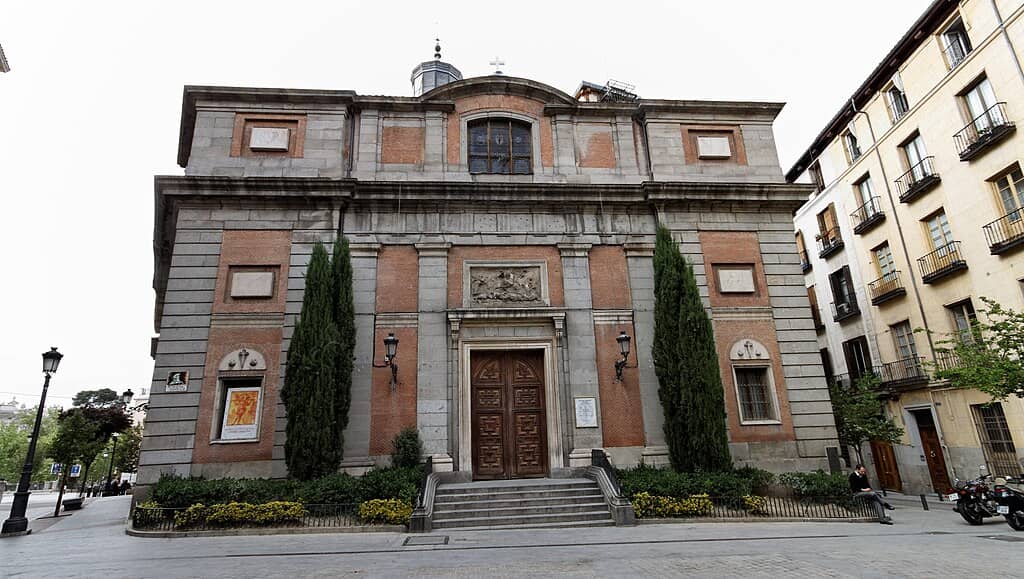
It is a Christian pilgrimage route that does not form part of the official network of the Camino de Santiago, yet it is closely linked to the figure of the Apostle Saint James. In fact, its route begins at the Church of Santiago in Madrid, right in the heart of the capital (just like the Madrid Way of St James itself), and ends at the Monastery of Santiago de Uclés, in Cuenca.
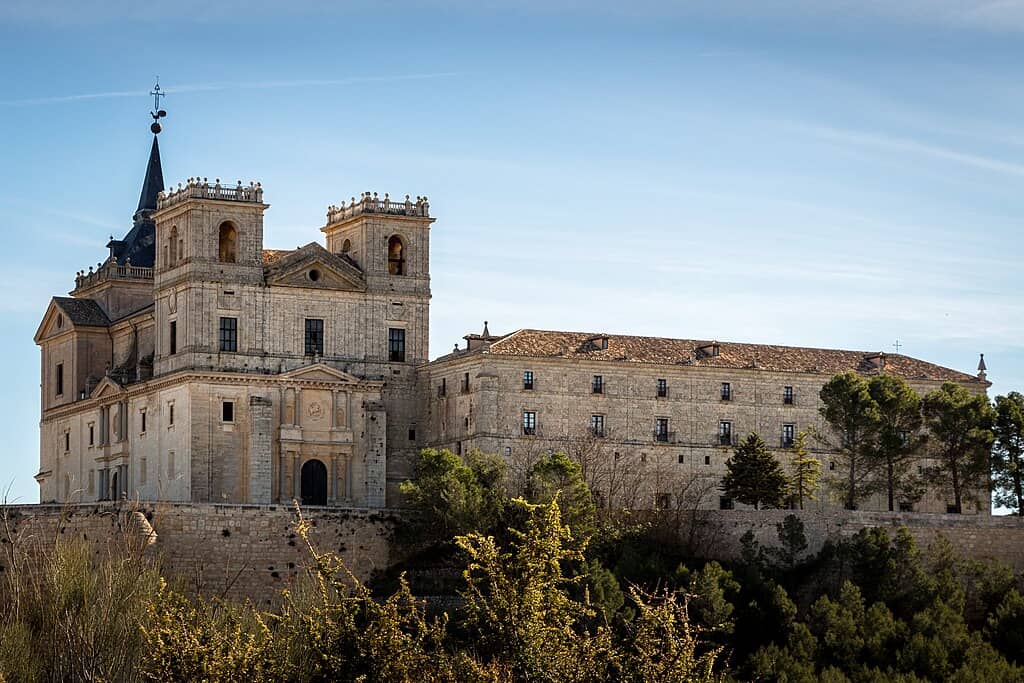
The choice of these points is no coincidence: Santiago de Compostela and Uclés are home to two of the most important temples dedicated to the Apostle Saint James in Spain – the Compostela cathedral and the monastery in Cuenca, respectively. Furthermore, the monastery of Uclés was built by the Order of Santiago in the 12th century and for centuries served as the mother house (or caput ordinis) of this military–religious order dedicated to protecting Jacobean pilgrims.
This turned Uclés into an important pilgrimage destination during the Middle Ages, as there was a historic route linking this enclave to distant Santiago de Compostela.
After the medieval period, it fell into obscurity for a long time due to historical changes (wars, confiscations and the declining importance of the monastery). It was not until 2010 that it was rediscovered and revitalised thanks to the initiative of Manuel Rossi and the Association of Friends of the Camino de Uclés.
Since then, its paths have been waymarked once again and its pilgrim use has been encouraged with the support of local municipalities. Today, it is recognised as a tourist route (it even has the backing of the Ministry of Agriculture for its rural stretches) and thousands of pilgrims have travelled it over the last decade, with numbers continuing to grow.
In the first 13 years since its recovery, more than 30,000 people have walked this route, with notable growth in recent years (in 2023 alone, the number of walkers doubled compared with the previous year). These figures show how an alternative, regional route can establish itself as a complement to the traditional Camino de Santiago.
A distinctive feature is its specific waymarking. Unlike the classic yellow arrows and scallop shells on a blue background, here we find red arrows adorned with the Cross of Santiago on a white background. This symbol of the Cross of Santiago guides pilgrims along the Camino de Uclés, highlighting its connection to the Apostle while distinguishing it from the official Jacobean paths.
In addition, it has its own pilgrim credential, a passport used to collect stamps in each town, available through the Association of Friends of the Camino de Uclés. Once pilgrims complete the route, they can even obtain an official certificate of completion called the Uclessiana, which serves as its own version of the “Compostela”.
Stages of the Camino de Uclés
The Camino de Uclés has an approximate length of 144 kilometres, which is usually divided into 11 short stages to make the journey easier. Below are the stages, including their starting and finishing points, along with the distance covered each day:
- Stage 1: Madrid – Rivas-Vaciamadrid (28.6 km): it begins at the Church of Santiago in Madrid and passes through the Linear Park of the Manzanares, a natural environment with views over the southeast of the city.
- Stage 2: Rivas-Vaciamadrid – La Poveda (4.3 km): a short stretch following the cycle path alongside the River Jarama, crossing green urban areas frequented by local cyclists and walkers.
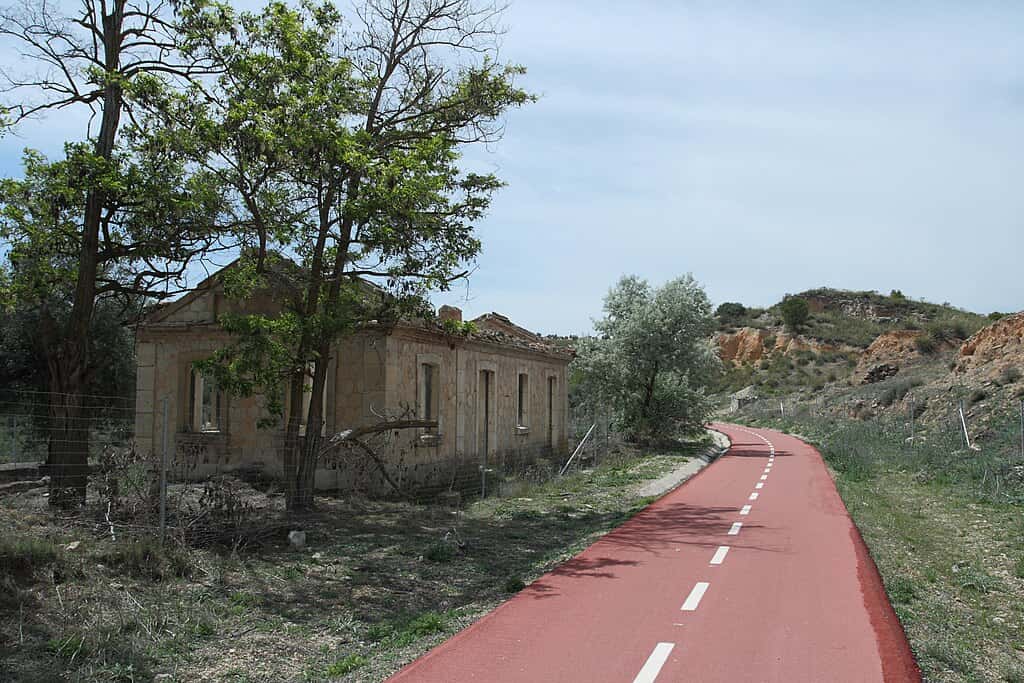
- Stage 3: La Poveda – Arganda del Rey (3.6 km): connects to Arganda via the old Tajuña railway lines, now converted into a greenway; remnants of the railway can still be seen.
- Stage 4: Arganda del Rey – Morata de Tajuña (17.8 km): one of the most picturesque stages, it runs along the Tajuña Greenway with wide views over orchards and agricultural plains.
- Stage 5: Morata de Tajuña – Perales de Tajuña (7.1 km): a stretch with gentle inclines and views over the Tajuña valley, ideal for enjoying the rural landscape of Madrid among olive groves and cereal fields.
- Stage 6: Perales de Tajuña – Tielmes (8.3 km): a peaceful route alternating between agricultural lanes and tarmac; Tielmes stands out for its rural architecture and riverside surroundings.
- Stage 7: Tielmes – Carabaña (9.2 km): a short stage with historical interest in Carabaña, known for its spa and medicinal waters; the route runs alongside the River Tajuña.
- Stage 8: Carabaña – Estremera (15.9 km): the route leaves the Tajuña valley and heads into a drier, rolling landscape; the natural environment leading to Estremera is particularly striking.
- Stage 9: Estremera – Barajas de Melo (26.2 km): the longest stage, crossing the border between Madrid and Castilla-La Mancha; notable for the transitional landscapes between valley and plateau.
- Stage 10: Barajas de Melo – Huelves (13.9 km): a quiet rural path with open views over the Cuenca plain, featuring traditional architecture and windmills in the surrounding area.
- Stage 11: Huelves – Uclés (9.0 km): the final stage offers an impressive view of the monastery upon arrival; Uclés welcomes pilgrims with its monumental heritage and Jacobean history.
As can be seen, the route crosses the southeast of the Community of Madrid and the west of the province of Cuenca, passing through a series of towns in both the Tajuña river valley (Rivas, Arganda, Morata, Tielmes, etc.) and the Castilian plateau (Estremera, Barajas de Melo, Huelves) before concluding in Uclés.
Many of these stages are of short distance, less than 10 km. They are designed to adapt to the availability of accommodation or local landmarks, as well as to allow pilgrims to walk at a more relaxed pace. However, those who prefer longer days can combine several of these small stages into a single day, depending on their physical condition and the rest options available.
Camino de Uclés vs. the Camino de Santiago
It is inevitable to compare the Camino de Uclés with the traditional Camino de Santiago routes, as they share the same religious background but differ notably in purpose and destination.
The main difference is that in this case the route does not end in Santiago de Compostela but in Uclés, and therefore it is not considered an official Jacobean route within the recognised pilgrimages to Santiago. In contrast, the genuine Caminos de Santiago are multiple historical routes whose aim is to lead the pilgrim to the tomb of the Apostle Saint James in the Compostela cathedral.
Those who pilgrimage to Santiago de Compostela seek to complete their journey by reaching the Apostle’s tomb and obtaining the Compostela (the official pilgrim certificate). In the case of the Camino de Uclés, the purpose is different: the route honours the Apostle Saint James by linking significant places of his worship. Instead, it offers a local spiritual experience and its own certificate (the Uclessiana) upon completion.
The Camino de Santiago
There are numerous recognised routes of the Camino de Santiago, each with its own layout, distance and particular history. For example:
- French Way: the most iconic route, starting from Saint-Jean-Pied-de-Port and crossing Navarra, La Rioja and Castile before reaching Galicia. Rich in heritage, services and international atmosphere.
- Northern Way: running along the Cantabrian coast from Irún, offering green landscapes and stunning cliffs. Less crowded, it combines Jacobean tradition with natural beauty.
- Primitivo Way: considered the oldest route, connecting Oviedo with Lugo and Santiago. It requires good fitness due to its demanding mountainous terrain. Ideal for experienced pilgrims.
- English Way: starting from Ferrol or A Coruña, used historically by pilgrims arriving by sea from the British Isles. Short but full of medieval history.
- Portuguese Way: the second most popular route. It passes through historic cities such as Lisbon, Coimbra, Porto and Tui. Very well-travelled, with excellent infrastructure and remarkable monumental and natural beauty. Even within this route there are variants and specific stretches, such as the Camino de Santiago from Porto to Tui or the Portuguese Way via the Spiritual Variant, which adds a route through places of great historical and natural richness in Galicia.
- Vía de la Plata: Beginning in Seville and crossing Extremadura and Castile. Long and less frequented, it stands out for its Roman heritage and landscapes of dehesa and open plains. The Ourense to Santiago – Sanabrés Way completes the final 100 km of the Vía de la Plata. Starting in Ourense, it offers forests, hot springs and charming villages, making it a quieter alternative to reach Santiago.
The Camino de Uclés
By contrast, this is an “alternative” Jacobean route in terms of destination: its endpoint is Uclés and the local veneration of Saint James in its monastery, not the Compostela cathedral. This means several practical differences.
One of these is the duration and distance: while most of the former routes span hundreds of kilometres, this experience is limited to around 144 km in total, achievable in roughly a week. It is therefore shorter and more manageable for those with limited time or for beginners who want to experience a pilgrimage without facing very long distances.
Another important difference is its “official” nature: pilgrims who complete Uclés cannot request the Compostela from the Cathedral of Santiago, as they have not arrived in Santiago by their own means. Instead, as mentioned, they receive the Uclessiana as a record of their achievement.
Similarly, the infrastructure and visitor numbers along the Camino de Uclés are smaller: although the route has adequate signposting, accommodation and stamps in each village, the number of pilgrims per day is lower. This makes it a more peaceful and solitary experience, ideal for those seeking personal reflection or wishing to avoid large crowds. That said, services can be more limited and it is important to plan each stage carefully.
Nonetheless, despite these differences, both routes are deeply connected spiritually and historically. You can be sure that the Camino de Uclés breathes the same pilgrim spirit as the Camino de Santiago: walkers follow arrows (red ones, in this case) from village to village, stamp their credentials, advance driven by devotion or personal growth, and are warmly welcomed by the local communities along the way.
There is also the possibility, after reaching Uclés, to connect with an official Camino de Santiago route: in fact, the signposting installed by the association indicates the return route towards Madrid, allowing pilgrims to start the Camino de Santiago from Madrid. Thus, an enthusiastic pilgrim could first walk from Madrid to Uclés, obtain the Uclessiana, and then return to the capital (by transport or walking back following the red crosses) to begin the traditional route.
In conclusion, the Camino de Uclés is a unique pilgrimage alternative that combines history and Jacobean devotion outside the crowded circuits. Although not official, its legacy linked to the Apostle Saint James and the Order bearing his name makes it a very special journey.
Pilgrims who walk it can enjoy the experience in a condensed version: beautiful rural sections, the hospitality of small villages, moments of solitude for reflection, and an emotional ending at the imposing monastery of Uclés.