While millions of hikers discover the charm of European routes every year, there is a gem of world hiking that remains less explored by Spanish travellers: the Crystal Rock Route in Australia.
Known internationally as Uluru or Ayers Rock, this iconic geological formation represents much more than just a tourist destination. It is a transformative journey into the heart of the Australian desert, an experience that rivals the emotional intensity and natural beauty of any other hiking trail on the planet.
For those who have already experienced the wonders of discovering the Camino de Santiago, the Crystal Rock Route offers a completely different perspective on what it means to walk towards a sacred destination. This is not just another route; it is an invitation to explore an ancestral landscape, to walk where indigenous peoples have walked for over 30,000 years, and to understand the true connection between humans and nature.
Índice de contenidos
- 1 What is the Crystal Rock Route? History and Significance of Uluru
- 2 Main Features of the Crystal Rock Route
- 3 Comparison: The Crystal Rock Route vs. Camino de Santiago Routes
- 4 The Uluru Circuit: Hiking Details
- 5 Preparation for the Crystal Rock Route
- 6 Complementary experiences in the area
- 7 Final thoughts: why choose the Crystal Rock Route?
- 8 Beyond the traditional route
What is the Crystal Rock Route? History and Significance of Uluru
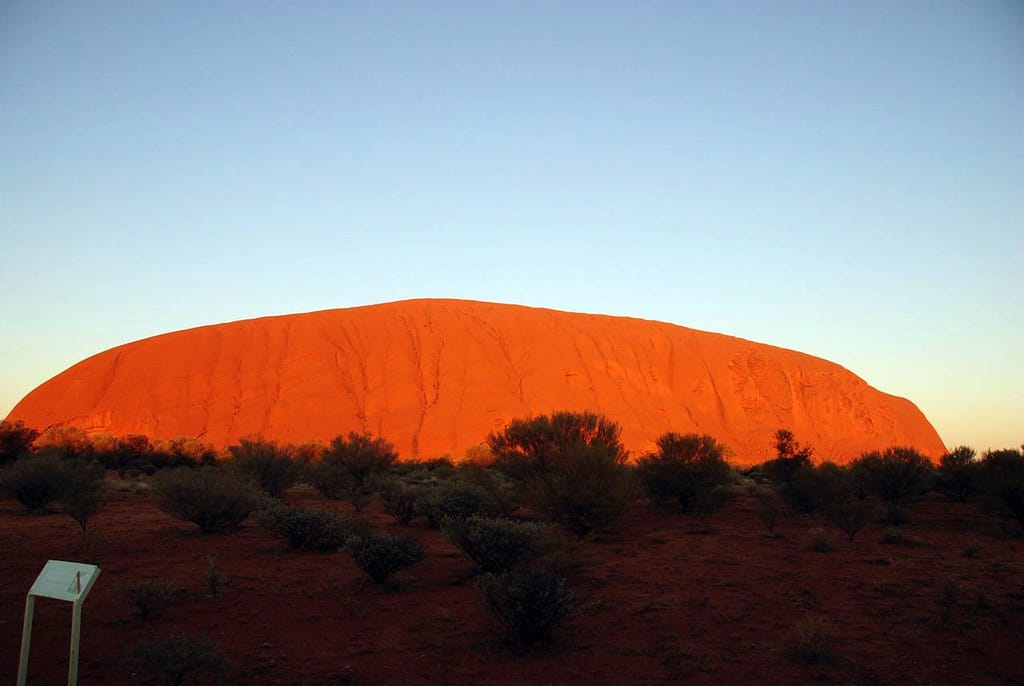
The Crystal Rock, originally known as Uluru in the Anangu language, is a red sandstone formation that rises 348 meters above the Sydney desert, in the heart of the Northern Territory. For the Anangu people, the indigenous inhabitants of the region, Uluru is a sacred place, a space where ancestral stories, Dreamtime legends (the time of dreams), and deep spirituality converge.
Its cultural significance is so great that in 1985, the government formally returned ownership of the site to the Anangu people, thereby recognizing their ancestral connection to the land. This decision marked a turning point in the history of the site and fundamentally changed the way hiking is managed and experienced in the region.
From Ayers Rock to Uluru: A Significant Name Change
For over a century, this formation was internationally known as Ayers Rock, a name given by European settlers in honour of Sir Henry Ayers, a 19th-century Australian politician. However, in 2002, the International Geographic Union officially recognised the dual name: Uluru/Ayers Rock.
Subsequently, in 2019, the name Uluru became the main official name, relegating Ayers Rock to a secondary position. This change reflects a growing respect for indigenous culture and acknowledges the true identity of the place.
Main Features of the Crystal Rock Route

Distance and Duration of the Route
The Uluru Base Circuit, known as the Uluru Base Walk, has a total distance of 9.4 kilometers.
Although this may seem modest compared to long-distance routes, the reality of the terrain and weather conditions make it more challenging than the distance suggests. Under normal conditions, the entire route requires between 3 and 4 hours of continuous walking. However, many visitors spend more time enjoying the different points of interest and taking photographs.
To put this duration in context, the Camino Portugués from Porto is a route of approximately 620 kilometers that requires between 25 and 30 days of walking. While the Camino Portugués is a long-distance hiking experience spread across several weeks, Uluru offers an intensive experience concentrated in a single day.
Difficulty Level and Physical Requirements
The Uluru Base Walk is classified as a route of moderate to moderately-high difficulty. The terrain is varied: it includes sections of loose sand, irregular rocks, short but steep climbs, and relatively flat stretches. Most of the route takes place under direct sunlight, with very little shade available, making sun exposure one of the primary challenges.
The altitude is not a significant factor (the peak is only 348 meters), but the combination of extreme heat, rocky terrain, and sun exposure requires solid physical conditioning and strong mental preparation.
Infrastructure and Available Services
The Uluru-Kata Tjuta National Park boasts modern and well-developed infrastructure. The visitor centre offers detailed information, exhibits on Anangu culture, and basic services. There is free parking, public restrooms, and a gift shop. Nearby, the village of Yulara provides a variety of accommodations, from campgrounds to luxury resorts, as well as restaurants and medical services.
However, it is important to note that this infrastructure is concentrated in specific areas. Once the walk begins, the visitor is exposed to an environment with virtually no services. There are no water sources along the route, no shelters, and emergency help requires communication via mobile phone or radio.
Best Time to Visit
The best time to visit Uluru is from April to September, when the temperatures are more moderate. During these months, daytime highs range from 25-30°C, while nighttime lows can drop to 10-15°C.
In contrast, from October to March, the heat is extreme, with temperatures exceeding 40°C, making the walk dangerous even for experienced hikers.
Comparison: The Crystal Rock Route vs. Camino de Santiago Routes
Distance and Durability: Uluru vs. Camino Portugués from Porto
As mentioned earlier, the Camino Portugués is a long-distance route requiring several weeks of walking. Uluru, on the other hand, is a one-day experience.
However, this difference in duration should not be interpreted as a difference in intensity or significance. While the Camino Portugués offers a gradual transformation through daily repetition and prolonged immersion in the journey, Uluru provides a concentrated experience.
Technical Difficulty: Desert Challenges vs. Mountain Challenges
The routes of the Camino de Santiago present challenges mainly related to accumulated distance, varied terrain (mountains, plains, dirt paths), and the endurance required to walk day after day. The greatest challenge is long-term mental and physical endurance.
Uluru, by contrast, presents more immediate technical challenges: extreme heat, rapid dehydration, unprotected sun exposure, and uneven rocky terrain. The greatest challenge is immediate adaptation to a hostile environment. Both routes require preparation, but of a different nature.
Accommodation Infrastructure and Services
The Camino de Santiago, especially the spiritual variant, offers a well-established network of accommodations, restaurants, and services along the route. Walkers can expect to find a place to rest every 15-25 kilometers, making for a sustainable and safe progression.
In Uluru, the infrastructure is concentrated at the visitor centre and in Yulara. The route itself is practically a desert without services. This requires more careful planning and greater self-sufficiency from the walker.
The Spiritual Variant of the Camino de Santiago is a route specifically designed for those seeking a transformative and spiritual experience. It incorporates elements of meditation, reflection, and connection with nature, alongside the physical walk.
Uluru offers a similar spiritual experience, but in a different context. Instead of following a Christian route, walkers immerse themselves in Anangu spirituality and the ancestral connection with the land. The place itself is sacred, and simply being there, walking around the rock, provides a sense of connection to something greater than oneself.
Alternative Routes: From Orense to Uluru

Just as there are multiple routes of the Camino de Santiago, such as the Camino from Orense, which offers variations in the hiking experience, the Uluru-Kata Tjuta National Park also offers alternatives. In addition to the Uluru Base Walk, there is the Kata Tjuta Walk, a 6-kilometer route that explores another equally spectacular geological formation in the same region.
These alternative routes allow visitors to personalise their experience according to their level of physical conditioning and their interests. Some prefer the concentrated experience of Uluru, while others choose to explore multiple formations in the region.
The Uluru Circuit: Hiking Details
The Base Route (Base Walk): The Most Accessible Route
The Uluru Base Walk is the most popular and accessible route around Uluru. The route begins at the visitor centre and follows a well-marked path that completely circles the base of the rock. The route is 9.4 kilometers long and can be completed in any direction.
Along the way, hikers will find several interpretive points of interest, including information panels explaining the geology, flora, fauna, and cultural history of the area. These stopping points not only provide valuable information but also offer opportunities to rest in the shade of scattered trees.
Main Points of Interest on the Route
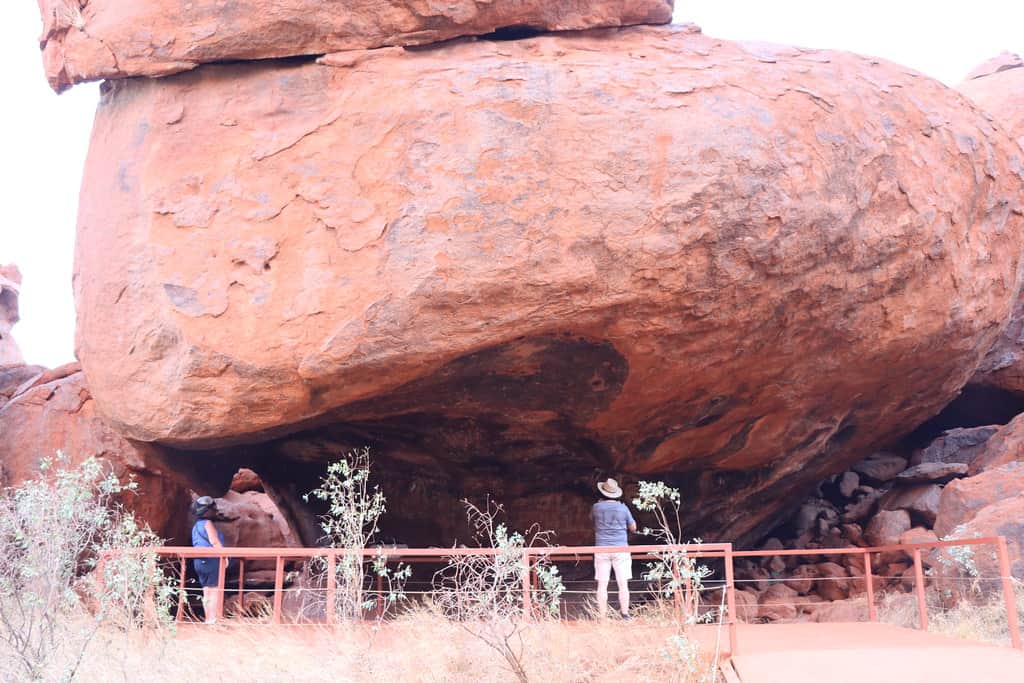
One of the highlights is Mala Walk, a 2.2-kilometer section that follows a sacred Anangu path. This trail offers spectacular views of the rock from different angles.
Another important point of interest is Kuniya Walk, a shorter 1-kilometre route that leads to a permanent waterhole called Kuniya Piti. This site is particularly significant in Anangu mythology and represents an oasis in the desert.
Flora and fauna of the Australian desert
The desert surrounding Uluru is home to unique flora and fauna adapted to the arid conditions. Visitors can observe mulga trees, acacias, and specialised desert plants. The fauna includes lizards, snakes, desert birds, and occasionally dingoes (wild Australian dogs).
The biodiversity of the area is surprising, considering the extreme climatic conditions. This adaptation of life to a hostile environment is a living lesson in resilience and evolution.
Natural challenges: heat, dehydration, and sun exposure
The biggest challenge of Uluru is the heat. During the Australian summer months (December to February), temperatures can exceed 40°C. Even during the best time to visit (April to September), the heat can be suffocating, especially considering the lack of shade along much of the route.
Dehydration is a real risk. It is recommended to bring at least 3 litres of water per person, although some experts suggest carrying up to 4 litres on hot days. Unprotected sun exposure can cause severe sunburn, heatstroke, and heat exhaustion. Using high-SPF sunscreen, a wide-brimmed hat, and sunglasses is essential.
Preparation for the Crystal Rock Route
Essential hiking gear for the desert
Essential gear for Uluru includes:
- Water: at least 3-4 litres per person.
- Sun protection: SPF 50+ sunscreen, a wide-brimmed hat, sunglasses.
- Clothing: lightweight, light-coloured clothing that covers arms and legs to protect from sun exposure.
- Footwear: sturdy hiking boots or shoes with good grip on rocky terrain.
- Backpack: a comfortable 10-15 litre backpack to carry water and other items.
- Snacks: energy bars, nuts, dried fruits.
- First aid kit: bandages, painkillers, antihistamines for insect bites.
Recommended physical conditioning
Although Uluru doesn’t require the long-distance conditioning demanded by the Camino de Santiago, it does require good cardiovascular endurance and leg strength. It is recommended to do regular walks of 5-10 kilometres in the months leading up to your visit, preferably on varied terrain that includes inclines.
Leg-strengthening exercises, such as squats and lunges, are also beneficial to prepare for the rocky and uneven terrain.
Hydration and nutrition tips
Hydration is critical. You should drink water regularly, not just when you feel thirsty. A good strategy is to drink small amounts every 15-20 minutes, rather than large amounts all at once.
Nutrition is also important. Snacks rich in carbohydrates and proteins provide sustained energy. Salty foods help retain water in the body.
Important safety precautions
- Before starting the hike, it is essential to check the weather forecast and trail conditions. If there are warnings of extreme heat, it is better to postpone the hike.
- It is also important to inform someone of your hiking plans, including your estimated return time. If something goes wrong, this helps emergency services know where to search.
- Finally, it is important to respect Anangu cultural restrictions. There are areas of the rock that are sacred and should not be photographed or visited without permission.
Complementary experiences in the area
Kata Tjuta: another gem of the National Park
Kata Tjuta, also known as The Olgas, is a formation of 36 red rock domes located about 50 kilometres from Uluru. It is equally spectacular and offers a different hiking experience. The 6-kilometre Kata Tjuta Walk is a popular route that weaves between the domes, offering breathtaking views and a sense of isolation in the desert.
Additional activities in the Red Desert
In addition to hiking, there are several other activities available in the region.
- All-terrain vehicle tours offer different perspectives of the landscape.
- Similarly, cultural tours led by Anangu guides provide deep insights into the history and spirituality of the place.
- For those interested in astronomy, the night sky over the desert is spectacular. Far from light pollution, you can see thousands of stars, including the Milky Way in all its glory.
Spectacular sunsets and sunrises
One of the most iconic aspects of Uluru is the change in the colour of the rock during sunrise and sunset. As the angle of the sun changes, the rock seems to shift in colour, from purples and blues to intense reds, then oranges and golds.
Many visitors wake up before dawn to witness this natural spectacle. It is a deeply moving experience that alone justifies the trip.
Final thoughts: why choose the Crystal Rock Route?
For those who have already experienced traditional hiking routes in Europe, Uluru offers something completely different. It is not a long-distance route that requires weeks of walking. It is an intensive, focused experience that challenges both the body and the mind in new ways.
The route is not about the distance travelled or the number of days spent. It is about the depth of the experience, the connection with a sacred place, and the personal transformation that occurs when you face an environment so different from what you are accustomed to.
Uluru offers a connection to nature that is hard to find elsewhere. The desert, with its vastness and austerity, has a way of putting everyday concerns into perspective. Walking around Uluru is a moving meditation, an opportunity to reflect on life, purpose, and the connection to something greater than yourself.
For many, this experience is as meaningful as any religious pilgrimage. It is a journey inward, facilitated by a journey outward.
Beyond the traditional route
The Crystal Rock Route represents an opportunity to expand the horizons of hiking beyond traditional European routes. While the Camino de Santiago and its variants offer a unique pilgrimage and transformation experience, Uluru offers something equally valuable: a connection to one of the most sacred places in the world, an immersion into an ancient culture, and a test of personal resilience in a challenging environment.
For those seeking new adventures, expanding their horizons, and facing unique challenges, the Crystal Rock Route is an experience not to be missed. It is a journey that will transform not only the way you see the world, but also the way you see yourself.