If the idea of walking the Camino de Santiago appeals to you, but you only have a couple of days free, weekend hiking routes are a great way to “test” what a stage trek feels like. Many of these short getaways condense into 48 or 72 hours the same sense of progress, changing landscapes, and outdoor life experienced on the longer Camino de Santiago routes. However, they do so in a format that is much easier to fit into your schedule.
Below, you will find a selection of real 2- or 3-day itineraries through some of the most interesting mountain and coastal areas of the Iberian Peninsula. They are designed for hikers who enjoy walking several days in a row, who may have already completed part of the Camino or dream of doing so, and who want to continue accumulating experiences without waiting for long holidays.
Índice de contenidos
- 1 Why a short trek can still feel like a great adventure
- 2 How to plan a weekend hiking route without complications
- 2.1 Choose the right level: elevation, distance and terrain type
- 2.2 Where to sleep: refuges, hostels, campsites and rural houses
- 2.3 How to organise transport for the start and end of each stage
- 2.4 Essential gear for two or three days of hiking
- 2.5 Mountain safety: weather forecast and escape alternatives
- 3 10 weekend routes to experience a great trek in just two or three days
- 3.1 1. 3-day trek in Ordesa and Monte Perdido (Aragonese Pyrenees)
- 3.2 2. 2-day circular through Laguna Grande and Cinco Lagunas (Sierra de Gredos)
- 3.3 3. Ibones de Panticosa in 2–3 days (Tena Valley, Huesca Pyrenees)
- 3.4 4. Circ de Colomèrs for a weekend (Val d’Aran, Catalan Pyrenees)
- 3.5 5. Poncebos – Vega de Urriellu in 2 days (Picos de Europa)
- 3.6 6. Río Borosa and the Guadalquivir source area in 2 days (Sierra de Cazorla)
- 3.7 7. Saliencia Lakes and the Somiedo area for a weekend (Asturias)
- 3.8 8. Mini 3-day trek in the Tena Valley from Panticosa Spa
- 3.9 9. Sections of the Camiño dos Faros on the Costa da Morte for a weekend
- 3.10 10. Trails of Ribeira Sacra and the Sil Canyons in 2–3 days
- 4 How to choose your weekend route according to your hiker profile
- 5 Final tips to make the most of a 2–3 day hike
- 6 Frequently asked questions about weekend hiking routes
Why a short trek can still feel like a great adventure
In just two or three days, you can link stages, sleep in refuges or small rural accommodations, carry the essentials in your backpack, and truly feel like you are progressing through the terrain. That sense of “travelling on foot” is very similar to what you experience on longer routes: you wake up in one place, go to sleep in another, and in between, the landscape, the weather, and even the local accents can change.
What distinguishes a linear route from a staged trek
On an out-and-back route, you usually return to the starting point along the same trail. In a staged trek, however, you travel the territory linearly or in a loop: you sleep in different places, and each day follows the routine of waking up, walking, and reaching another location. This format is most similar to what you would experience on a section of the Camino from Oporto to Tui, but applied to high mountain or wild coastal environments and condensed into a weekend.
How to plan a weekend hiking route without complications
Choose the right level: elevation, distance and terrain type
Before deciding, check three basic data points: daily kilometres, positive elevation gain, and trail type. A mountain trek of 12–15 km with 800–1,000 m of ascent per day can be more demanding than a flat 25 km stage on a historic path. Prioritise well-marked routes with defined trails if you don’t have much experience in technical terrain.
Where to sleep: refuges, hostels, campsites and rural houses
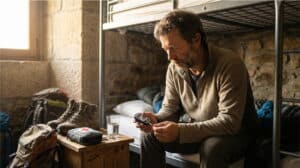
In Spain, you will find staffed mountain refuges, small family hotels, hostels, and rural houses scattered across the main hiking areas. It is advisable to book in advance, especially during summer and long weekends, just as you would when planning the Camino de Santiago, where availability can also be limited on specific dates.
How to organise transport for the start and end of each stage
On linear treks, the most practical option is to leave your car at the end of the route and take a taxi or public transport to the start, or vice versa. In many mountain areas, there are 4×4 taxi services or shuttle buses that reach high parking lots or trailheads, as is the case in Ordesa, Gredos, or the Val d’Aran. Check official park websites or local tourist offices for information.
Essential gear for two or three days of hiking
A 30–40 litre backpack is usually sufficient: hiking boots or shoes, layered clothing, a light fleece or down jacket, waterproof jacket, headtorch, basic first aid kit, sunscreen, cap, thin gloves if going to mid/high mountains, water, and some energy food. Always carry a map (paper or offline downloaded) and a power bank for your phone or GPS.
Mountain safety: weather forecast and escape alternatives
Check the specific mountain forecast, not just the valley. Be clear on where you can shorten stages or descend quickly if the weather deteriorates. In high mountain routes, a sudden weather change can turn an easy trek into a challenging experience; it is important to stay flexible and always prioritise safety.
10 weekend routes to experience a great trek in just two or three days
1. 3-day trek in Ordesa and Monte Perdido (Aragonese Pyrenees)
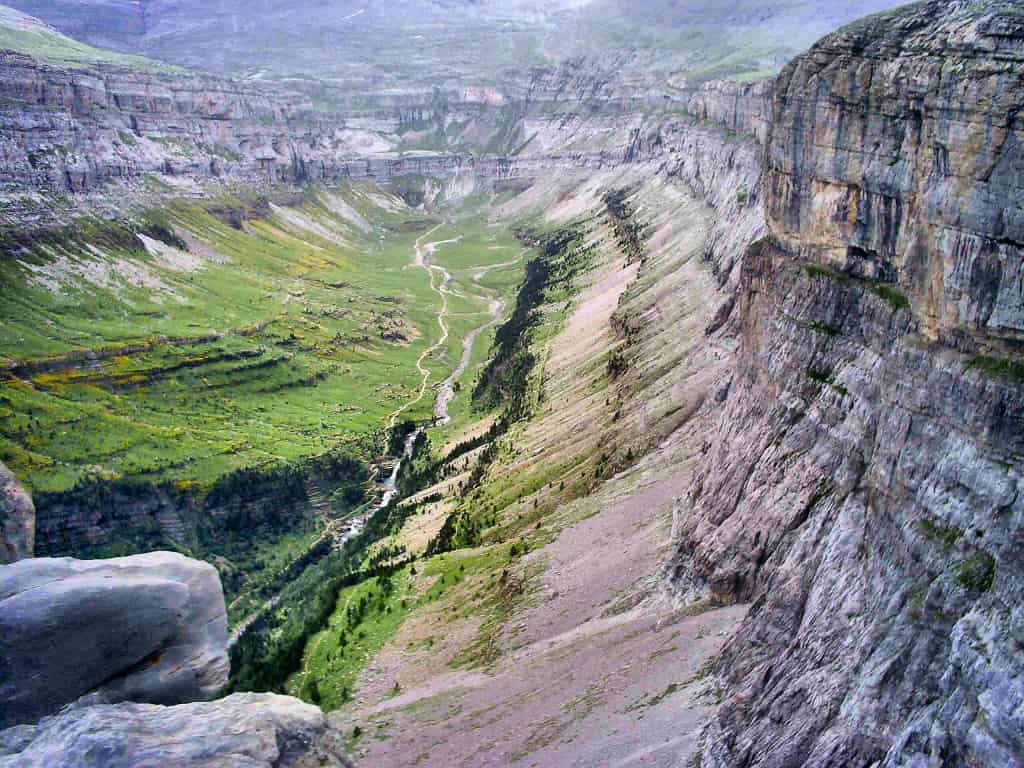
The Ordesa National Park and Monte Perdido allow you to complete a spectacular 3-day route through the Ordesa valley, the Góriz refuge, and the surrounding peaks and ledges. Guided proposals usually suggest:
- Day one: from the Ordesa Meadow to Góriz via the Hunters’ Trail and the Faja de Pelay (about 13 km with approximately 950 m of positive elevation gain).
- Day two: ascent to Monte Perdido (3,355 m) and return to the refuge (around 7–8 km, very demanding).
- Day three: descent back to the valley.
- Why it fits into a long weekend: Although it is an alpine trek, compressed into three days it allows you to experience sleeping outdoors, walking at altitude, and linking stages like on a long-distance route. Previous mountain experience and awareness of accumulated elevation gain are important.
- Recommended for: Ideal for hikers accustomed to high mountain routes and in good physical condition, who have already completed multi-day routes — such as consecutive stages of the Camino — and want to take a step further in more technical terrain with greater elevation gain.
2. 2-day circular through Laguna Grande and Cinco Lagunas (Sierra de Gredos)
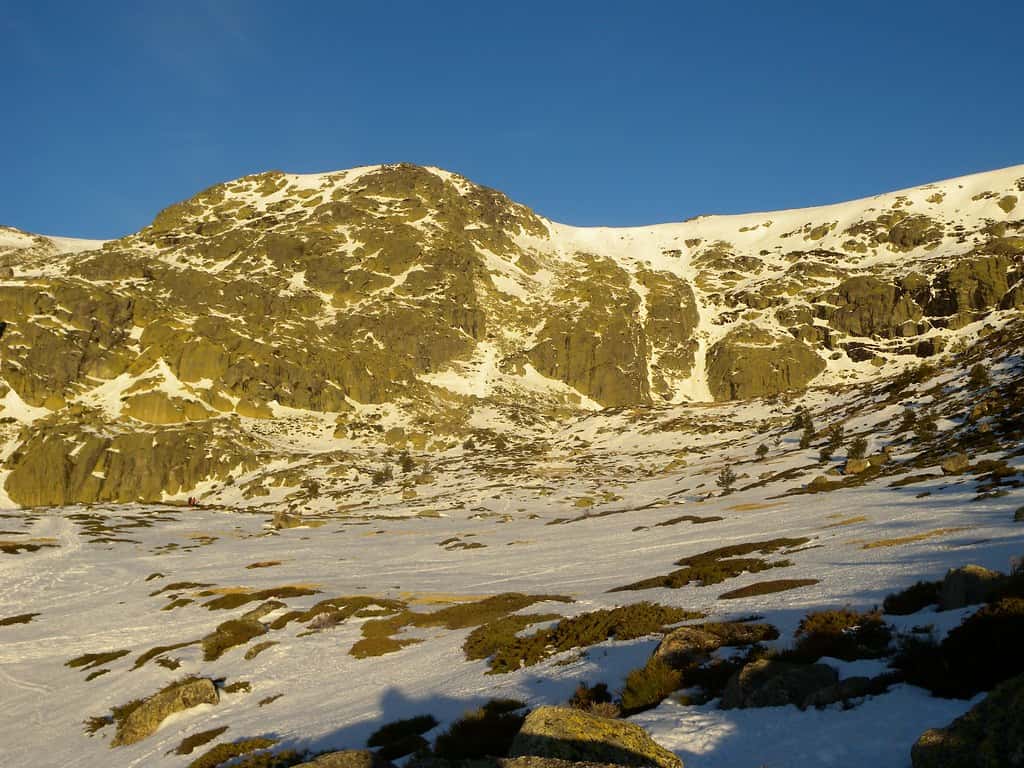
In the central Gredos massif, you can complete a two-day trek connecting Laguna Grande and the Cinco Lagunas cirque, starting from Navalperal de Tormes and staying overnight at the Elola refuge. Overall, the route covers about 30–35 km with nearly 1,800 m of cumulative positive elevation gain, depending on the variants.
- Recommended stages: A typical plan is to ascend on the first day from Navalperal to the Cinco Lagunas via the Pinar Gorge and descend to sleep at the Elola refuge, next to Laguna Grande. On the second day, return to the starting point descending via the Gredos Gorge. The scenery of glacial cirques, gullies, and peaks such as Almanzor makes this trek a compact “high route.”
- Practical tips: Requires good navigation skills in high mountain terrain and experience on rocky paths. It is an interesting option for those who have already managed multi-day marked itineraries and want to try something more alpine without extending the trip.
3. Ibones de Panticosa in 2–3 days (Tena Valley, Huesca Pyrenees)
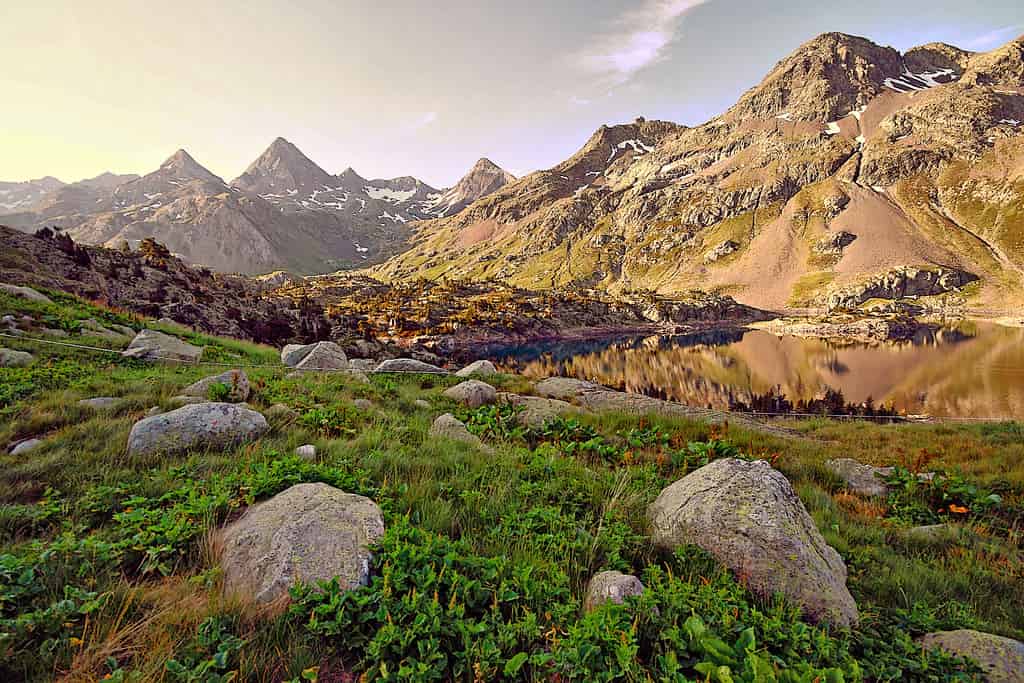
From the Panticosa Spa, several routes start that link mountain lakes (ibones) and refuges such as Bachimaña or the Bramatuero lakes. A weekend itinerary can combine the ascent to the Bachimaña ibones (around 13–16 km with approximately 900–1,000 m of elevation gain in a typical day) with visits to nearby lakes, such as Bramatuero or the Blue Ibones.
- Proposed trek.
- Day 1: ascent from the Panticosa Spa to the Bachimaña refuge and the surrounding ibones, with an overnight stay at the refuge.
- Day 2: a longer, more demanding route linking other lakes, or a relaxed descent combining viewpoints and swimming areas in the valley. It is also possible to add a third day, extending the trek to other nearby valleys.
- For whom. Perfect for hikers with some experience who want to get used to walking with a backpack and overnight stays in refuges, in a photogenic high granite mountain environment.
4. Circ de Colomèrs for a weekend (Val d’Aran, Catalan Pyrenees)
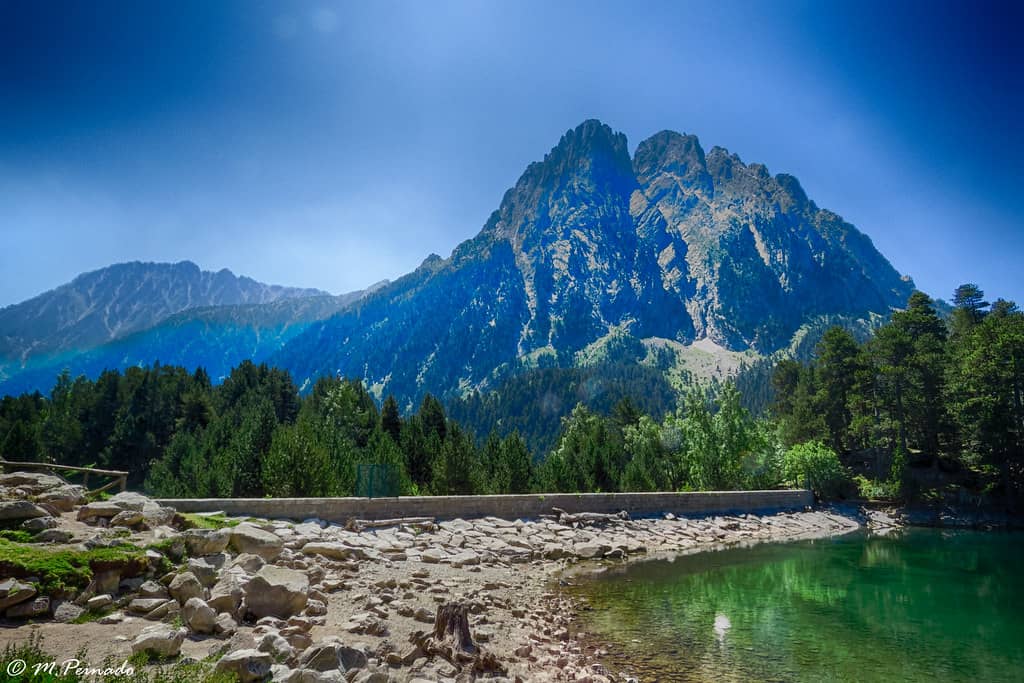
The Circ de Colomèrs, within the Parc Nacional d’Aigüestortes i Estany de Sant Maurici, is a glacial amphitheatre dotted with lakes. From the Banhs de Tredòs access point, you climb to the Colomèrs refuge (around 6–7 km of ascent) and from there you can complete a circuit linking several lakes in an additional day of around 12–13 km.
-
2-day itinerary
-
- Day 1: climb to the Colomèrs refuge, walk around nearby lakes and overnight at the refuge.
-
- Day 2: lake circuit and return to the valley.
It is an excellent introduction to refuge-to-refuge routes in the Pyrenees, a sort of “mini Carros de Foc”, but condensed into a weekend.
5. Poncebos – Vega de Urriellu in 2 days (Picos de Europa)
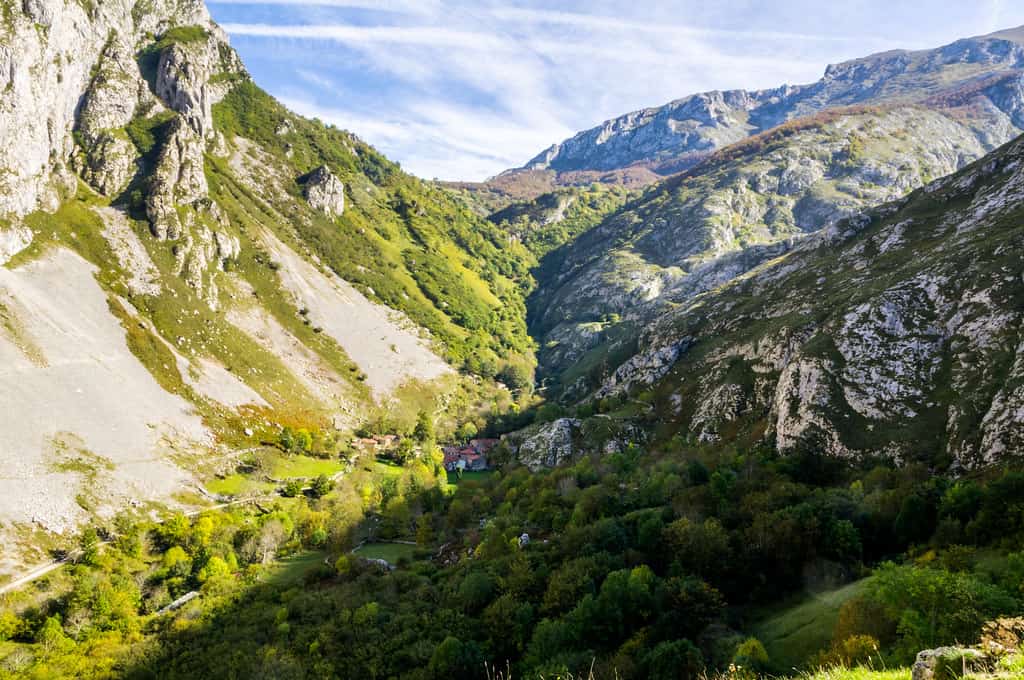
The route from Poncebos to the Vega de Urriellu is a classic of the Picos de Europa. It is a continuous ascent covering around 1,700 m of elevation gain, depending on the route chosen, over just under 9–11 km to reach the refuge at the foot of the legendary Picu Urriellu.
- How to organise it over a weekend. A common option is to climb from Poncebos to the refuge on the first day, taking it easy and starting early to avoid the heat. This way, on the second day, you can enjoy the surroundings and descend by the same route or via an alternative. Waking up under such an imposing wall is an unforgettable experience.
- Requirements. This is a demanding route in terms of elevation and is not recommended as a first multi-day trek, but it is very rewarding for those accustomed to long stages. The logistics of refuges, timing, and daily pace are reminiscent of organising an intense day on the Camino, but in a much more alpine environment.
6. Río Borosa and the Guadalquivir source area in 2 days (Sierra de Cazorla)
- First day: Río Borosa and Cerrada de Elías. The classic Río Borosa trail follows a path and track along the river, passes through the Cerrada de Elías — a spectacular section with walkways and narrow cliffs — and continues to the tunnels and the Valdeazores lagoon. The full round trip covers around 20–23 km, with moderate elevation gain.
- Second day: other easy routes in Cazorla. For a weekend, you can reserve Saturday for the Borosa and Sunday for a gentler itinerary around the Guadalquivir source or other marked trails in the natural park. These are easier routes, ideal for stretching your legs before returning home.
7. Saliencia Lakes and the Somiedo area for a weekend (Asturias)
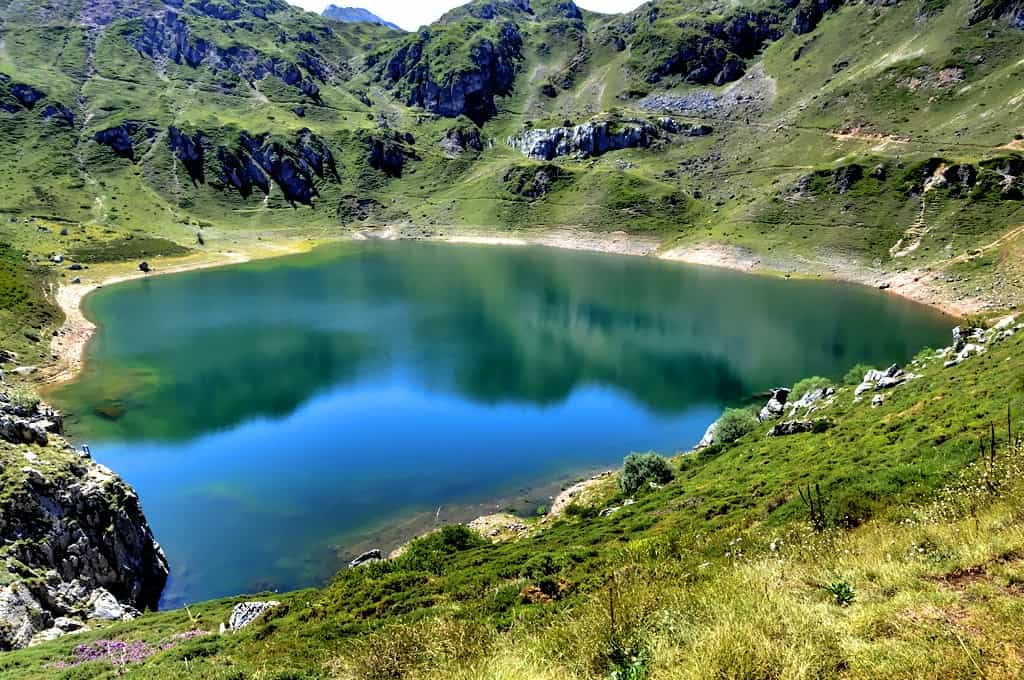
The Somiedo Natural Park is a benchmark destination for hiking in the Cantabrian Mountains. The Saliencia Lakes route starts from Alto de la Farrapona and passes several glacial lakes on an out-and-back itinerary of approximately 14–15 km, with an elevation gain of around 600–700 m and low to moderate difficulty.
- 2-day proposal.
- Day 1: complete Saliencia Lakes route, with numerous stops to enjoy viewpoints and traditional mountain pastures.
-
- Day 2: another different route in the park, such as Valle del Lago or a shorter circular route, to complete a varied weekend.
8. Mini 3-day trek in the Tena Valley from Panticosa Spa
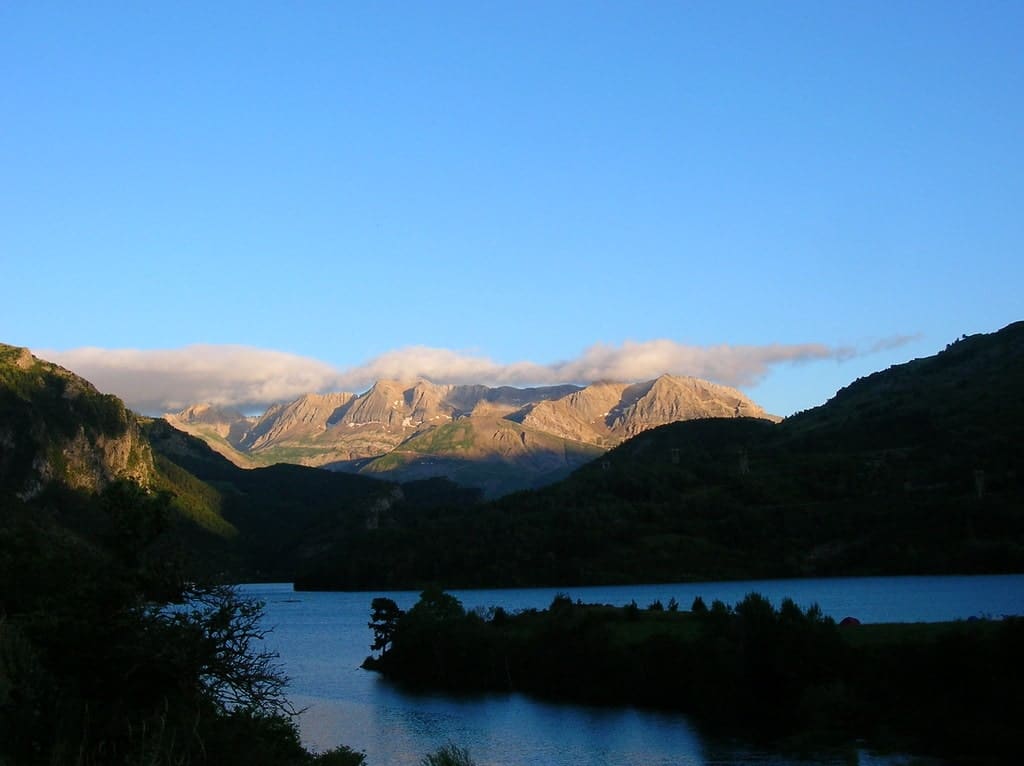
In addition to the nearest ibones, the Tena Valley allows linking refuges and mountain passes in a small 3-day trek starting and ending at the Panticosa Spa. By combining ascents to nearby passes and visits to different lakes, you can complete a high mountain route of around 40 km over three days, with daily stages of 12–15 km and significant elevation gains.
It is perfect for those who want to practice several consecutive days at altitude, sleep in refuges, and get used to managing fatigue and continuous elevation. This is especially useful if you plan to connect multiple stages of a long-distance route in the future.
9. Sections of the Camiño dos Faros on the Costa da Morte for a weekend
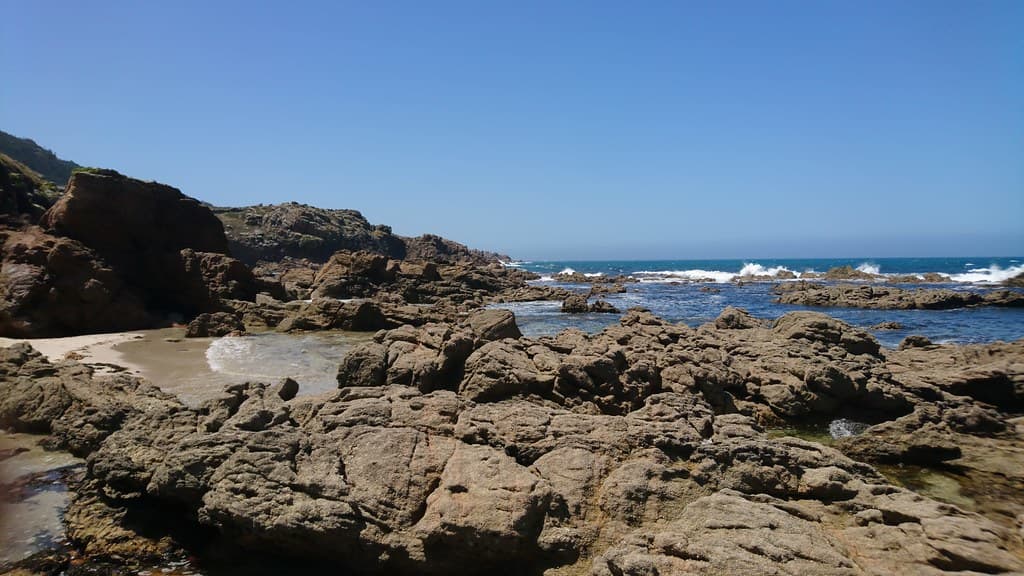
O Camiño dos Faros is a 200 km route connecting Malpica with Fisterra along the Costa da Morte, officially divided into 8 stages of around 18–27 km each.
- 2–3 day proposal. For a weekend, a very interesting option is to walk the first stage between Malpica and Niñóns (around 22 km of cliffs, beaches, and the Punta Nariga lighthouse) and continue the next day with part of the second or third stage, adjusting distances to your level.
The experience of linking lighthouses, coves, and fishing villages is somewhat reminiscent of coastal routes to Santiago, such as the stages of the spiritual variant. However, here the absolute protagonist is the wild coast of the Costa da Morte.
10. Trails of Ribeira Sacra and the Sil Canyons in 2–3 days
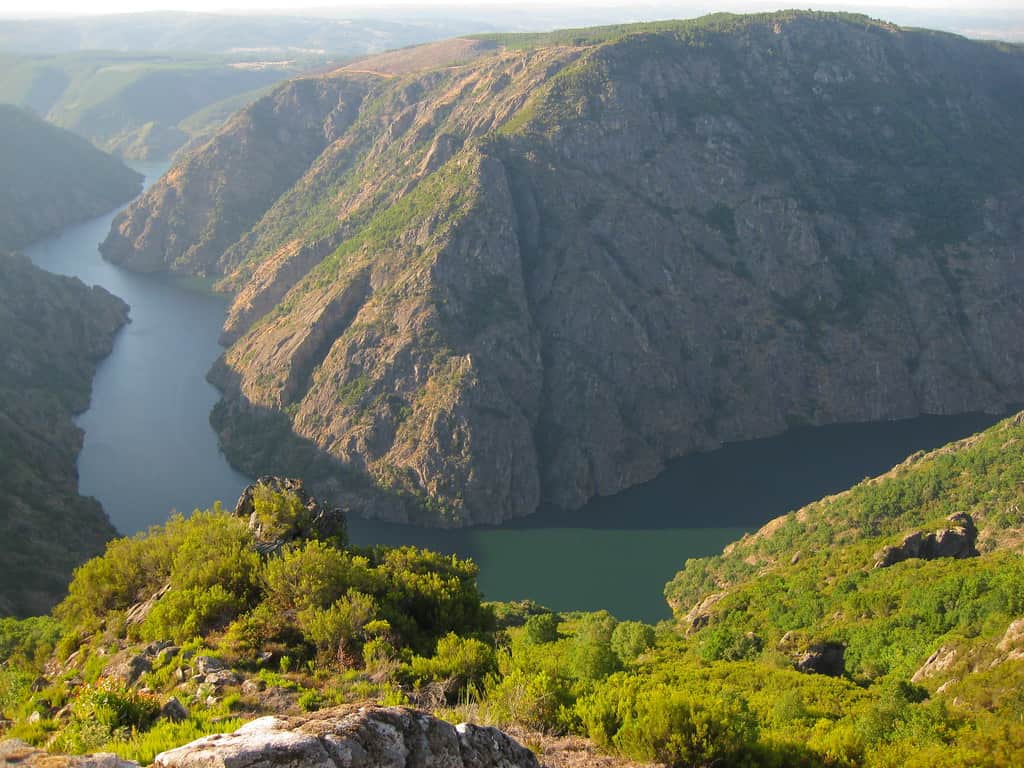
The Ribeira Sacra, between Lugo and Ourense, combines hillside vineyards, Atlantic forests, and deep river canyons. The Río Mao boardwalk route, marked as PR-G 177, offers a circular route of 11–16.5 km depending on the variant, with wooden walkways along the river and sections linking villages such as San Lourenzo de Barxacova and Forcas.
To complete the weekend, you can add another day of trails along the Sil viewpoints, visiting monasteries and natural viewpoints. The area is ideal for combining nature, heritage, and good gastronomy in a format very similar to some stages of the Camino from Ourense to Santiago, but focusing solely on exploring Ribeira Sacra.
How to choose your weekend route according to your hiker profile
- If it’s your first multi-day trek. Start with low or moderate difficulty routes, well-marked, and with good access to refuges or accommodation:
- Saliencia Lakes, Río Mao boardwalks, or a combination of easy routes in Cazorla are excellent first options. They allow you to experience walking for two consecutive days with a backpack without facing significant elevation or technical terrain.
- If you already have experience and want something more demanding. For those comfortable with long stages, Pyrenean treks like Ordesa–Monte Perdido, the Panticosa ibones, or Circ de Colomèrs offer tougher stages, high mountain terrain, and the need to manage weather and elevation more carefully.
- If travelling with family or inexperienced hikers. Choose short routes with gentle elevation, with the option to shorten if someone gets tired. Saliencia Lakes, partial Río Borosa routes, or simple sections of Ribeira Sacra are very suitable. Avoid exposed itineraries, aerial passages, or long scree slopes.
How to use these short treks to prepare for longer future routes
Each weekend trek is “real training” for future longer adventures. It helps you test your gear, adjust backpack weight, learn your pacing, and understand how your body responds to several hours of walking over consecutive days. If later you decide to undertake a long route to Santiago or any other major trek, you will do so with much more confidence.
Final tips to make the most of a 2–3 day hike
- What to check in the week before
-
- Detailed weather forecast (especially for mountains).
-
- Trail conditions and possible restrictions in national parks.
-
- Confirmed accommodation bookings.
-
- Track downloaded on phone or GPS, and a paper map if possible.
-
- Check your gear and basic first aid kit.
- How to minimise backpack weight. Think in layers and versatile clothing: one spare T-shirt, a light thermal layer, waterproof, a change of clothes for sleeping, and little else. Avoid doubling items “just in case” and favour quick-drying garments. Remember: every extra kilo is felt much more on ascents.
- Basic rules for respecting the environment and other hikers. Do not leave litter, respect flora and fauna, keep quiet in sensitive areas, and follow marked trails to prevent erosion. In refuges and shared accommodation, be considerate with rest times and the space of others.
Why these weekend escapes are as addictive as a long trek
A weekend trek allows you to disconnect from routine, discover new landscapes, and experience “travelling on foot” without waiting for holidays. Many hikers who try this format end up making it a regular part of their year: a couple of intense days that feel like a major adventure, while also preparing body and mind for longer future routes.
Frequently asked questions about weekend hiking routes
What fitness level do I need for a two-day trek?
It depends on the route, but generally you should feel comfortable walking 5–7 hours per day, with breaks, and tackling some elevation. Before attempting a demanding trek, try day hikes of similar distance and difficulty first.
Is it a good idea to do these routes alone?
Many people hike solo, but it’s important to consider your experience and the type of route. In high mountains or very remote areas, it is advisable to go with someone or join organised groups. If you go alone, always inform someone of your itinerary and expected return time.
Which months are most recommended?
In the mountains, late spring, summer, and early autumn are usually the best times, avoiding snow and ice unless you have specific experience. In coastal and lowland routes, almost all year is suitable, although in midsummer it is advisable to avoid the hottest hours of the day.