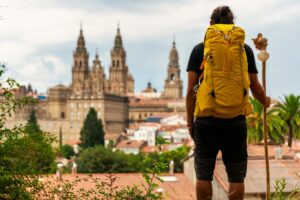
Abadín is a small rural municipality in the province of Lugo, Galicia, known for being a stop along the Northern Way of St. James. Although not a major tourist destination, it offers pilgrims lush green landscapes and peace and quiet in the heart of the Lucense Terra Chá region, along with a few historical and cultural points of interest worth discovering.
This agricultural and livestock-based settlement offers a welcome break for walkers after crossing the mountains of Mariña Lucense, allowing them to “breathe deeply” in its clean air and natural surroundings. Below, we highlight what to see in Abadín and its surroundings.
Índice de contenidos
Abadín on the Northern Way
The Northern Way (also known as the Coastal Way) passes through this village on its final stretch towards Santiago Cathedral. This last section of the Jacobean route enters Galicia via Ribadeo and passes through towns steeped in history such as Lourenzá and Mondoñedo. It then continues towards Gontán and Abadín before reaching Vilalba.
It lies right on the Way of St. James, having been a route used for centuries by pilgrims and traders. It’s no surprise that this area has preserved significant examples of ancient religious heritage, given its long-standing flow of walkers.
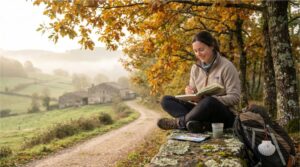
This is the region of A Terra Chá, with gently rolling terrain and green meadows, where livestock farming is the main activity. This is evident in the landscape: trails between pastures, native woodland, and scattered hamlets. Abadín itself is a small village, but it offers the basic services needed by pilgrims.
Many pilgrims enjoy the rural calm here after demanding mountain stages. They also appreciate touches like the warm local hospitality and the chance to rest at the Gontán Recreational Area, a green space ideal for a picnic and relaxation.
While the place may not be as well-known as other Jacobean landmarks, it offers a beautiful taste of inland Galicia. Its landscapes are part of the Northern Way’s charm: to the north lies the O Xistral mountain range, whose hills encircle the area, while to the south stretches the vast Lucense plain (chaira).
- Tip: if you’re planning your route along the Northern Way, remember that there are specialist Camino de Santiago tour companies that can help with logistics (accommodation, luggage transport, etc.), making your pilgrimage experience much easier.
Places of interest in and around Abadín
Abadín may be modest in terms of monuments, but it does preserve a few historically interesting spots that curious pilgrims will enjoy as they pass through.
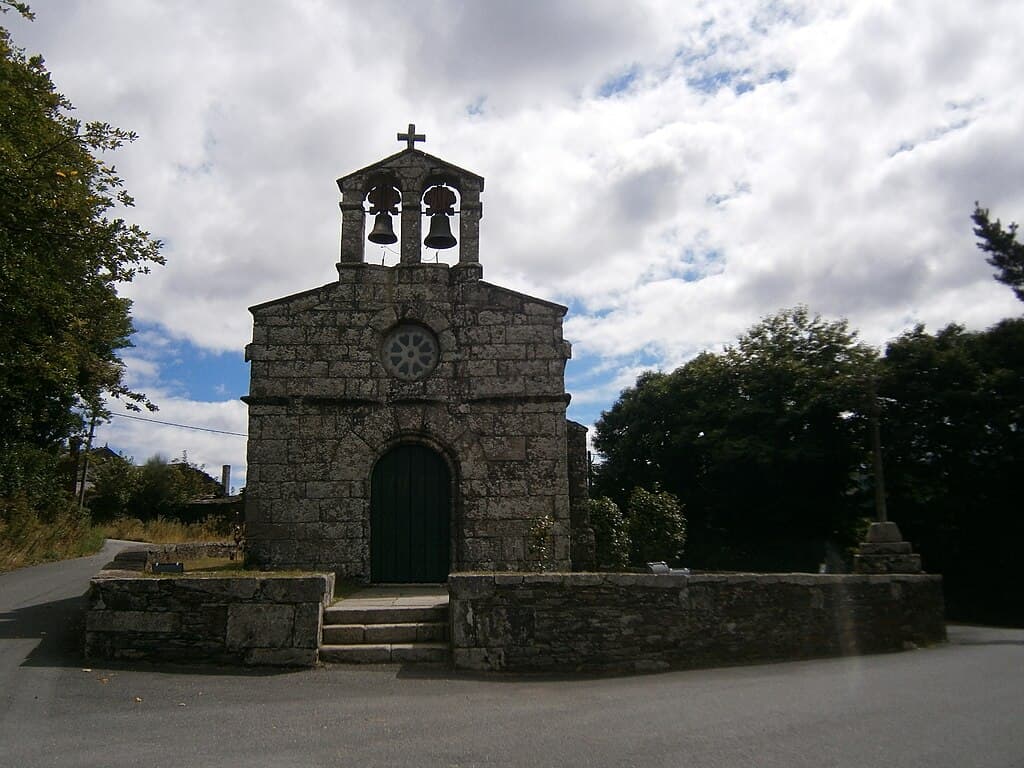
- Church of Santa María: this is the main local attraction and lies directly along the route. It is a Romanesque-style church from the 12th century, which has survived to the present day with minimal alterations.
The original structure still features its main façade, including a simple semi-circular arch at the entrance and a beautiful rose window above. At the top stands a typical Baroque-style espadaña with twin bell gables, which draws the attention of pilgrims as they approach. Inside, the church boasts a chancel renovated in the 16th century in Isabelline Gothic style, including a main chapel from that period, as well as a Renaissance altarpiece that adorns the altar. This balance between the original Romanesque architecture and later Gothic additions gives this small sanctuary a unique charm.
In the front courtyard, visitors will also find an 18th-century stone cross (cruceiro)—one of the iconic crucifixes so typical of the Galician landscape.
Not only does it provide a space for spiritual reflection, it also serves as a natural viewpoint: standing on a small hill, it offers splendid views over the valley and surrounding farmlands.
- Historic Bridges of Romariz: the municipality of Abadín is crisscrossed by several streams and small rivers, over which bridges were built as early as the medieval period to facilitate the passage of people and goods. Two of these ancient stone bridges are still well preserved in the parish of Romariz.
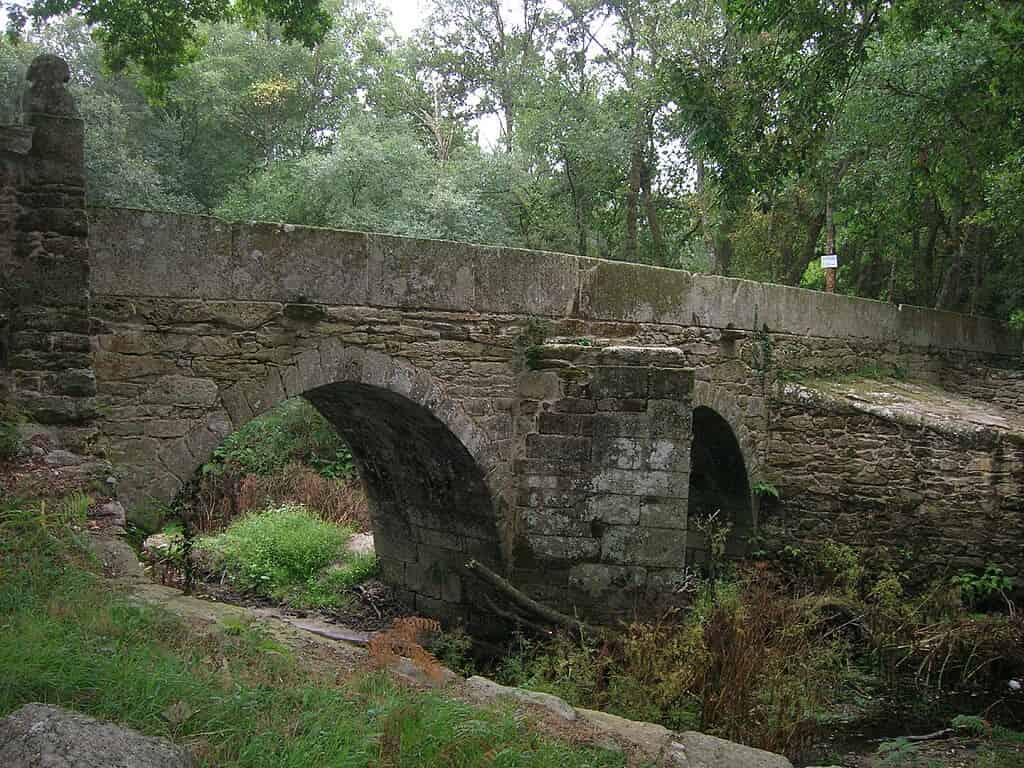
One of them is the well-known Ponte Vella de Martiñán, a medieval bridge (rebuilt in the 17th century) that crosses the River Batán, marking the boundary with Vilalba. If the pilgrim continues the stage towards Vilalba, they will pass near this bridge in the village of the same name, where they can admire its traditional stone architecture and natural surroundings.
- Romariz: for those with time and energy, taking a short detour of a few kilometres from the main route allows you to visit the Church of San Xoán de Romariz. This 13th-century Romanesque church has been recently restored and is a fine example of the enduring presence of medieval art in the rural parishes of the region.
- Not far away, in the parish of Montouto, lie the ruins of the old Church of Santa María (16th century). Though now abandoned, it features an interesting adjoining cemetery where a late Gothic baptismal font stands out.
- Archaeological heritage: despite its small size, this area harbours traces from times long before the Camino. Prehistoric remains have been found in its hills and meadows, including the Dolmen of Romariz and the structures of several castros (Celtic settlements) in places such as Os Castros, Fraiás (Moncelos), Abeledo, and Romariz itself.
Other noteworthy features include legendary rock formations such as Penas da Abaladoira and A Pena do Petitore, which are linked to ancient local beliefs. You’ll also find megalithic monuments in the parish of Fano.
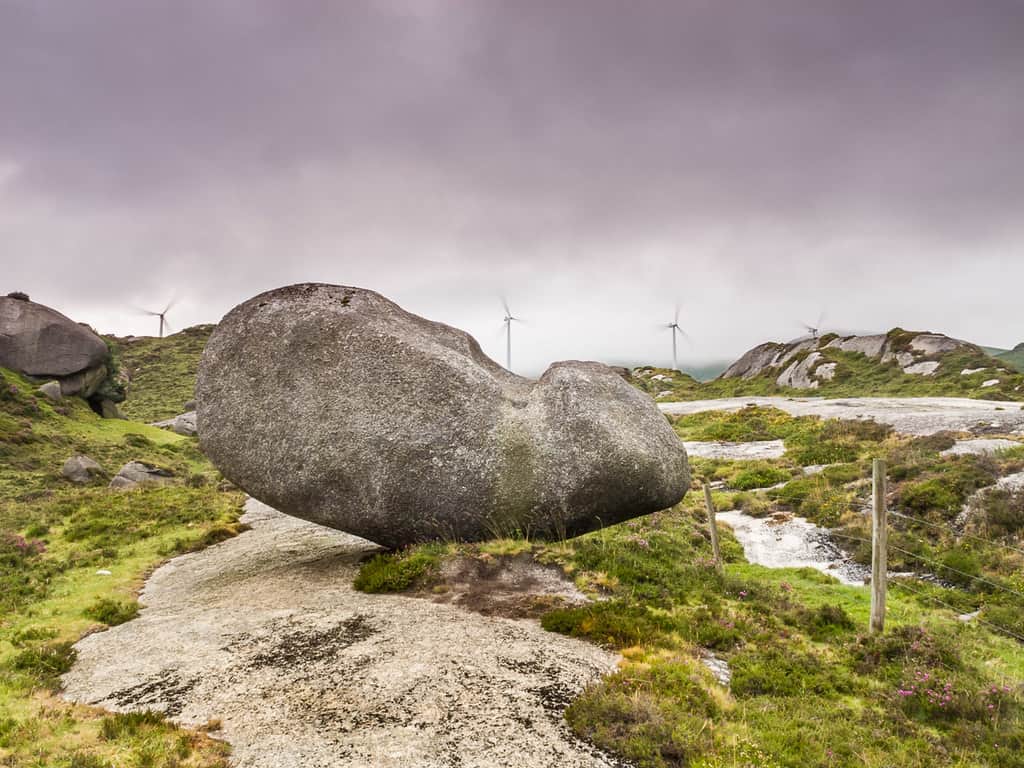
Although these archaeological sites aren’t part of the Jacobean route and usually fall outside the conventional pilgrim’s itinerary, knowing they exist adds cultural depth to the journey: the Terra Chá region has been inhabited since ancient times, and Abadín inherits this rich, millennia-old history.
- Corvite Mill: among the area’s ethnographic attractions is the Muíño de Corvite, a restored flour mill now serving as an ethnographic museum. Located in the parish of Corvite by the River A Fraga, it showcases the traditional workings of a mill and the associated agricultural trades.
In fact, a marked mill route starts from this spot, following the Anllo River’s channel past various mills in differing states of preservation. If a pilgrim happens to have an extra rest day (a rare but possible luxury), this route offers a true immersion into Galician rural culture and its farming traditions.
In summary, what you’ll find in Abadín are mostly features closely tied to the Camino itself (church, cruceiro, bridges) and the surrounding natural and historical setting. Don’t expect grand museums or imposing monuments, but rather charming and simple corners full of character.
Local Cuisine and Traditions
One of the great joys of the Camino is sampling the local cuisine. Throughout Terra Chá, the food is traditional Galician, with a strong emphasis on locally sourced produce and livestock. As a mainly livestock-rearing area, top-quality Galician beef and pork are in abundance, as well as dairy products.
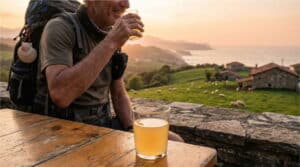
Nearby lies Vilalba, the heart of Terra Chá, renowned for its gastronomy—especially the cheese from San Simón da Costa (a smoked cheese with protected designation of origin) and its high-quality free-range chickens or capóns. Pilgrims will likely come across these delicacies in local taverns: a slice of San Simón cheese, a bowl of homemade Galician stew, or a good cut of veal are all excellent choices after a long day’s walk.
Other Galician staples also abound in the area, such as octopus á feira, meat or tuna empanadas, and simple homemade desserts. O Xistral honey and other native products (like turnip tops in season, chestnuts in autumn, etc.) are also part of the local offering.
As for festivities and traditions, Abadín preserves the spirit of old-time pilgrimages and agricultural fairs.
A standout event is the Feira de Santos in Gontán, a traditional livestock fair held every year at the start of November (on the first Saturday of the month) in Gontán. This centuries-old fair brings together locals, farmers, and visitors in a single day centred around the buying and selling of livestock and autumn produce, with contests to award the best cows, horses, etc., and displays of agricultural tools and machinery.
Other events include the End of Summer Sardine Festival (a popular community sardine feast) and celebrations promoting the region’s food and agricultural products.
On the religious calendar, each parish has its own patron saint day: for example, in Abadín parish, Santa María is honoured on 8 September; in Romariz, San Xoán is celebrated on 24 June (with traditional bonfires); and on 25 July (Feast of Saint James the Apostle), there are festivities in Moncelos, Quende, and other parishes.
Why Choose the Northern Way? A Comparison with Other Routes
Many pilgrims wonder which Camino de Santiago route to take, as there are several options (French, Primitivo, Portuguese, Northern, etc.), each with its own personality. If you’ve reached Abadín, it means you’ve chosen the Northern Way—a coastal and northern route with several distinctive features:
- Landscapes and surroundings: this route offers a unique combination of sea and mountains. Especially in its early stages, it alternates between stunning beaches, Cantabrian cliffs, wooded hills and lush forests. It’s prized for its scenic beauty and variety of ecosystems—different from the inland French Way or the milder, Atlantic coastal Portuguese route.
For instance, the route from Santander to Gijón on the Northern Way covers much of the Cantabrian coast, combining coastal and mountainous sections. The terrain is moderately challenging and the landscapes highly rewarding, making it an attractive route, albeit physically tougher than others.
Overall, the Northern Way is considered fairly demanding: the terrain is uneven, with frequent ascents and descents, more humidity, and occasionally longer stages. That shouldn’t discourage anyone—it simply calls for preparation for a rewarding challenge. The lower number of pilgrims also offers greater peace and perhaps a more introspective experience.
- Atmosphere and services: as it’s less crowded than the French Way, it has a calmer and more authentic feel, with less busy accommodation (except during peak season) and villages where pilgrims are still a welcome novelty. Nevertheless, the infrastructure is sufficient—you’ll find guesthouses in virtually every stage.
- Alternatives such as the Portuguese Way: on the other hand, the Portuguese Way (in its inland and coastal variants) is another popular route, generally less demanding. Its stages are flatter and the climate milder—ideal for beginners or those seeking a less challenging experience.
Compared to the Northern Way, the Portuguese route lacks major mountain ranges—it’s a gentler journey, but just as picturesque, passing through lovely rural landscapes in Portugal and Galicia.
- For example, coastal routes like the Portuguese Way from Porto to A Guarda are easy to follow, with good paths and a strong maritime-Portuguese atmosphere.
- Then, the route from A Guarda to Santiago continues along the Galician coast from the mouth of the River Miño to Compostela. Here, you’ll encounter mostly flat stretches, wooden boardwalks by the sea and sweeping views—perfect for relaxed or recovery stages.
In conclusion, choosing the Northern Way means opting for a less crowded route, rich in coastal and mountainous landscapes, and steeped in history (it was one of the first Jacobean routes used in the Middle Ages).
Abadín exemplifies the subtle charm found along this route: a peaceful village, with its rural culture intact, welcoming pilgrims amid endless meadows and legendary hills. It may not have the grand cathedrals of other routes, but it offers the authentic Galician essence in every cruceiro, every village fair, and every smile from its people.