Sobrado dos Monxes is a small Galician town steeped in history, right on the Northern Way of the Camino de Santiago. Located in the province of A Coruña, its identity is closely linked to the famous Monastery of Santa María, which dominates the village.
Despite its small size, it offers pilgrims all the basic services needed to finish a stage without any setbacks. In fact, it remains to this day an important place of spirituality and pilgrim hospitality.
Whether you’re walking the Way on your own or through organised Camino de Santiago tours, it’s well worth discovering what to see in Sobrado and its surroundings — always from the perspective of a walker.
Índice de contenidos
Why choose the Northern Way? A comparison of Jacobean routes
There are multiple Jacobean routes leading to Santiago de Compostela, each with its own character, history, and level of difficulty. Choosing one over another depends on the kind of experience you’re looking for as a pilgrim — spiritual, cultural, natural, or physical. Below is a comparison of the main Camino de Santiago routes to help you decide which best suits your personal motivation:
French Way: the classic and most popular route
The French Way is the quintessential route. It spans nearly 800 km from Saint-Jean-Pied-de-Port on the French side of the Pyrenees to Santiago de Compostela. It’s the most well-known and most travelled (attracting around 70% of all pilgrims each year), and it’s the best equipped in terms of signage and services.
The route passes through iconic places such as Roncesvalles, Pamplona, Logroño, Burgos, León, Astorga, and O Cebreiro, before entering Galicia inland. This route is rich in history, culture, and Romanesque art and allows for greater social interaction among walkers — though in peak season it can feel overcrowded.
Portuguese Way: spirituality and Atlantic charm
The Portuguese Way is the second most popular route. It usually begins in Porto (240 km), and it can be followed via two variants: the more traditional inland route, or the increasingly popular Portuguese Coastal Way, ideal for those who want the sea as a constant companion. It passes through charming towns like Viana do Castelo, Caminha, A Guarda, Oia, Baiona, and Vigo.
This route stands out for its natural beauty and mild climate, as well as peaceful fishing villages and unique coastal landscapes.
- To find out more, you can explore the full itinerary of the Portuguese Way from Porto to A Guarda — an ideal choice for those wanting to combine nature, heritage, and Atlantic gastronomy.
- From A Guarda, the route enters Galicia. The Camino from A Guarda to Santiago reveals a seafaring and welcoming side of Galicia all the way to Compostela.
Its difficulty is medium-low, making it accessible to beginners, and the range of accommodation and services has grown significantly in recent years.
Original Way: the oldest and most mountainous
The Original Way is considered the first pilgrimage route, followed by King Alfonso II in the 9th century from Oviedo. Spanning approximately 315 km, it cuts through the heart of the Asturian and Galician mountains, making it one of the most physically demanding.
It’s also less travelled, offering a more intimate and quiet experience. The effort is rewarded with breathtaking landscapes, authentic rural villages, and a very pure sense of the Camino.
English Way: from the Galician estuaries
The English Way was used for centuries by pilgrims arriving from northern Europe by ship, docking at the ports of Ferrol or A Coruña. Today, the route can be started in Ferrol (120 km, the minimum distance required to obtain the Compostela) or in A Coruña (75 km, which can be supplemented with a religious certificate for those not meeting the minimum distance).
It is a short but intense route with many ups and downs, crossing forests, rivers, and small villages. As it runs entirely within Galicia, it has a distinct identity and is perfect for those with limited time who still want a complete experience. Its peaceful atmosphere and moderate difficulty also make it a great first introduction to the Camino.
So what makes the Northern Way so special? Here are a few key reasons:
- Stunning coastal scenery: this route follows the entire Cantabrian coastline from Irún to Galicia. It offers a unique scenic experience, alternating between beaches, cliffs, and lush green forests. In summer, it has the added benefit of passing by numerous beaches perfect for a refreshing dip — something rare on the more inland routes.
-
- Unmissable stretches, like the Camino de Santiago from Santander to Gijón, showcase the full splendour of the Cantabrian Sea.
- Less crowded and more authentic: around 7% of pilgrims choose this route. That means quieter stages and less crowded towns — ideal for those seeking solitude and authenticity. Although its popularity has grown (over 20,000 pilgrims in 2022), it remains a relatively uncrowded route.
-
- Pilgrims here enjoy a more intimate camaraderie and discover hidden gems that often go unnoticed on other routes — such as the Sobrado dos Monxes Monastery itself.
- A challenge with variety for experienced pilgrims: this route is considered medium in difficulty. It features long stages with frequent elevation changes, making it more physically challenging than the flatter Portuguese or French sections. It’s perfect for more seasoned pilgrims who want to blend adventure with spirituality.
-
- In return for the effort, the route offers unspoilt landscapes, picturesque fishing villages, and the satisfaction of treading a historic path. Its undulating terrain is comparable in difficulty to the Original Way, though without the latter’s high mountain sections.
- Cultural and gastronomic richness of northern Spain: this route crosses regions with strong identities — the Basque Country, Cantabria, Asturias, and Galicia. Pilgrims will enjoy everything from Basque pintxos to Asturian fabada, Galician cheeses, and seafood — a true gastro-cultural journey.
-
- Cities such as San Sebastián, Bilbao, and Santander offer a cultural heritage different from inland routes. While its artistic landmarks are more spread out, it still includes notable highlights (churches, monasteries, historic centres in coastal cities).
What to see in Sobrado dos Monxes
Sobrado dos Monxes is part of the final stretch of the Northern Way. In fact, the last official stage of this route starts from here, covering 22 km to Arzúa, where it merges with the French Way. For this reason, many pilgrims arrive here filled with emotion, knowing they are very close to Santiago — just 70 km from the final goal.
Although it’s a small place, tucked away from major roads, it treasures points of interest linked to its rich monastic history and natural surroundings. Below, we highlight its must-see attractions:
Monastery of Santa María de Sobrado
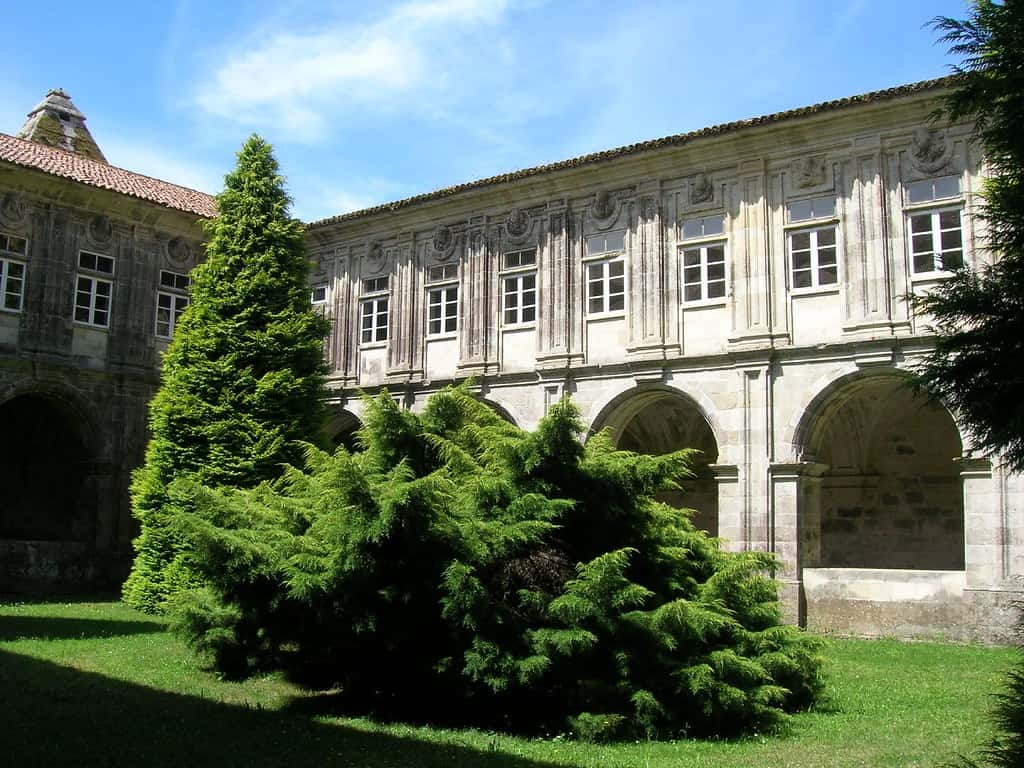
The Monastery of Santa María de Sobrado dos Monxes is, without doubt, the village’s main landmark.
Originally founded in the 10th century, it gained prominence when it joined the Cistercian Order in 1142. It was the first Cistercian monastery on the Iberian Peninsula and one of the most powerful in medieval Galicia.
Its walls witnessed centuries of splendour and decline: after thriving during the 12th and 13th centuries, it fell into abandonment following the Ecclesiastical Confiscations of 1834, lying in ruins for over a century. In the mid-20th century, monastic life was revived. In 1954 its reconstruction began and in 1966 a new community of monks returned to the cloister, restoring spirituality to Sobrado.
Architecturally, the complex is a gem of Galician baroque. Its imposing main façade, completed in the late 17th century, impresses with its grand design. Inside, the monastery houses several areas of great interest: the Church of Santa María (Latin cross layout, with elements from the original 10th-century temple), a 16th-century Renaissance sacristy, and various cloisters.
One of these is the Cloister of the Pilgrims, built in the 18th century, a reflection of this monastery’s long-standing tradition of hospitality. Wandering through its halls and courtyards is like travelling back in time: the monastic kitchen, the chapter house, and other corners transport visitors to distant eras.
Today, the monastery is still active. It is inhabited by Benedictine monks who care for the site, and it also offers lodging for pilgrims within the grounds.
Lago de Sobrado
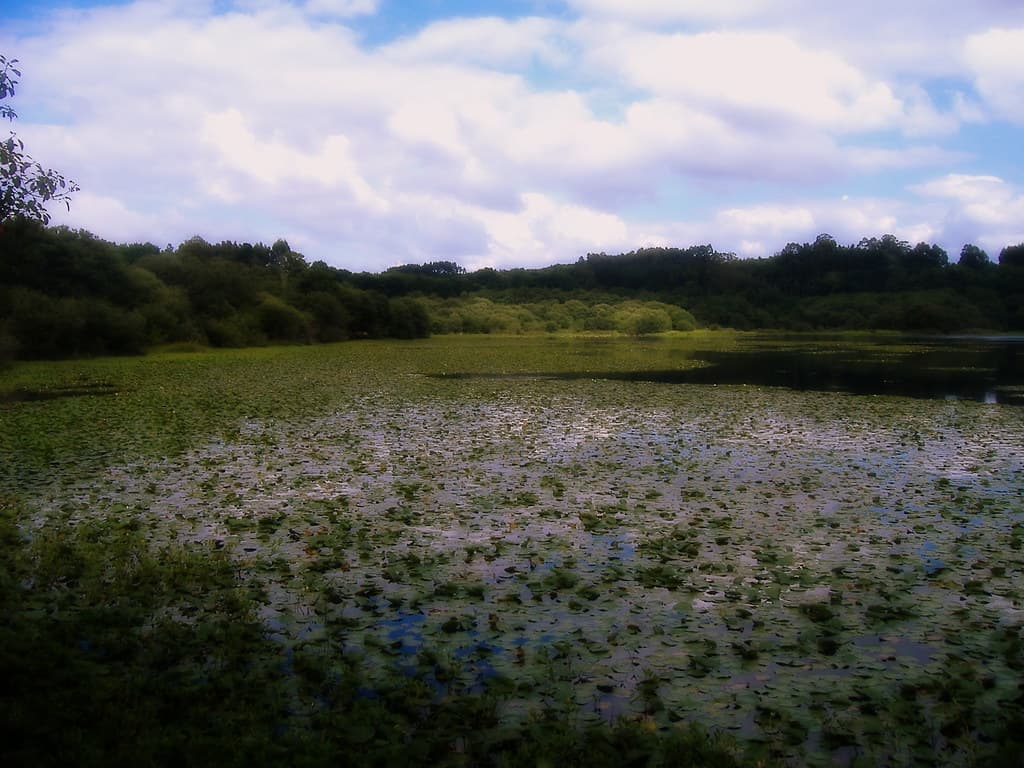
Very close to the monastery lies the Lagoon of Sobrado. This wetland is one of the area’s most outstanding natural spots thanks to its rich aquatic flora and fauna, to the extent that it is protected under the European Natura 2000 Network.
What many pilgrims may not know is that it is not a natural lake, but rather an artificial one: it was created in the 15th century by means of a dam built by the monks to create a large pond.
The lagoon covers around 10 hectares and, over time, it has naturalised, becoming a haven for many species of water birds. It is currently managed for conservation purposes (since 1992 it has belonged to the Galician Society of Natural History).
There is a simple path around the water — perfect for stretching your legs after a stage and spotting ducks, herons, and other local birdlife.
Roman Camp of A Ciadella
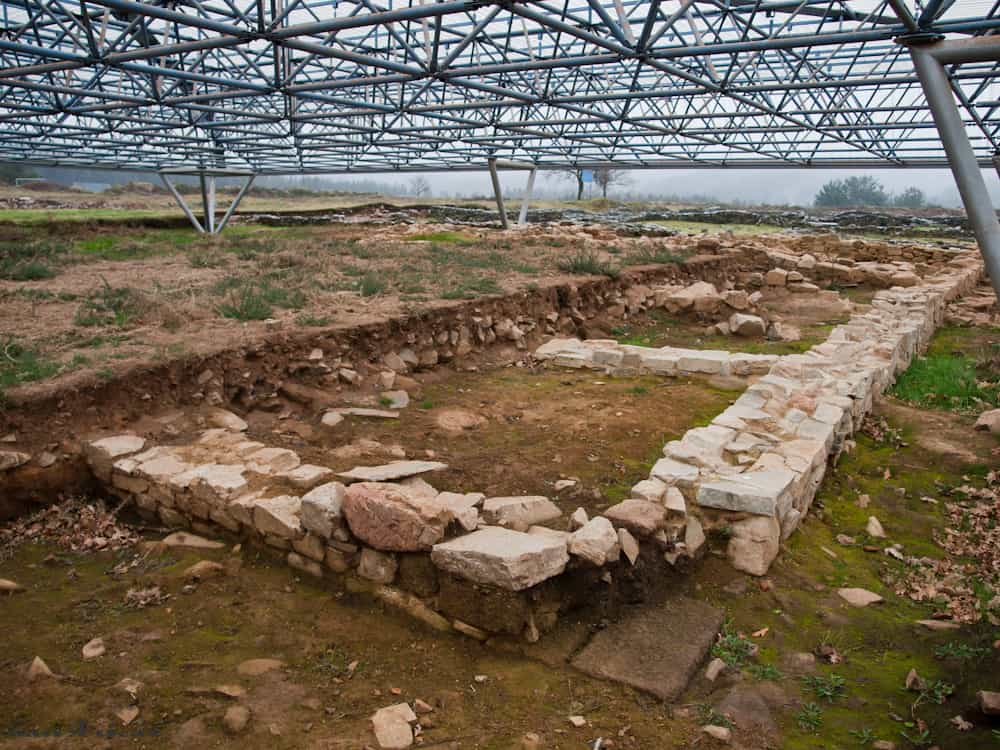
Another point of historical interest nearby is the Roman Camp of A Ciadella. These are the archaeological remains of a former Roman military settlement, located near the village and church of Ciadella, just a few kilometres from Sobrado.
During the imperial period, this site housed the Cohors I Celtiberorum unit — evidence of the Roman presence in inland Galicia. Today, you can see the ruins of the fortification, remnants of the walls, and traces of the defensive ditch that once surrounded it. The first excavations were carried out in 1934, revealing towers, walls, and even a megalith reused in the structure.
The site, declared a Site of Cultural Interest, has been owned by the Xunta de Galicia since 1990 and features informative panels for visitors. While it’s slightly off the main Camino route, some pilgrims take a short detour to visit this Roman remnant that adds a layer of historical context to the journey.
Traditions and gastronomy of Sobrado
Despite its modest size, Sobrado dos Monxes keeps alive a range of cultural and culinary traditions that enrich the pilgrim’s experience. Below, we explore its most noteworthy customs — from local cuisine to annual festivals — always with the walker’s interests in mind.
Local gastronomy
Like any good Galician village, Sobrado delights visitors with the region’s typical flavours.
One of its star products is Arzúa-Ulloa cheese, a delicious cow’s milk cheese with protected designation of origin, produced throughout the region. Creamy in texture and mild in flavour, this cheese is often a favourite among pilgrims. It can be enjoyed on its own or with rustic bread and pairs beautifully with young Galician red or white wines.
You’ll also often find Galician beef on village menus, as this geographically protected meat is a source of local pride. Many bars serve traditional Galician broth or homemade empanadas — perfect for warming up and recharging energy.
As for culinary celebrations, the most important is the Trout Fair (Feira da Troita), a food festival held around the 10th of August. During the event, locals set up food and craft stalls, with music and dancing. The highlight dish is “trucha a la montañesa” — mountain-style trout stewed with bacon and spicy seasoning.
Another unique event is the Festa do Pan, a celebration of the village’s traditional bread. This event pays homage to Sobrado’s long baking tradition, with demonstrations of artisan bread-making, tastings, and folk performances. Pilgrims visiting during this festival can enjoy music and dancing while sampling different types of Galician wood-fired bread.
And finally, we can’t forget the sweet offerings: here you’ll find traditional melindres and Galician almond pastries, or homemade cakes from the local bakery — perfect with a coffee after your stage.
Festivals and local customs
Sobrado’s festival calendar includes several patron saint and folk celebrations that may interest curious pilgrims.
The Feast of Saint Peter, patron of Sobrado dos Monxes, takes place every year on 29 and 30 June. During these days, the village is decorated, and solemn masses, lively evening dances with live music, and other community activities are organised.
Throughout the year, several romerías and traditional festivals are held in the local parishes. For example, in mid-September, there is the Virxe dos Dolores festival, in which locals honour the Virgin of Sorrows with religious ceremonies and community events.
Also noteworthy is the warm monastic tradition that continues in Sobrado. The monastery’s monks keep their daily prayer rituals open to anyone who wishes to join. Many pilgrims attend the evening mass sung at the monastery, known for its moving Gregorian chants echoing under the stone vaults.
This simple, spiritual twilight service has become something of an “attraction” for pilgrims. It offers a moment of introspection and connection with the true spirit of the Camino in a unique setting.
In summary, Sobrado dos Monxes may not be a major tourist centre, but for those walking the Camino de Santiago, it is a truly special place. Its imposing monastery, serene natural surroundings, and vibrant traditions offer exactly what a walker needs at this stage of the journey: peace, culture, and human warmth.
Upon arriving here, you’ll feel that every stone and every person has a story to tell — a story tied to the Camino. Enjoy its simple charms, recharge with its homemade food, join in its customs if the timing is right, and continue your route knowing that this little corner of Galicia will leave a mark on your pilgrimage. Buen Camino!