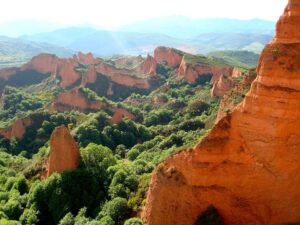
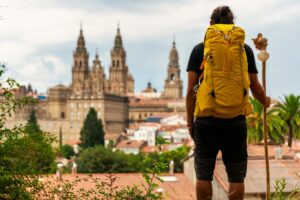
The Camino de Santiago is an experience that thousands of pilgrims undertake every year in search of adventure, spirituality, or simply a time to disconnect.
Although spring and summer are usually the most popular seasons to embark on the route, more and more walkers are discovering the advantages of doing it in autumn. Unique colours, less crowds, and a more pleasant climate make these months an ideal time to walk the Camino paths.
If you prefer to have a more set plan —especially on long weekends or public holidays— some people choose to coordinate with trusted Camino de Santiago agencies. Whatever your style, whether independent or assisted, this season will gift you perfect days for walking.
In this article, we explore why autumn is an ideal time to walk the Camino, how the main routes are experienced in this season, and practical tips to make the most of it.
Índice de contenidos
The Charm of the Camino de Santiago in Autumn
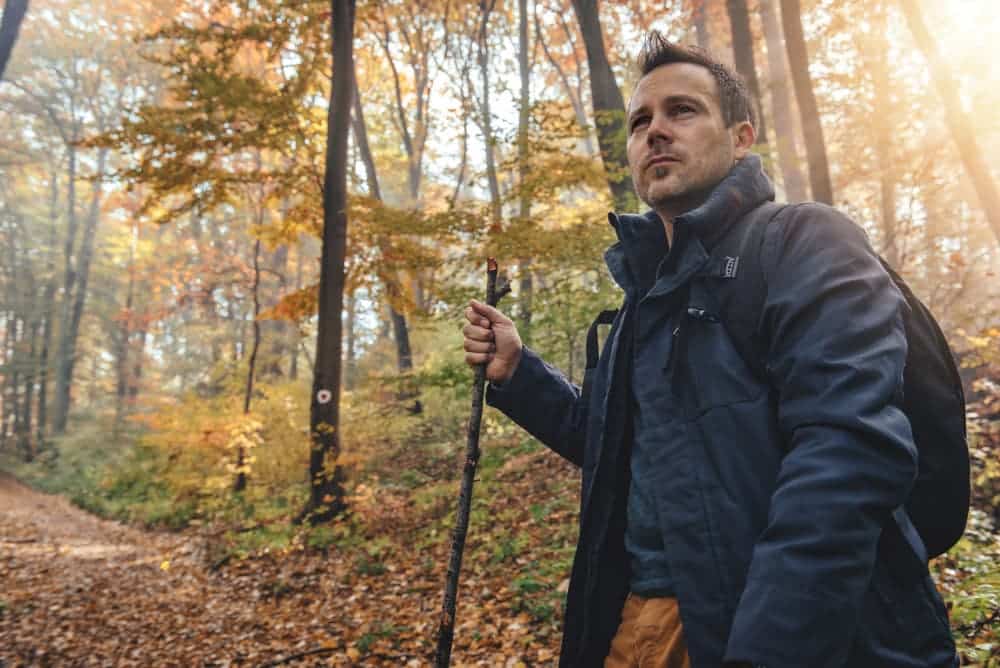
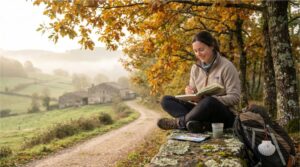
Autumn transforms the Camino into a spectacle of contrasts. The oak, chestnut, and beech forests display a warm colour palette that accompanies the pilgrim kilometre by kilometre. Vineyards at harvest time, dewy meadows, and gentle mists at dawn create an intimate and highly photogenic atmosphere.
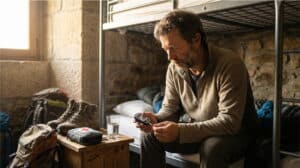
Additionally, the reduction in the number of walkers compared to July and August makes the route a more peaceful space. Conversations with fellow pilgrims occur more spontaneously and authentically, and the hostels regain a relaxed pace that encourages rest and camaraderie.
The climate is in your favour: mild temperatures and less heat than in summer. It is true that the chances of rain increase, especially in the north, but this same humidity enhances the greenery of the landscapes and refreshes the air. With a good waterproof jacket, these days are even enjoyable in light rain.
Advantages of Pilgrimage in Autumn
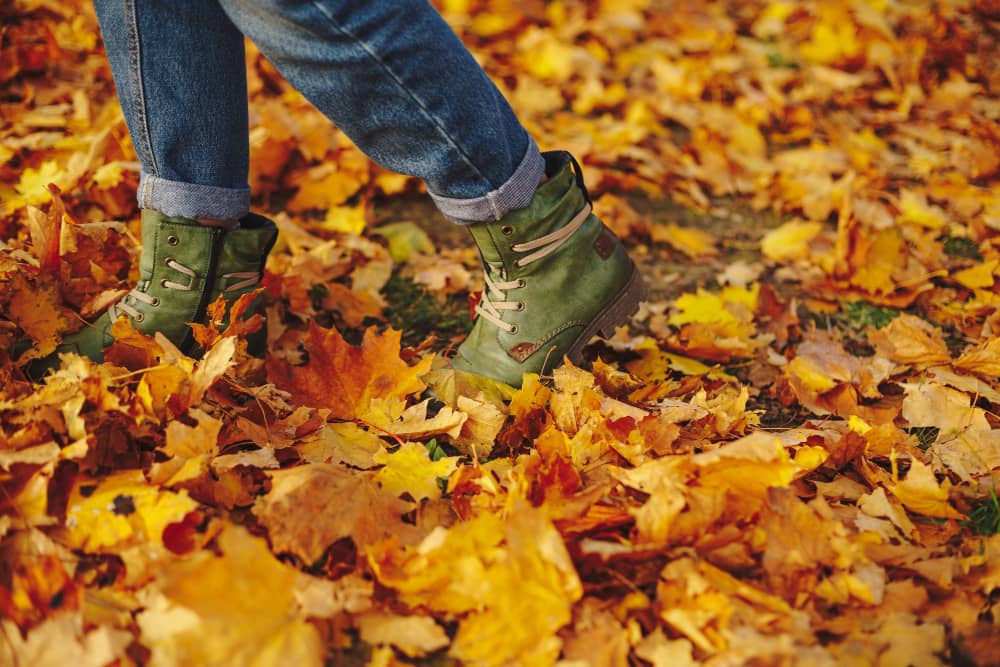
- More availability in accommodations and services. With fewer people, finding a bed is easier and you can afford to be a little more flexible with your stages. It’s a good idea to book for long weekends or local holidays, but the pressure is much lower than during peak season.
- More comfortable walks. In September, October, and November, average temperatures are usually in the “comfortable” range for walking. This helps maintain a steady pace and finish each stage feeling physically better.
- Local culture and festivals. In autumn, grape harvests, chestnut festivals, food fairs, and patron saint celebrations coincide. Immersing yourself in local life adds value to your journey and multiplies the memories: music in the squares, artisan products, seasonal cuisine…
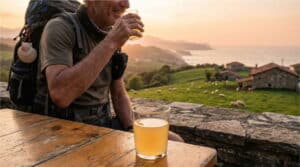
- Comforting gastronomy. Mushrooms, broths, stews, roasted chestnuts, and young wines. Autumn cuisine gives you energy and warmth after the stage. Additionally, the lower volume of visitors means you can enjoy bars and taverns at a slower pace.
The Different Routes of the Camino de Santiago in Autumn
Each route has its character, and this season is clearly felt along them. Below, we review the most popular ones, connecting their landscapes with the advantages of autumn.
Camino Francés
The best-known route with the best infrastructure throughout the year. In autumn, the Camino Francés “slows down”: the hostels are less crowded, the villages are quieter, and conversations last longer.
- Landscape and climate: vineyards in La Rioja and Bierzo at harvest time, golden plateaus in Castilla, and damp forests in Galicia. Pleasant temperatures during the day and cooler evenings.
- Crowds and infrastructure: excellent network of services open; fewer crowds than in summer, which makes it easier to improvise a shorter or longer stage if you feel up to it.
- Seasonal gastronomy: young wines, mushrooms, and hearty dishes that warm you up after long days of walking.
Camino del Norte
A coastal route of great beauty, with cliffs, beaches, and mountains overlooking the Bay of Biscay. These months are particularly good for it, although you must accept its changing weather.
- Landscape and climate: dramatic skies, morning mist, and intense green landscapes. Mild temperatures, but with more frequent rainfall than inland.
- Crowds and infrastructure: fewer people than in summer; coastal towns and cities are more livable, with a good selection of accommodation.
- Recommended section: if you’re looking for a shorter and more peaceful coastal experience, the Camino de Santiago Santander to Gijón offers maritime essence, good views, and sufficient services in autumn.
- Gastronomy: fresh fish and seafood, cider, and hearty dishes that are wonderful after the rain.
Portuguese Way
It has grown in popularity for its balance between nature, heritage, and services. It offers both inland and coastal variants, both very enjoyable in autumn.
- Landscape and Weather: evergreen forests and valleys, with golden hues as the leaves fall; mild temperatures and a humid atmosphere that is very manageable for walking.
- Crowds and Infrastructure: less congestion than in August; welcoming towns well-prepared for pilgrims.
- Notable Variants:
- The Portuguese Way from Porto to A Guarda is a quiet alternative, ideal if you are looking for a balance between the sea and green areas, with fewer pilgrims.
-
- The Way from A Guarda to Santiago de Compostela offers a maritime character, lighthouses, walks along the Atlantic and Atlantic cuisine (fish, seafood).
- Gastronomy: soups, cod, green wines, empanadas, and seafood upon arrival in Galicia.
Primitive Way
Mountainous, demanding, and very authentic. September, October, and November shine with their stillness and landscapes.
- Landscape and Weather: morning fog that opens up to views of valleys, beech forests in reddish tones, and rivers with a lively flow. Fresh temperatures; rain is possible, so good footwear and waterproof gear are necessary.
- Crowds and Infrastructure: fewer pilgrims, which enhances the feeling of adventure; it’s advisable to check schedules and accommodation availability in less populated sections.
- Experience: intense stages rewarded with silence, introspection, and unspoiled nature.
English Way
An ideal option if you have fewer days. It is especially peaceful in autumn.
- Landscape and Weather: Galician villages, oak groves, and damp paths; mild temperatures with the possibility of showers.
- Crowds and Infrastructure: easy to find accommodation; very authentic local atmosphere and friendly service.
- Gastronomy: broths, lacón (salted pork), empanadas, and traditional desserts that replenish both body and spirit.
Way to Finisterre
A continuation from Santiago to the Atlantic coast: a “walking beyond” full of symbolism.
- Landscape and Weather: forests that lead to cliffs and beaches open to the ocean; postcard-worthy sunsets. Autumn brings vibrant skies and fewer visitors.
- Crowds and Infrastructure: low pilgrim density, an intimate pace, and available accommodation; a great time to savour each kilometre without rush.
- Experience: reaching Fisterra or Muxía at this time of year enhances that feeling of closure; the sea and the wind complete the pilgrimage with an emotional finishing touch that is hard to forget.
Practical Tips for Doing the Camino in Autumn
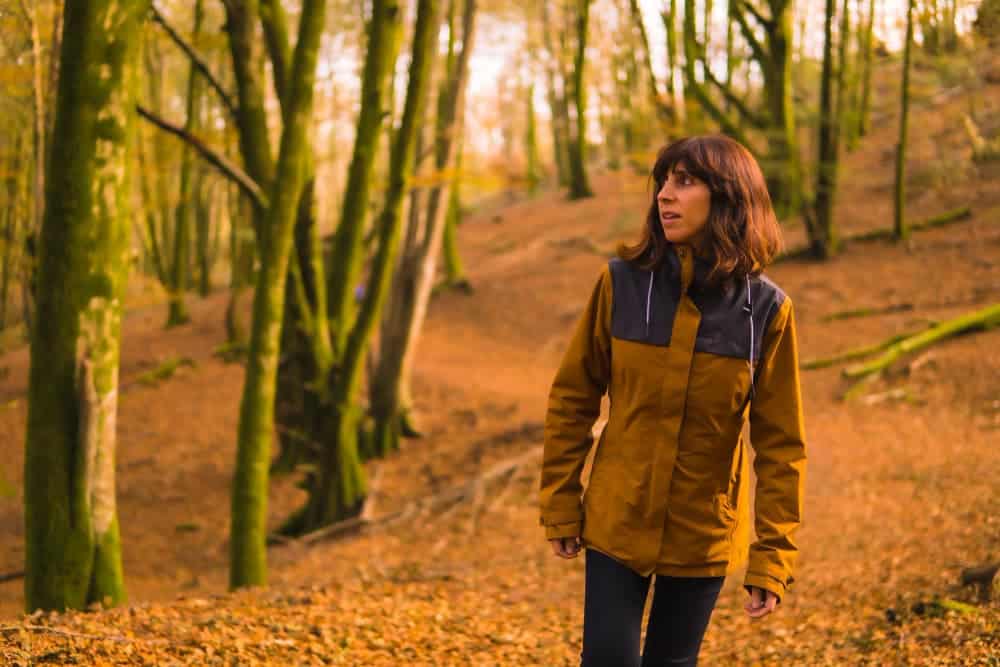
- Layered Clothing and Gear. Breathable T-shirts, lightweight or Primaloft jackets and waterproofs (preferably with a hood). Add a rain cover for your backpack or a waterproof liner, and a quick-drying towel. Thin gloves and a lightweight hat can make a big difference in the early hours.
- Footwear and Keeping Feet Dry. Trekking boots or shoes with a non-slip, waterproof sole (membrane type “waterproof”). Bring two pairs of technical socks and alternate. Use Vaseline or anti-friction cream to prevent blisters in damp conditions.
- Planning Stages and Daylight. As summer ends, days get shorter: start early to make the most of the morning and avoid arriving after dark. As a reference, from September to November, the useful daylight hours decrease, so it’s advisable to adjust distances and rhythms accordingly.
- Open Services. Although most towns maintain bars and shops, in less populated sections, opening hours may be shorter. Check food and water options in advance; bring something energetic (nuts, energy bars).
- Safety and Weather. Check the weather forecast before you go. If heavy rain or strong winds are expected, avoid exposed ridges and adjust your stage. Poles help on slippery descents. A whistle and a headlamp (with fully charged batteries) are simple yet useful tools.
- Credential, Stamps, and Compostela. The Credential is valid year-round, and stamps are still obtained at hostels, churches, bars, and tourist offices. Keep the habit of stamping at least twice a day in the Galician stages for the Compostela.
- Transport and Logistics. In autumn, there is good connectivity with cities at the start and end of the stages, and less congestion on trains and buses. If you decide to divide a stage, check local transport or rural taxis in the area.
Which Autumn Month to Choose?
- September: a smooth transition from summer; mild temperatures, harvest time, and still long days. There is slightly more crowding at the beginning of the month.
- October: the “sweet” autumn for many pilgrims: the colours are at their peak, the weather is pleasant, and the atmosphere is very peaceful.
- November: the most serene and contemplative option. Shorter days and more frequent rains, but with an intimacy that is hard to match.
Autumn on the Camino: A Transformative Experience
Doing the Camino in autumn is not just about choosing a different season: it’s experiencing it at a different pace. The silence of the forests, the warmth of the colours, and the absence of overcrowding allow for a deeper connection with yourself and the surroundings. The cycle of falling leaves symbolises closures and new beginnings, in tune with what many pilgrims feel when they arrive in Santiago… or continue to the ocean at Finisterre.
Whichever route you choose, this season will gift you with more comfortable walks, calm towns, and seasonal flavours that taste like home. With sensible planning, the right rain gear, and the desire to enjoy, walking the Camino at this time becomes a profound, authentic, and memorable experience.