The Camino de Santiago is a life-changing experience, a journey that goes far beyond the physical to immerse itself in the culture, history and, of course, the gastronomy of the lands it crosses. For the pilgrim seeking a truly enriching adventure, wine becomes an inseparable travelling companion, telling the story of each region through its aromas and flavours.
Throughout this guide to Camino de Santiago gastronomy, we will explore the most emblematic designations of origin found along the various Jacobean routes. We will also reveal the characteristics of their grapes, the history of their wineries and the secrets behind their food pairings. From the robust reds of Castile and León to the Atlantic whites of Galicia, each glass tells a story.
Get ready for a sensory journey that will enrich your experience and leave you with an unforgettable memory, glass by glass, stage by stage.
Índice de contenidos
- 1 The French Way: a mosaic of vineyards and flavours
- 2 Galicia: Atlantic freshness in every glass
- 3 The Northern Way: a journey between sea and mountains
- 4 Pairings: the art of combining wine and gastronomy on the Camino
- 5 Wine tourism on the Camino: experiences that enrich the journey
- 6 An experience for the senses with Mundiplus
The French Way: a mosaic of vineyards and flavours
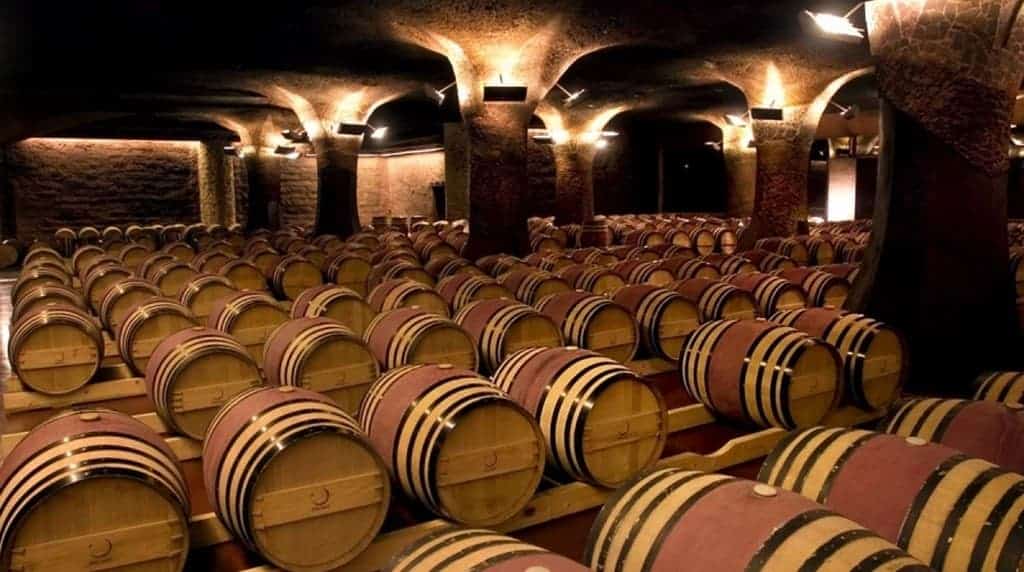
The French Way, the most popular and iconic route, is a true feast for wine lovers. It passes through some of Spain’s most important wine-growing regions, offering a diversity of landscapes and flavours that reflect the cultural richness of the Iberian Peninsula.
Shortly after crossing the Pyrenees, the pilgrim enters Navarre, a region that, while famous for its rosé wines, boasts a surprising enological diversity.
The Navarra Designation of Origin benefits from a convergence of climates — Atlantic, continental and Mediterranean — which allows for the cultivation of a wide range of grape varieties. Garnacha is the undisputed queen, especially in the production of rosés made using the saignée method, which gives them an intense colour, fruity aromas and unparalleled freshness. These are the perfect companion for regaining strength after a long stage.
But Navarre is much more than rosé. In recent years, the region has gained recognition for its high-quality red wines, made mainly from Tempranillo, Graciano and Merlot, as well as for its fresh, aromatic whites, with Chardonnay and Viura taking centre stage.
For pilgrims seeking a complete experience, stopping at one of the local wineries for a guided tasting is an unbeatable opportunity to discover the versatility of this land.
La Rioja: international prestige at the heart of the Camino
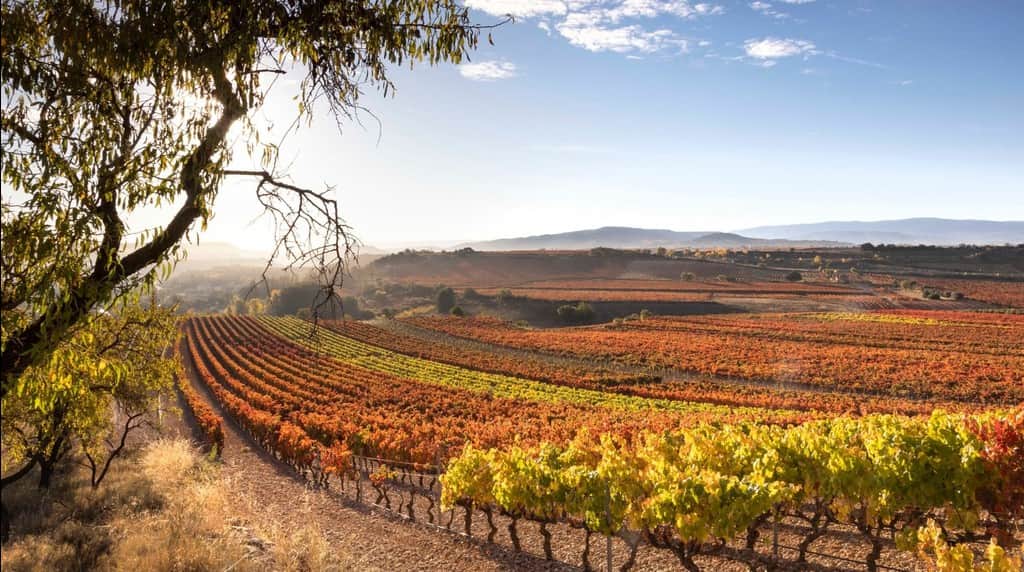
Continuing westwards, the route plunges into a sea of vineyards announcing arrival in La Rioja, Spain’s oldest and most prestigious designation of origin. To speak of La Rioja on the French Way from Logroño is to speak of a wine culture that permeates every corner of the region.
The Rioja DOCa is divided into three subzones with clearly defined personalities: Rioja Alta, Rioja Alavesa and Rioja Oriental, each contributing unique nuances to their wines.
Tempranillo is the soul of the reds, a variety that reaches its highest expression here, giving rise to elegant, complex wines with extraordinary ageing potential. Often complemented by Garnacha, Mazuelo and Graciano, the result ranges from young, fruit-forward wines to Grandes Reservas. In many cases, these are true oenological gems that have rested for years in barrel and bottle.
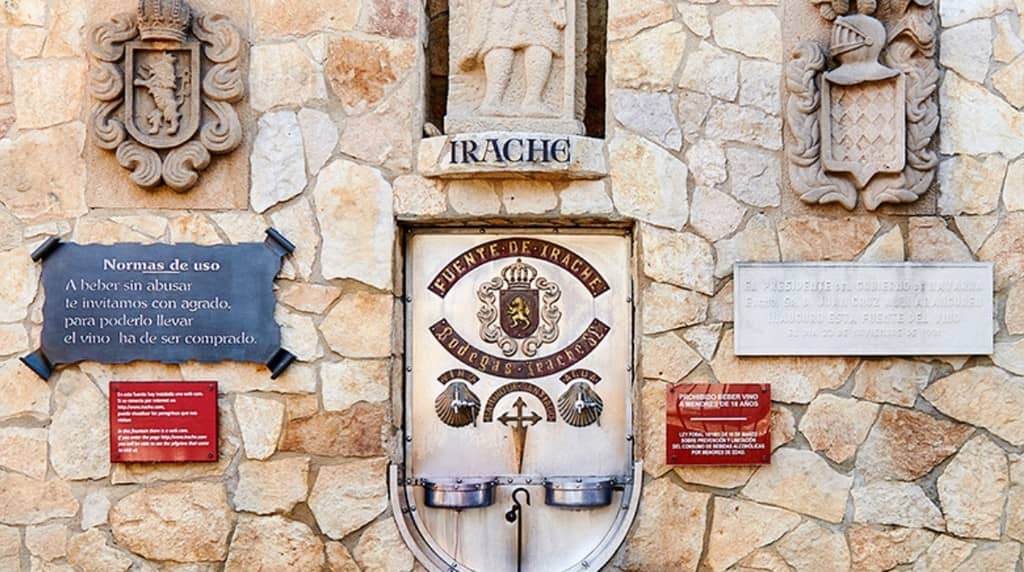
For pilgrims, the experience is enhanced by visits to iconic wineries, where it is possible to wander through centuries-old underground cellars and taste wines that are living history. One of the most iconic stops is undoubtedly the Wine Fountain at Bodegas Irache, in Ayegui. Here, the pilgrim can fill their flask with water or wine, a gesture of hospitality that perfectly sums up the spirit of the Camino.
Castile and León: character and personality on the Meseta
Leaving La Rioja behind, the French Way enters the vast plateau of Castile and León, a land of endless horizons and a character forged by history. Here, wine takes on a new dimension, with two designations of origin marking the pilgrim’s path: Ribera del Duero and Bierzo.
Ribera del Duero: the power of Tinta Fino
Around Burgos, the landscape undulates with vineyards that give life to the Ribera del Duero Designation of Origin. This region has established itself as one of the most prestigious in the world thanks to its powerful, structured red wines. They are made from the Tinta Fina variety, as Tempranillo is locally known. The altitude of the vineyards and the extreme continental climate, with wide temperature variations, give the grapes exceptional concentration and acidity.
For pilgrims walking the Jacobean route from Burgos, the wine experience provides the perfect counterpoint to the area’s monumental heritage. Ribera del Duero wines are ideal companions to hearty Castilian cuisine, such as roast suckling lamb. Organising a visit to one of the region’s wineries, many of them true architectural landmarks, allows visitors to understand the passion and rigour behind every bottle.
El Bierzo: the Atlantic elegance of Mencía
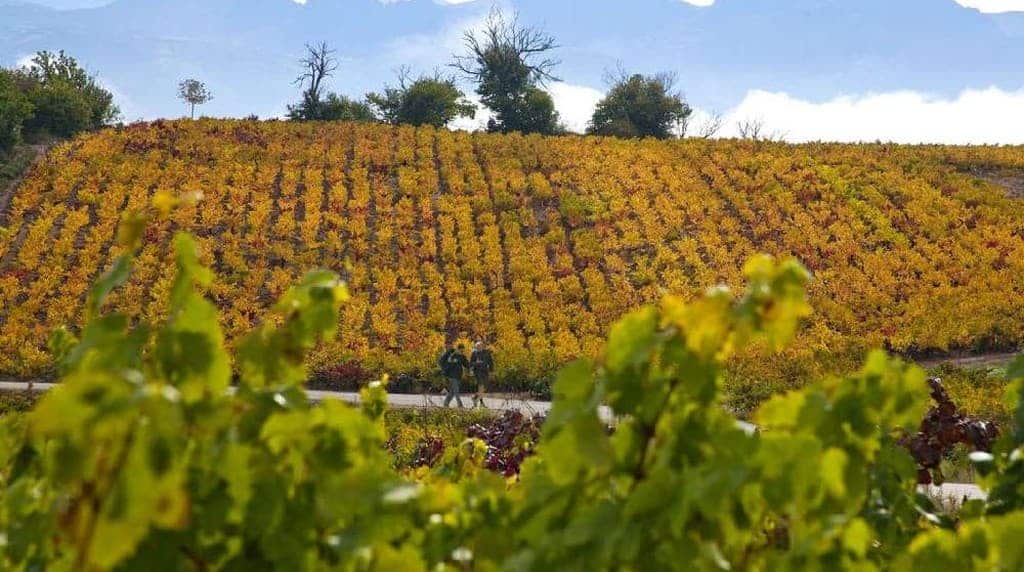
As the route transitions towards Galicia, already in the province of León, it leaves the plateau behind and enters El Bierzo. This region enjoys a special microclimate, milder and more humid, clearly influenced by the Atlantic. Here, the Mencía grape is the absolute star, producing fragrant, fresh red wines of remarkable elegance. These are wines that speak of their origin, of the slate hillsides where the vineyards — often centuries old — take root.
Bierzo wines, along with whites made from the Godello variety, offer a lighter, more subtle alternative to the reds of the plateau. They are perfect for pairing with dishes such as botillo, the region’s most emblematic product.
For the well-organised pilgrim, a stop in Ponferrada or Villafranca del Bierzo is the ideal opportunity to explore the small family-run wineries that have placed this designation firmly on the wine map.
Galicia: Atlantic freshness in every glass
Arriving in Galicia marks a radical change in landscape, climate and, of course, wine. The influence of the Atlantic Ocean permeates everything, giving rise to white wines of great freshness and acidity, which have become the hallmark of the region. The area is a mosaic of small designations of origin, each with its own personality.
Rías Baixas: the reign of Albariño
Entering Galicia via the Portuguese Way, the pilgrim steps into the heart of the Rías Baixas DO, the birthplace of Albariño. This white wine, made 100% from this grape variety, has won over palates around the world thanks to its aromatic intensity, with citrus and floral notes, and its fresh, saline palate.
It is the perfect pairing for the gastronomic treasures of the Galician coast: octopus, seafood and fresh fish. Enjoying a glass of Albariño on a terrace in Combarro or Cambados is one of the great pleasures this adventure has to offer.
Ribeiro, Ribeira Sacra, Monterrei and Valdeorras: a universe waiting to be discovered
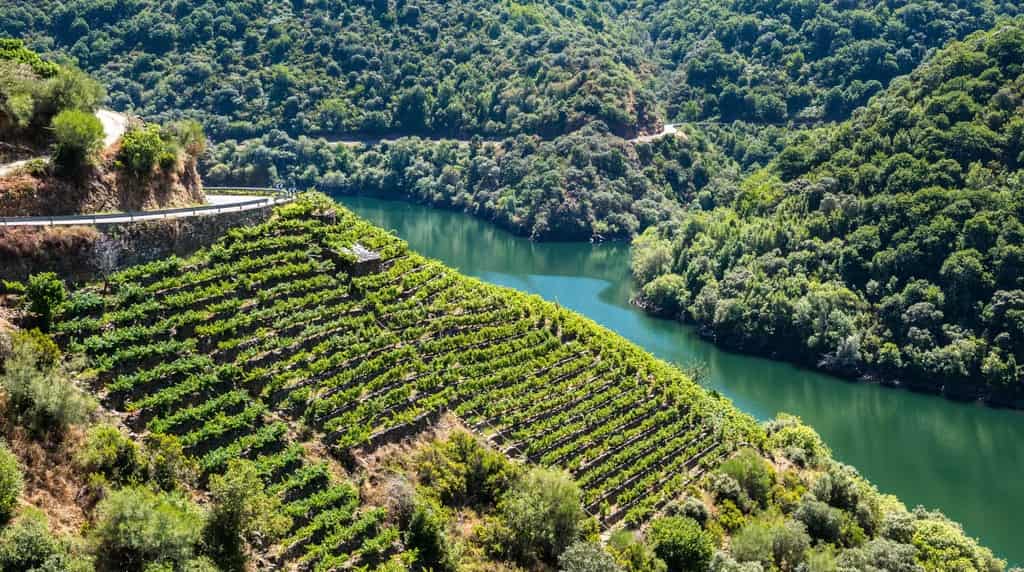
But Galicia is much more than Albariño. The interior of the region is home to four other designations of origin that are well worth exploring:
- DO Ribeiro: located in the province of Ourense, this is Galicia’s oldest designation of origin. Its wines, traditionally blended whites with Treixadura as the backbone, are complex, elegant and have great ageing potential. They are the ideal accompaniment to dishes such as Arnoia peppers or “polbo á feira”.
- DO Ribeira Sacra: perhaps the most spectacular of all due to its so-called “heroic viticulture”. The vineyards are cultivated on seemingly impossible terraces overlooking the canyons of the Sil and Miño rivers. Here, Mencía once again takes centre stage, but with a very different expression to that of Bierzo: lighter, more floral wines with striking acidity. A true landscape turned into wine.
- DO Monterrei and DO Valdeorras: in south-eastern Galicia, these two designations share the spotlight for Godello in whites and Mencía in reds. Godello, in particular, is experiencing a revival, producing white wines with body, structure and surprising aromatic complexity.
The Northern Way: a journey between sea and mountains
The Northern Way offers a different perspective, a route that winds along the Cantabrian coast, revealing landscapes of breathtaking beauty. From an oenological point of view, it is a fascinating journey that takes us from the Txakoli of the Basque Country to Asturian cider.
Txakoli, Vino de la Tierra de Liébana and Asturian cider
Travelling along the northern route is an immersion in a unique gastronomic culture, where wine shares the spotlight with other ancestral drinks.
- In the Basque Country, pilgrims will discover Txakoli, a slightly sparkling white wine, highly acidic and refreshing, ideal for accompanying the famous pintxos.
- In Cantabria, the route enters the Liébana region, where a surprising mountain wine is produced, mainly from Mencía and Palomino grapes.
- Finally, upon reaching Asturias, specifically on the Northern Way from Gijón, cider becomes the drink of choice. Asturian Natural Cider, with its ritual of pouring from height, is much more than a beverage: it is a symbol of the region’s culture and identity, a social experience no pilgrim should miss.
Pairings: the art of combining wine and gastronomy on the Camino
Below are a few suggestions to turn every meal into a small tribute to the land underfoot.
- In Navarre, fresh, fruity rosés are the ideal complement to piquillo peppers stuffed with cod or grilled chistorras. The wine’s acidity cuts through the fat and enhances the smoky flavours.
- In La Rioja, a Crianza or Reserva made from Tempranillo pairs perfectly with patatas a la riojana, a humble yet comforting stew, or with lamb cutlets cooked over vine shoots. The intensity of the wine complements the depth of the meat’s flavours.
- As you enter Castile and León, the heartiness of the cuisine calls for full-bodied wines. A Ribera del Duero is the perfect companion for roast suckling lamb, suckling pig or Burgos black pudding. The wine’s tannic structure and ripe fruit balance the richness of these dishes.
- In El Bierzo, the lighter, more floral Mencía is the ideal partner for botillo, a cured sausage served with cachelos (boiled potatoes) and grelos.
- Finally, in Galicia, Albariño reigns supreme at seafood feasts. Pulpo á feira, grilled razor clams or Arcade oysters find their perfect match in this white wine. Its salinity and vibrant acidity cleanse the palate and prepare it for the next bite. For heartier dishes such as lacón con grelos, a red from Ribeira Sacra provides the necessary freshness without overwhelming.
Wine tourism on the Camino: experiences that enrich the journey
Wine tourism has become the perfect complement to the Camino de Santiago. Many wineries along the route have opened their doors to visitors, offering experiences ranging from simple tastings to full immersions in the world of wine. For the well-organised pilgrim, these visits can be easily integrated into the itinerary, adding a cultural and sensory dimension to the journey.
- In La Rioja, the Barrio de la Estación in Haro is home to some of the country’s most iconic wineries.
- Centenary wineries such as Muga, La Rioja Alta or López de Heredia offer guided tours of their underground cellars, where time seems to have stood still among oak barrels. Further south, the avant-garde architecture of wineries such as Ysios or Marqués de Riscal, designed by internationally renowned architects, shows that tradition and modernity can coexist in perfect harmony.
- In El Bierzo, wine tourism has a more intimate, family-run character. Small wineries such as Descendientes de J. Palacios or Dominio de Tares open their doors to showcase the artisanal work behind each bottle. Walking through vineyards of old vines, some more than a hundred years old, is an experience that connects visitors with the history of the land.
- In Galicia, Ribeira Sacra offers a unique experience: the chance to navigate the Sil canyons while admiring the terraced vineyards cascading down the hillsides. It is a different way of understanding viticulture, of appreciating the titanic effort required to grow vines on slopes exceeding 50%.
- Wineries such as Regina Viarum or Abadía da Cova offer tastings overlooking the river, an experience that unforgettable combines landscape and flavour.
An experience for the senses with Mundiplus
Walking the Camino de Santiago is a personal adventure, but doing so with Mundiplus means taking that experience to a new level of comfort and discovery. Our philosophy is based on taking care of every detail so that pilgrims only need to focus on walking and enjoying the journey. This naturally includes the gastronomic and wine-related dimension of the experience.
We take care of selecting charming accommodation where, at the end of each stage, you can savour the local cuisine and the most representative wines of the region. We can also help you arrange winery visits, private tastings and experiences that will allow you to discover wine culture first-hand, all seamlessly integrated into your itinerary.
The Camino de Santiago is a treasure trove of landscapes, history and flavours, and wine is undoubtedly one of its most precious jewels. We invite you to discover it with us, to raise a glass to every stage completed and to collect memories that, like great wines, will only improve with time.