Embarking on the Camino de Santiago is a transformative experience, a journey that tests both mental and physical endurance. Every step along its ancient routes is an opportunity for introspection and discovery. However, for the pilgrimage to be a memorable experience for the right reasons—and not due to discomfort or health issues—meticulous preparation is essential.
Within this preparation, the choice of equipment for the Camino de Santiago plays a leading role, and perhaps the most critical and often underestimated decision is the selection of clothing. The eternal question for both novice and experienced pilgrims is: technical clothing or cotton?.
Cotton has been a staple in our wardrobes thanks to its everyday comfort. Nevertheless, its properties become a serious drawback when faced with the demands of long-distance walking.
Through this guide, we aim to demystify this choice. We will provide clear, experience-based arguments on why technical clothing is the indispensable ally of the pilgrim and how cotton can become their greatest enemy. We will analyse the properties of different materials, the layered clothing system, and how to adapt your gear to the climatic particularities of the various Camino routes.
Índice de contenidos
The phrase “cotton kills” is a well-known mantra in the mountaineering and hiking community, and although it may sound dramatic, it contains a truth that is vital for safety and comfort in outdoor activities.
Cotton is a natural hydrophilic fibre, which means it loves water. This characteristic, which makes it so soft and pleasant in dry conditions, becomes its greatest weakness during prolonged physical exercise. When a pilgrim walks, their body generates sweat to regulate temperature. A cotton T-shirt will absorb this moisture like a sponge.
The problem is that, unlike technical fabrics, this raw material does not have the ability to transport that moisture outwards so that it can evaporate. Instead, it retains it, remaining soaked for hours. A wet cotton garment can take between 6 and 12 hours to dry completely, an absolutely unviable timeframe on the Camino. Remember that it is normal to wash your clothes at the end of the day so they are ready the following morning.
The consequences of wearing cotton are numerous and range from simple discomfort to serious health risks:
- Loss of insulation and risk of hypothermia: water is an excellent thermal conductor. A wet cotton garment clinging to the body draws body heat away up to 25 times faster than a dry garment. When the pilgrim stops to rest or when the ambient temperature drops, this rapid cooling can cause a dangerous fall in body temperature, even on days that do not seem particularly cold.
- This phenomenon is particularly dangerous in mountainous areas or on routes with high ambient humidity.
- Increase in weight: wet cotton is heavy. A T-shirt can triple its weight when saturated with moisture, adding an unnecessary load to the pilgrim’s already heavy rucksack, increasing fatigue and effort with every step. Over the course of a 25-kilometre stage, this additional weight can make a significant difference to overall exhaustion levels.
- Chafing, irritation and blisters: damp skin is far more susceptible to friction. The seams of a wet cotton T-shirt, combined with the constant rubbing of the rucksack, are a guaranteed recipe for irritation and painful chafing. Likewise, cotton socks soaked with sweat are the main cause of blisters on the feet—the most common and debilitating problem among pilgrims.
- Blisters can turn a pleasant stage into a real ordeal and, in severe cases, force the pilgrim to abandon the journey.
In short, the initial comfort of cotton is a mirage that disappears at the first sign of exertion or rain, leaving the pilgrim exposed to cold, discomfort and skin injuries.
The solution: technical clothing to the rescue
Faced with the shortcomings of cotton, technical clothing stands out as the definitive solution for the modern pilgrim. Designed specifically for sports and high physical-demand activities, this apparel uses synthetic fibres (such as polyester, polyamide or polypropylene) and advanced natural fibres (such as merino wool) to deliver superior performance.
The key to its success lies in its hydrophobic capacity: instead of absorbing moisture, it repels and actively manages it, transporting it away from the skin to the outer surface of the garment where it can evaporate.
The fundamental principle governing its use is the layered clothing system. Originally developed for mountain activities, this method allows the pilgrim to adapt flexibly and efficiently to changing weather conditions and the intensity of their own effort. The system consists of three main layers:
- First layer (base layer): this is the layer in direct contact with the skin. Its primary function is not to provide warmth. Instead, it is responsible for managing sweat, transporting it away from the skin to the outer layers in order to keep the body dry and at a stable temperature.
- This is where the choice between a synthetic fabric and merino wool becomes most important. This layer should fit close to the body without being restrictive, allowing free movement and facilitating moisture evacuation.
- Second layer (insulating layer): its purpose is to provide warmth by trapping the warm air generated by the body. Fleece garments (made from polyester) or vests and jackets with synthetic insulation or natural down are the most common options. This layer is only used when temperatures are low or during prolonged stops. Its thickness may vary depending on the expected climatic conditions.
- Third layer (protective layer): this is the barrier against external elements: wind and rain. It must be waterproof to prevent water ingress, but also breathable to allow water vapour (evaporated sweat) from the inner layers to escape.
- Jackets with membranes such as Gore-Tex, eVent or similar are the gold standard in this category. A good waterproof jacket or poncho is essential in every pilgrim’s rucksack.
The brilliance of this system lies in its modularity. On a sunny, hot day, the pilgrim can walk wearing only the base layer. If the wind picks up or the temperature drops, they can add the second or third layer as needed. This versatility ensures comfort across a very wide range of conditions, while minimising weight and bulk in the rucksack.
Taking a closer look at technical fabrics: synthetics vs. merino wool
Choosing the material for the base layer deserves detailed analysis. The two main families of technical fabrics are synthetics and merino wool, each with its own advantages and considerations.
- Synthetic fibres (polyester, polyamide): these are the most widely used option due to their excellent sweat-wicking ability and fast drying time, often taking just one or two hours. They are highly durable fabrics, resistant to abrasion, and generally more affordable than natural alternatives.
- Their main drawback has traditionally been a tendency to retain odours, as the bacteria that cause them can thrive on the fabric. However, modern antibacterial treatments (such as silver ions) have greatly improved this aspect. They are ideal for high-intensity activities where heavy sweating occurs.
- Merino wool: considered by many the premium material for base layers, merino sheep wool is a natural fibre with extraordinary properties.
- It is exceptionally soft to the touch (very different from traditional wool, which can be scratchy).
- Regulates temperature remarkably well (keeps you warm in the cold and cool in the heat).
- Its molecular structure allows it to absorb up to 30% of its weight in moisture without feeling wet, maintaining its insulating properties even when damp.
- Its greatest advantage is its natural resistance to odours; it can be worn for several consecutive days without developing an unpleasant smell, making it perfect for multi-day treks.
- Drawbacks include slightly slower drying compared to synthetics, lower durability (especially in lightweight grades), and a higher price.
The choice between the two often depends on personal preference, budget, and expected conditions. A good strategy is to combine both: synthetic T-shirts for the warmer stages and a merino wool one for colder, wetter days or for sleeping in hostels.
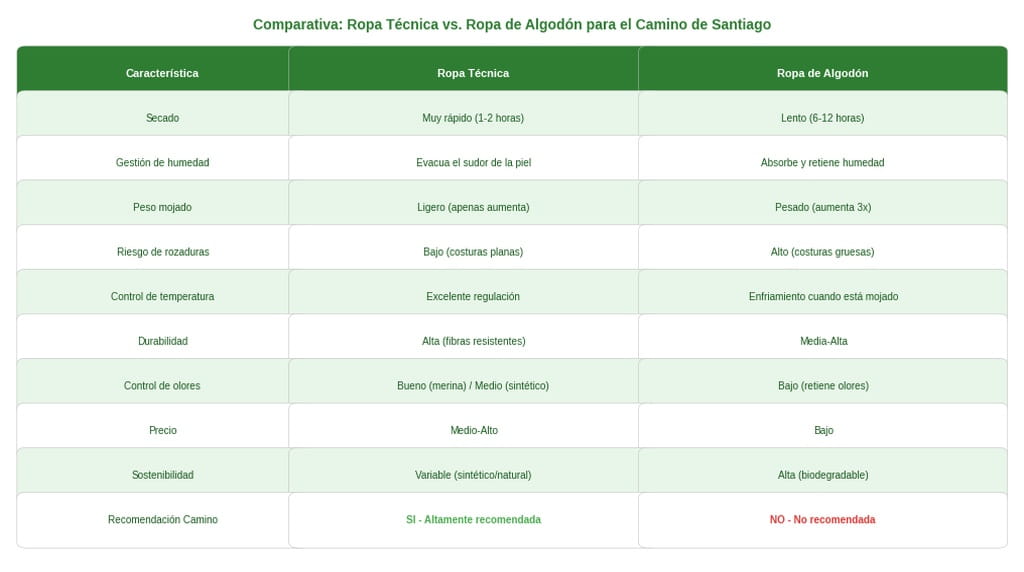
Comparison chart: technical clothing vs. cotton
To clearly visualise the fundamental differences between the two types of fabric, the following chart summarises their key characteristics in the context of the Camino de Santiago.
The right clothing for each Camino: adapting to the route and climate
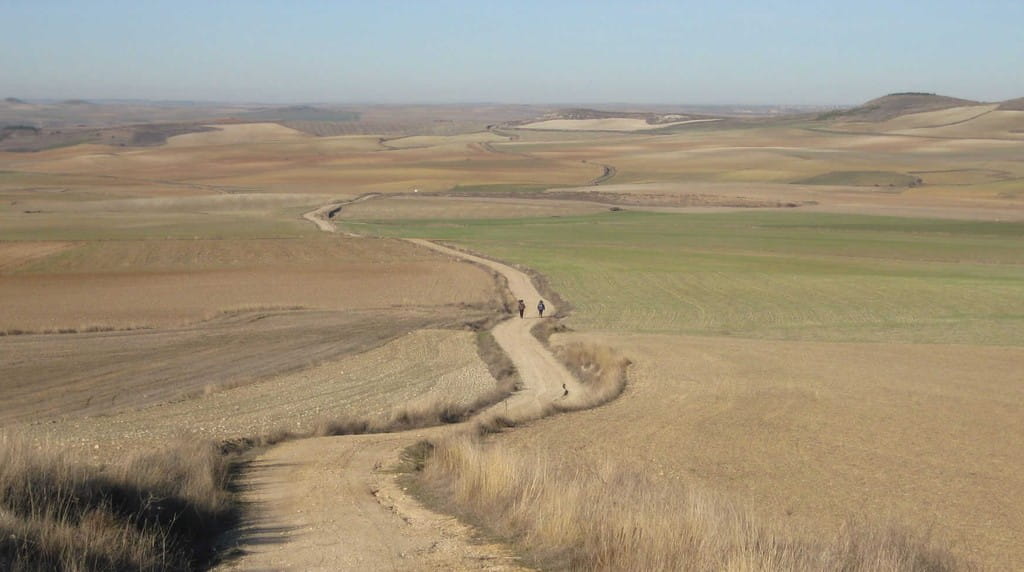
Spain is a country of enormous climatic diversity, and the Caminos de Santiago that cross it are a faithful reflection of this. Facing the constant humidity of the Cantabrian coast is very different from dealing with the thermal extremes of the Castilian Meseta. Therefore, although the core equipment (technical clothing and the layering system) is universal, it is wise and recommended to adjust it to the chosen route and time of year.
Camino Francés
Undoubtedly the most travelled and popular route, it is a perfect example of this climatic variety. It passes through very diverse landscapes and climates along its approximately 800 kilometres: from the Pyrenees, with unpredictable high-mountain weather and the possibility of snow even in spring, to the vast plains of the Meseta.
- Those starting the Camino Francés from Logroño enter terrain that, especially in summer, is characterised by extreme continental weather: cool mornings giving way to dry, scorching midday heat, with few shaded areas for refuge.
- Further along, the section of the Camino Francés from Burgos reinforces this experience, requiring the pilgrim to start walking at dawn to avoid the hours of maximum sun exposure.
On these stages, ultra-light technical clothing in light colours, preferably with UPF sun protection, is absolutely essential. Carrying sufficient water and protecting the head with a hat or cap is equally vital.
Camino del Norte
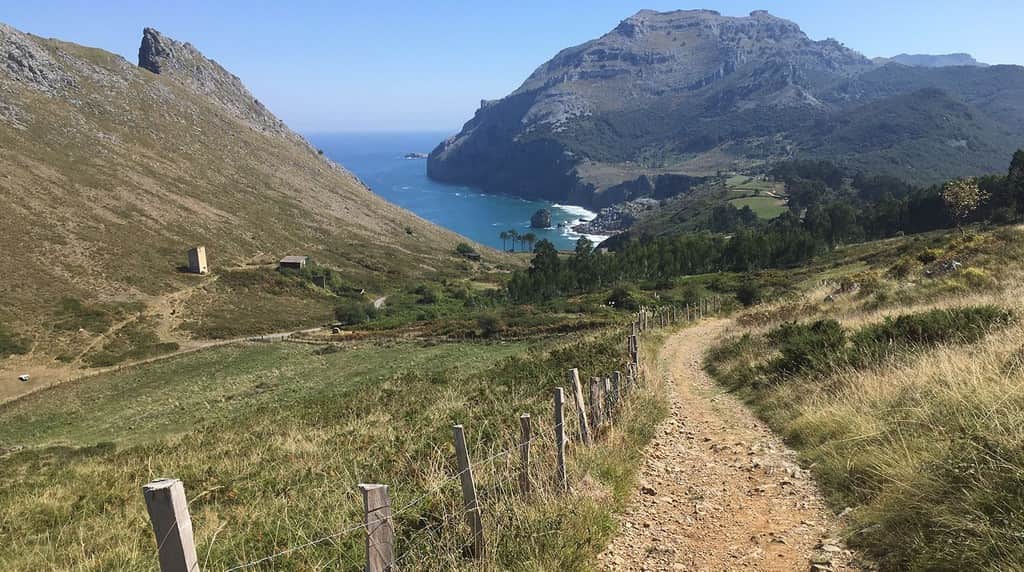
The Camino del Norte offers spectacular coastal landscapes, but with a humid and changeable climate.
Running parallel to the Cantabrian coast, it features green landscapes, impressive cliffs, and stunning sea views. However, its climate is oceanic: mild year-round, yet very humid and unpredictable. Rain can appear at any time, even in the height of summer.
- A pilgrim walking the Camino del Norte from Gijón should prioritise an excellent third layer (highly breathable, waterproof jacket and trousers) and clothing that dries extremely quickly, as the high ambient humidity hinders evaporation. Merino wool, with its ability to provide warmth even when wet and its odour resistance, is a great ally on this route where drying clothes can be a challenge.
Other routes
Other routes present their own climatic challenges.
- The Camino Primitivo is known for its physical difficulty and wild beauty. It crosses the mountains of Asturias and Lugo, with a climate similar to the North but at higher altitude, meaning lower temperatures and frequent fog.
- The Camino Portugués, both inland and along the coast, enjoys a milder Atlantic climate but is equally humid, especially upon entering Galicia.
- The Camino Inglés, short but intense, shares the Galician climatic characteristics.
On all these routes, the versatility of the layering system and the quality of technical clothing make the difference between a pleasant experience and a constant struggle against the elements.
Practical tips for choosing your technical clothing
When preparing your luggage, consider the following recommendations:
- Carry only what you need: the golden rule is to bring the minimum necessary. Generally, two or three technical T-shirts, two pairs of trousers (one long and one short or convertible), three sets of underwear, and three or four pairs of technical socks are sufficient. Daily washing is part of the pilgrim’s routine.
- Prioritise quick-drying garments: especially socks and underwear. These items must be dry by the next morning.
- Invest in good socks: along with footwear, these are the most critical items of equipment. Look for hiking-specific socks, seamless or with flat seams, that wick moisture and provide cushioning in impact zones.
- Don’t forget sun protection: hat, sunglasses, and sunscreen are essential, especially on the Meseta.
- Test your gear before departure: take several training walks with the clothing and footwear you will use on the Camino to ensure everything works correctly and doesn’t cause chafing.
Conclusion: an investment in comfort, safety and enjoyment
Choosing between technical clothing and cotton for the Camino de Santiago is not a matter of fashion or status but a fundamental decision that directly impacts comfort, health, and the enjoyment of the pilgrimage. As we have analysed, cotton, despite its apparent initial comfort, becomes a dangerous burden during long-distance activity, retaining moisture, causing body cooling, and promoting chafing and blisters.
Technical clothing, on the other hand, is designed to perform under the most demanding conditions. Whether through synthetic fibres that quickly wick sweat away or the intelligent thermoregulation of merino wool, its purpose is to keep the pilgrim dry, comfortable, and protected against the elements.
Investing in a good set of technical clothing based on the three-layer system is not an unnecessary expense. It is an excellent investment to ensure that the only memories of the Camino are the unforgettable landscapes, the friendships forged along the way, and the profound sense of personal achievement—not the cold, wetness, and discomfort.
So, when packing your rucksack for this unique adventure, leave cotton at home. Your body and pilgrim spirit will thank you at every step of the Camino. ¡Buen Camino!.