The Northern Way of St. James (Camino de Santiago del Norte) stretches for just over 800 km (around 820 km in total) from Irún (on the French border) to Santiago de Compostela, crossing the Spanish regions of the Basque Country, Cantabria, Asturias and Galicia.
Because of its considerable length, completing it usually takes around 34 stages or days of walking — which translates into roughly five weeks of travel if done in one go. However, the exact duration varies depending on the pilgrim’s pace, rest days, route planning, and whether they choose to complete the entire route or only a section of it.
Below, we’ll take a closer look at how long it takes to walk the Northern Way — both in its entirety and when divided into more manageable sections.
Índice de contenidos
Duration of the Northern Way: key factors to consider

Although, as mentioned, the route is generally divided into around 34 walking stages, not all pilgrims take the same number of days. What determines the exact duration? Mainly the following factors:
- Physical condition and walking pace: a well-trained pilgrim may cover more kilometres per day or even combine stages. Conversely, those who prefer a slower rhythm or have less experience may choose to split longer stages into two days, adding extra walking days to avoid overexertion.
- Rest day planning: some pilgrims include rest days in major cities or midway along the route to regain strength or do some sightseeing (San Sebastián, Bilbao, Santander, Gijón, etc., are great places to take a break). These additional days naturally extend the total journey but make it more enjoyable.
- Available time and chosen routes: not everyone can be away for more than a month. That’s why many people choose to divide the Camino into sections and walk them at different times. In this way, a pilgrim with only one or two weeks available can complete one section of the Northern Way and leave the rest for a future trip.
- Weather and time of year: the chosen season also plays a role.
- In summer, days are longer (you can start early and walk more hours in daylight), but the heat and higher tourist numbers may make shorter stages more advisable.
-
- In milder seasons (spring or autumn), walking conditions are generally very pleasant.
-
- In winter, adverse weather or fewer daylight hours may force shorter daily distances, increasing the total number of days required.
Comparison: duration of the Northern Way versus other Camino routes
Now that we know the full route takes roughly a month to complete, it’s useful to compare it with other pilgrimage routes, which differ in length and duration. Overall, the Northern Way is among the longest both in distance and days required — surpassed only by the Via de la Plata in total length. Let’s look at some comparisons:
- French Way (Camino Francés): the most traditional and popular route. It covers around 780 km from Saint-Jean-Pied-de-Port (France) to Santiago, usually taking about 33 stages to complete.
- Portuguese Way (central route): if starting from Lisbon, the distance is around 600 km; however, a very popular option begins in Porto (Portugal). From Porto to Santiago it’s roughly 240 km, typically completed in 11–12 stages (around two weeks).
-
- Here too, the journey can be divided into separate stages. The Camino de Santiago from Porto is often organised into about six walking days.
-
- Portuguese Way – Spiritual Variant: within the Portuguese Way there’s an optional route known as the Portuguese Way Spiritual Variant. This is a special three-day detour that begins near Pontevedra, offering a unique experience that includes the famous Traslatio (a boat journey along the River Ulla to Padrón) and visits to sites such as the Monastery of Armenteira. This variant adds about one or two extra days.
- English Way (Camino Inglés): one of the shortest routes. Traditionally starting in Ferrol (Galicia), it spans just 116 km, which pilgrims usually walk in five stages. Even starting from A Coruña (a variant of around 75 km), it only takes three or four days to complete.
- Original Way (Camino Primitivo): around 320 km from Oviedo to Santiago, normally divided into 13 stages due to its mountainous terrain. It’s shorter in distance but more demanding physically. Notably, it shares its final section with the Northern Way if one comes along the coast, and with the French Way in Melide, meaning the last days are common to both routes.
- Sanabrés Way (Camino Sanabrés): this route branches off from the Via de la Plata in Zamora and enters Galicia through Ourense. If walking the Sanabrés Way from Ourense, it’s about 110 km to Santiago, typically covered in five stages. It’s a short and comfortable alternative. The full Sanabrés Way (from Granja de Moreruela in Zamora), however, is much longer — roughly 370 km, requiring 13–14 stages to complete.
Finally, it’s worth noting that regardless of the chosen route, you can always rely on professionals to help plan your pilgrimage. If travellers wish to avoid logistical concerns (accommodation, luggage transfer, etc.), they can turn to the services of a Camino de Santiago travel agency specialising in tailor-made arrangements.
While this doesn’t change the number of walking days, it does make it easier to adapt the route to fit the pilgrim’s available time.
The Northern Way by sections: stages and duration of each part
As mentioned earlier, a very popular strategy to tackle the long Northern Way is to walk it in separate sections. This allows pilgrims to enjoy each part calmly and fit it into one- or two-week holidays. Practically speaking, it’s usually divided into five main sections, corresponding to the different regions along the route. These sections and their approximate durations are as follows:
- Irún – Bilbao: 6 stages (approx. 130 km) – Route through the Basque Country.
- Bilbao – Santander: 5 stages (approx. 150 km) – End of the Basque Country and start of Cantabria.
- Santander – Gijón: 9 stages (approx. 290 km) – Section crossing all of Cantabria and part of Asturias.
- Gijón – Ribadeo: 7 stages (approx. 150 km) – Route along western Asturias’ coast up to Galicia.
- Ribadeo – Santiago de Compostela: 9 stages (approx. 190 km) – Final stretch through Galicia.
Together, these segments add up to around 36 days on the Northern Way (34 walking stages plus a couple of travel days).
Section Irún – Bilbao (6 stages)
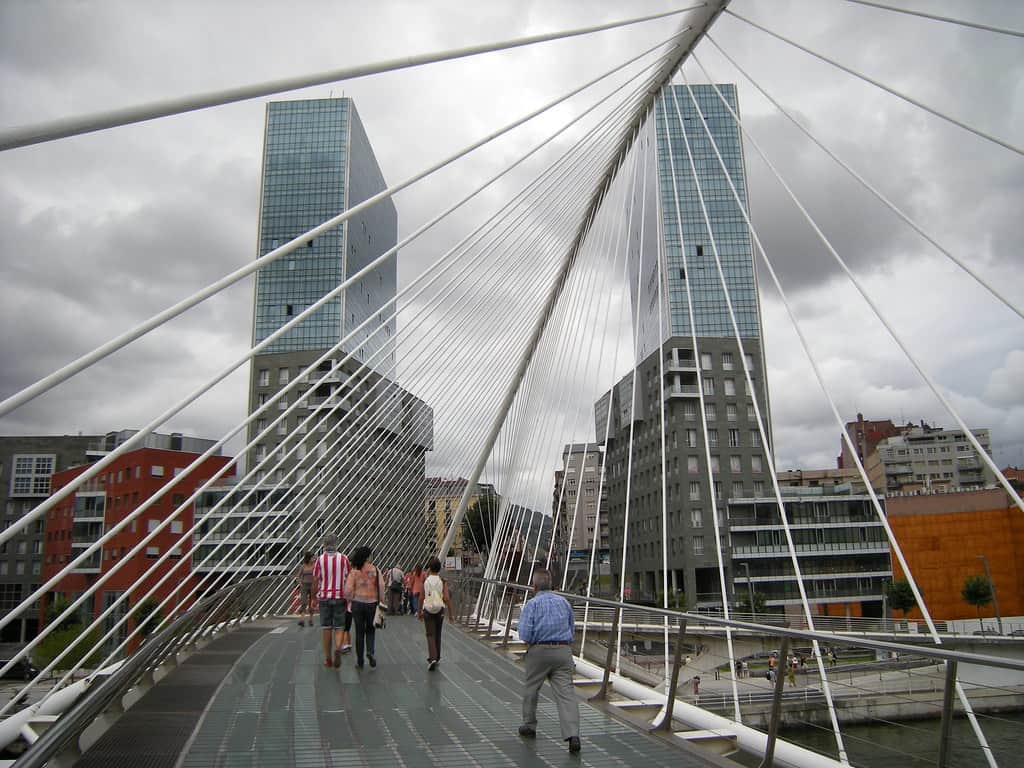
- Estimated duration: ~6 walking days.
- Distance: ~130 km in total.
- Description: The Northern Way from Irún to Bilbao follows the entire Basque coastline, from the French–Spanish border to Bilbao, the capital of Biscay. It’s a section of stunning natural beauty but also physically demanding: the Basque terrain alternates between coastal paths and continuous ascents and descents along the nearby hills.
In around six days, you’ll pass through iconic locations such as San Sebastián, Zarautz, Getaria, Markina-Xemein, Gernika and Bilbao.
It is possible to shorten some days by using public transport (for example, skipping the entrance to Bilbao if you are running out of time, taking the underground or bus on the outskirts). Conversely, if any stage proves to be difficult (such as Irún-San Sebastián, which is quite hilly), you can stay overnight before finishing it.
Accommodation availability is good, with options at almost every stage.
Section Bilbao – Santander (5 stages)
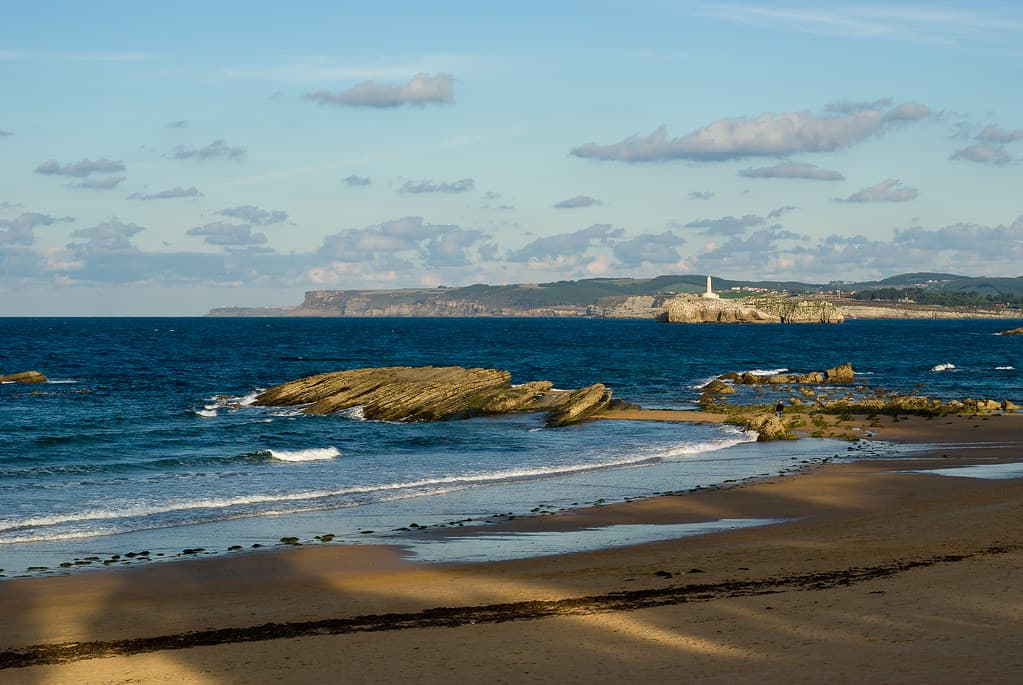
- Estimated duration: ~5 walking days (plus possible sightseeing days in cities).
- Distance: ~150 km (between 130 and 150 km depending on variants).
- Description: this second section connects the capitals of Biscay (Bilbao) and Cantabria (Santander), moving from the Basque geography into Cantabria. It is slightly gentler in profile than the previous section, although moderate ascents and descents still occur.
Highlights of this segment: Portugalete Hanging Bridge, Eastern Cantabrian Coast (Castro Urdiales, Laredo, and Santoña) and Santander.
On the Camino del Norte from Bilbao to Santander there is some flexibility: for example, some itineraries do it in 6 days including an extra stop in Noja or Güemes to shorten daily stages. The stages here are not excessively long (many around 20–25 km), so a fit pilgrim could combine them if in a hurry, potentially reducing it to 4 days. However, it is recommended to enjoy the route calmly, savouring the Cantabrian towns and beaches.
The company of other pilgrims begins to be somewhat more dispersed than in the Basque Country (as some finish in Bilbao), but there is still a steady flow. Accommodation services are likewise sufficient.
Section Santander – Gijón (9 stages)
- Estimated duration: ~9 walking days.
- Distance: ~280–300 km.
- Description: This is a long section covering the second half of Cantabria and much of Asturias, up to the city of Gijón, being one of the longest segments of the Camino del Norte. Due to its length, some pilgrims even split it into two parts (Santander to Llanes, and Llanes to Gijón, for example).
Main features: Western Cantabria (towns like Santillana del Mar, Comillas, or San Vicente de la Barquera) and Eastern Asturias, with a succession of unforgettable coastal landscapes. You walk with the Cantabrian Sea on one side and often the Picos de Europa to the south, a unique contrast. You pass through Ribadesella, Colunga, Villaviciosa, Llanes before reaching Gijón.
Since Santander to Gijón is almost 300 km, completing it in 9 stages implies averaging somewhat long stages (30+ km in some cases). This section requires careful planning of stops: especially in Asturias, accommodation density is lower and sometimes it is necessary to walk a little further to reach the next place to stay.
In terms of difficulty, western Cantabria and eastern Asturias have medium difficulty stages, with some elevation but nothing extreme. The main challenge may be cumulative duration: after several consecutive days, fatigue is noticeable. It is therefore recommended to listen to your body and, if necessary, take a rest (for example, enjoy an extra afternoon in Llanes or Ribadesella).
The Camino from Santander to Gijón offers a lot of camaraderie among pilgrims: as it is a long section, it is common to meet the same people over several days, creating the typical family-like atmosphere.
Section Gijón – Ribadeo (7 stages)
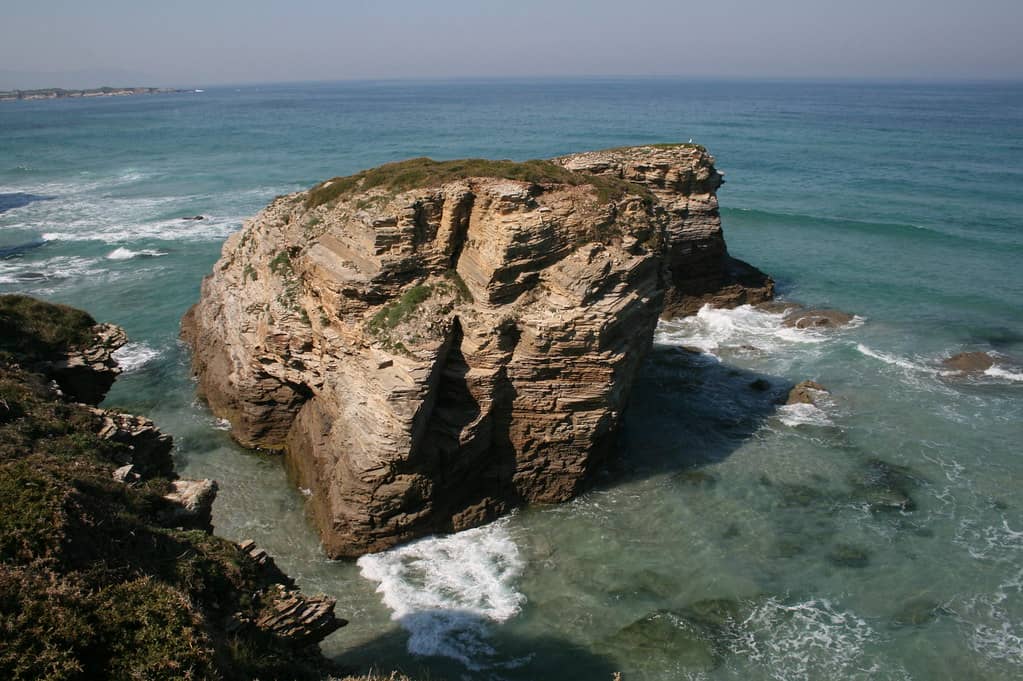
- Estimated duration: ~7 walking days.
- Distance: ~150 km.
- Description: this section takes the pilgrim from the second half of Asturias (Gijón) to the Galician border in Ribadeo. It typically consists of 7 stages along the western Asturian coast, a less touristy region full of authenticity.
Route highlights: You will pass through Avilés and experience rural western Asturias with towns such as Cudillero, Luarca, Navia, and Tapia de Casariego. The environment combines green meadows, eucalyptus forests, and views of the Cantabrian Sea from cliff tops. You finish in Ribadeo.
It is also possible to adjust the Camino del Norte from Gijón to Ribadeo. Some split this section into 8 stages to avoid rushing, as there are some long days (for example, the stage to Luarca can exceed 30 km depending on the starting point). Conversely, for those in a hurry, there are minor road variants to shorten distances.
This section is quiet and less crowded. It is common to walk alone for stretches and enjoy more silence, encountering company mainly upon reaching the evening stop. This can promote quality interactions, as conversations tend to be closer with the few pilgrims you meet, forming a tight-knit group.
Section Ribadeo – Santiago de Compostela (9 stages)
- Estimated duration: ~9 walking days.
- Distance: ~190 km (depending on final variants).
- Description: the final section runs through Galicia from north to south, from Ribadeo to the ultimate destination at Santiago Cathedral. This section combines the calm of the first Galician days with the gradual integration into the busier main routes as you approach Santiago.
Key itinerary points: A Mariña lucense (Lourenzá and Mondoñedo), other small villages like Abadín, Vilalba, and Baamonde in a less touristy part of Galicia, with chestnut and oak forests, and the typical humid, green atmosphere; the Monastery of Sobrado.
Once you reach Arzúa, you meet hundreds of pilgrims from the French route coming from Sarria, creating a much busier atmosphere. From here to Santiago is just under 40 km, typically done in two final stages. And of course, Santiago de Compostela.
This Galician section allows you to enjoy rural Galicia at a relaxed pace. Many pilgrims greatly value the peace of the first stages in Lugo, where the route is still very lightly trafficked and authentic, inviting introspection. The atmosphere changes in Arzúa: for some, it is a shock to see so many people, but for others it is an injection of energy and excitement feeling the proximity of the goal.
The Camino de Santiago from Ribadeo is a popular choice, a perfect ~10-day holiday section. Some choose it for the quiet beauty of Galicia and to avoid crowds until almost the end.
Also worth mentioning is the Coastal Variant in Galicia: from Ribadeo, it is possible to follow the coast to Viveiro and then to Ferrol to join the English route. However, this is much less common and would considerably lengthen the journey, so most stick to the standard inland route via Mondoñedo.
Additionally, it is possible to do the Camino de Santiago from Villalba, as it is about 120 km from Santiago, more than the 100 km minimum for the Compostela.
Final tips: company and enjoyment on the Camino del Norte
Walking the Camino del Norte, whether fully or in sections, is not just about how many days it takes, but about how those days are experienced. Unlike busier routes, this alternative offers a quieter environment conducive to personal reflection. This does not mean one will feel alone; on the contrary, the lower traffic often encourages more genuine encounters and quality company.
In the words of the Asturias tourism office, “it is not as crowded as others, so the experience is more authentic, inviting introspection and a greater connection with nature”. Especially outside peak season, you can walk long stretches in relative solitude, but at the end of each stage, you will always find other pilgrims to share experiences with.
In short, how many days it takes to walk the Camino del Norte depends on each pilgrim. Around 34 stages is typical to cover its ~820 km, but the important thing is not the exact number, but living the experience fully. Whether you have a month to do it all at once, or prefer to split it into one-week annual sections, it will reward you with its wealth of landscapes, cultural heritage, and unforgettable company of fellow pilgrims and locals.