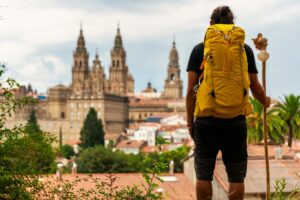
The Portuguese Way of Saint James (central route) is currently the second most popular pilgrimage route. The duration of the journey can vary considerably depending on where you start and the pace of each pilgrim. Starting in Lisbon is not the same as starting in Porto or at the Galician border in Tui, as the distance covered changes significantly.
Below, we analyse how many days are needed depending on the most common starting points and how the stages can be adjusted to your needs. We will also compare the duration of the Portuguese Way with other Camino de Santiago routes.
Índice de contenidos
Duration of the Portuguese Way by starting point
The central route of the Portuguese Way offers multiple starting points, and the number of days it takes to reach Santiago de Compostela depends on where you choose to begin. The three most common options are Lisbon, Porto, or Tui, listed from longest to shortest distance. Let’s look at each section in detail:
From Lisbon (full route, ~600 km)
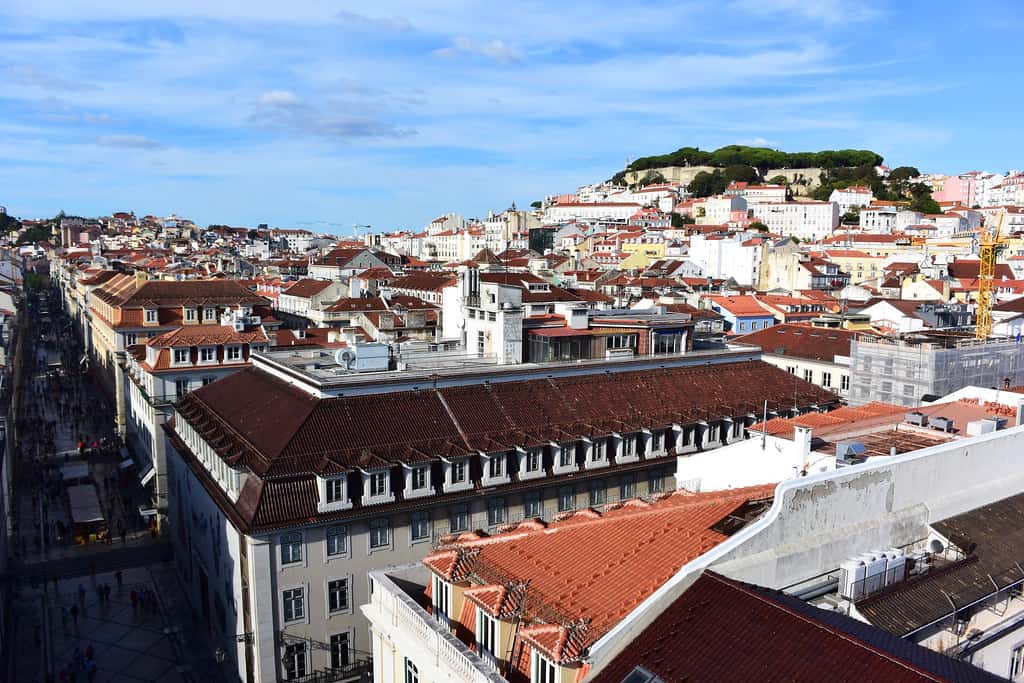
If you choose to start from Lisbon, you will face approximately 600 to 640 km of walking to Santiago. This typically translates to around 25 to 30 stages.
Of course, the exact number of days can be adjusted according to individual plans. More experienced pilgrims might complete longer stages and reduce the total number of days, while others may prefer shorter stages and add extra days.
Starting in Lisbon allows you to experience the Central Portuguese Way from start to finish, crossing all of Portugal. You will pass through historic cities such as Santarém, Coimbra, and of course Porto, before reaching Galicia.
It is a long journey (around a month of continuous walking) and less crowded in the early stages, but rich in cultural and scenic experiences. Many pilgrims divide this route into two or three separate trips (Lisbon–Porto and then Porto–Santiago or Porto–Tui) due to the number of days required to complete the full journey.
From Porto (~240 km)
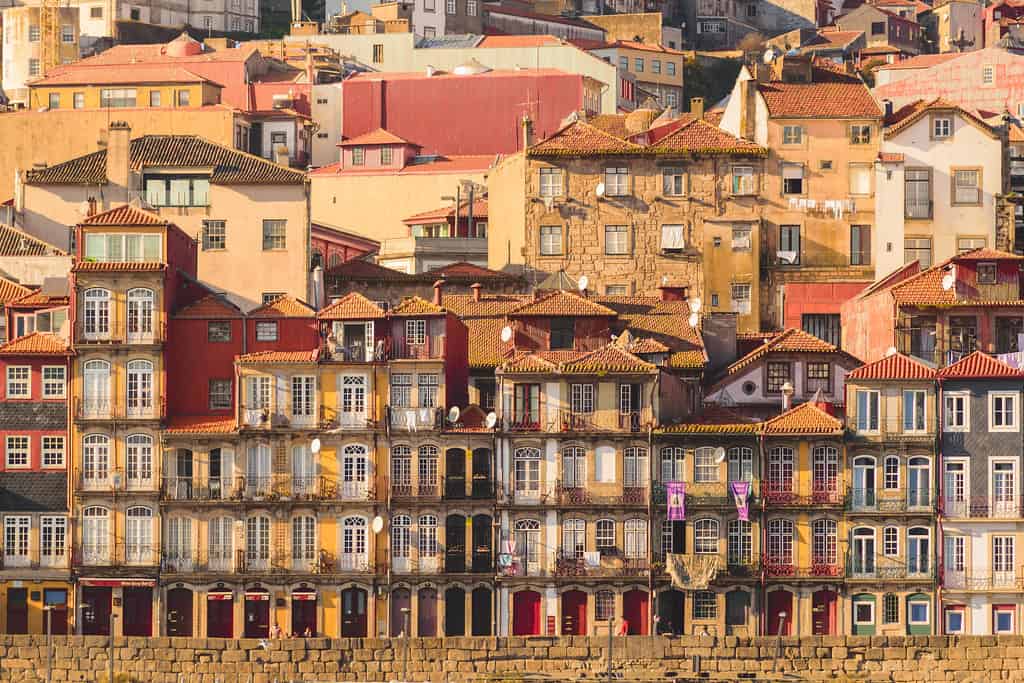
Possibly the most popular option nowadays is to do the Portuguese Way from Porto to Tui. From here to Santiago, there are around 240 km, typically covered in about 11–12 stages. In fact, the standard itinerary of the central Portuguese Way starting from Porto consists of 12 walking days to cover the distance to the finish.
A common way to describe this route is to divide it into two segments: up to Tui (Portuguese section) and from Tui (Galician section). From Porto to the border, there are usually 6 walking stages, passing through emblematic towns and cities such as Barcelos, Ponte de Lima, and Valença do Minho.
For example, one possible distribution of this first segment would be: Porto–Arcos, Arcos–Barcelos, Barcelos–Balugaes, Balugaes–Ponte de Lima, Ponte de Lima–Rubiaes, Rubiaes–Tui, with daily distances between 16 and 27 km. After crossing the Miño River via the International Bridge into Galicia, there are another 5 to 6 additional stages from Tui to Santiago.
Starting in Porto offers a perfect balance for many: a manageable distance of around 240 km, moderate difficulty (no very high mountains; the most challenging point is usually the climb to Alto da Portela Grande leaving Ponte de Lima, which is still an achievable challenge), and passing through regions with good infrastructure of hostels and services.
Moreover, Porto is a city easily accessible by transport (with an international airport) and provides a beautiful starting point with its cathedral (Sé do Porto) overlooking the Douro River.
For all these reasons, this city has become one of the favourite places to start the Camino: in 2024 alone, over 27,300 pilgrims started here, consolidating it as the second most popular starting point (only behind Sarria on the French Way).
From Tui (~115–120 km)
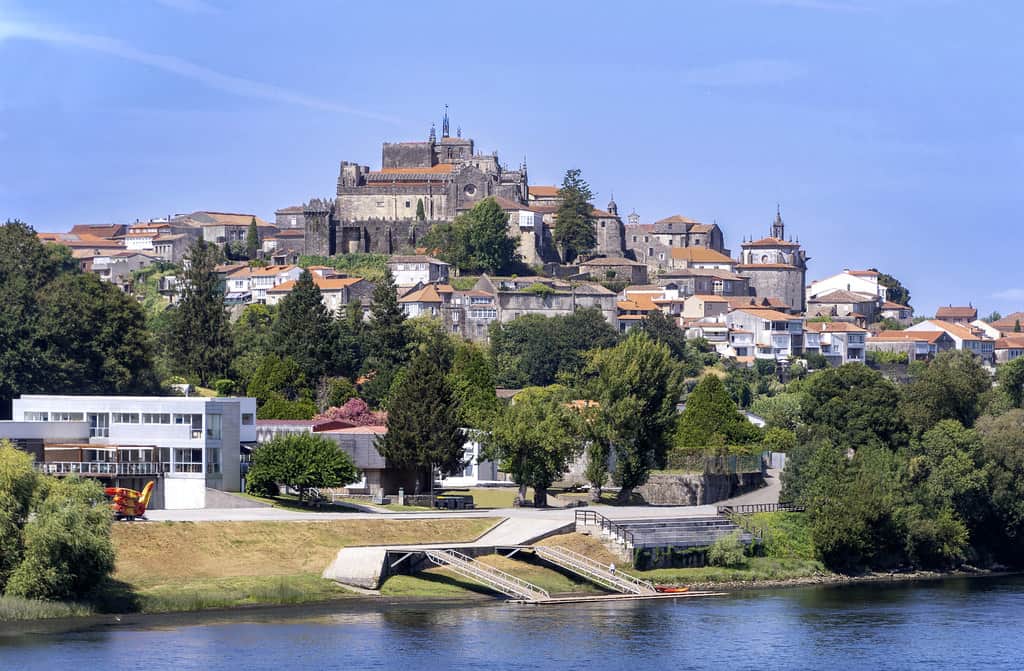
For those with less time or simply wishing to do the minimum required to obtain the Compostela, an ideal option is to start in Tui, already in the province of Pontevedra (Galicia). This town is right on the border with Portugal, separated from Valença do Minho by the Miño River, and marks approximately the last 115 km to Santiago. This distance is usually covered in 5 or 6 days, depending on the stage plan chosen.
Traditionally, many pilgrims divide the Tui–Santiago segment into 5 comfortable stages, around 20 km per day, except for the first day. A typical itinerary would be: Tui–Redondela (~33 km), Redondela–Pontevedra (~20 km), Pontevedra–Caldas de Reis (~22 km), Caldas–Padrón (~19 km), and Padrón–Santiago (~25 km).
Thus, in six days you cover the final ~118 km of the central Portuguese Way. However, some pilgrims choose to combine the first two stages and walk directly from Tui to Redondela in one day (about 32 km, a considerable but feasible challenge for those used to long distances).
By doing so, it is possible to complete the segment in 5 stages. In fact, it is common to plan 5 days of walking for 116 km, skipping the stop at O Porriño. In any case, whether in 5 or 6 stages, this final section offers a short experience (around a week), ideal for those with limited time but who want to experience the Camino.
In terms of scenery, starting in Tui means that almost the entire route takes place in Galicia. You will pass through towns with a strong pilgrim atmosphere such as Pontevedra or Padrón, and enjoy the well-known Galician hospitality. It is a short but very special journey, with the added attraction that with 100 km walked you can request the Compostela upon arrival in Santiago.
And what about the coastal route? It is worth mentioning that, in addition to the central (inland) route we have described, there is a Portuguese spiritual variant which also starts in Porto but follows the Atlantic coast via Vigo before joining the central route in Redondela. The duration of the coastal route from Porto to Santiago is similar: about 280 km covered in around 12–13 stages.
Comparing the duration of the Portuguese Way with other routes
Each Camino de Santiago route has a different length and difficulty, resulting in highly variable durations. Compared to other pilgrimage routes (especially starting from Porto), it offers a medium duration, neither the longest nor the shortest. Let’s see how it compares to some of the best-known routes:
- French Way: the most traditional and crowded route. It covers around 764 km from Saint-Jean-Pied-de-Port (or Roncesvalles) to Santiago, usually requiring between 30 and 35 walking days. Many guides estimate about 33 stages to complete it fully, making it longer than the Portuguese Way.
- Northern Way: runs along the Cantabrian coast from Irún to Galicia. Its route is around 800–820 km, similar in length to the French Way, with approximately 34–35 recommended stages. Therefore, it is also longer than the central Portuguese Way.
- Primitive Way: starts from Oviedo and reaches Santiago after about 313 km, usually covered in 13–14 days. It is a shorter route, although with more elevation gain and physical demand.
- English Way: from Ferrol to Santiago, about 120 km, completed in only 5 or 6 days, one of the shortest routes.
- Sanabrés Way: corresponds to the last 100–130 km of the Vía de la Plata, normally starting from Ourense. It is approximately 110 km to Santiago, typically done in 5 or 6 walking days. For example, our Sanabrés Way from Ourense plans 6 comfortable stages to cover this final stretch of the Vía de la Plata, comparable in length to the Portuguese Way from Tui (both around a week).
In summary, the central Portuguese Way requires fewer days than long routes such as the French or Northern Way, but more days than short routes of around 100 km, like the English Way or the final Sanabrés section.
This makes it a balanced alternative for many pilgrims: neither a five-week commitment nor a too-short experience of less than a week, but about twelve days of adventure (if starting from Porto) with the possibility of adjusting slightly up or down according to your needs.
Flexibility of stages: combining or splitting days
One of the advantages of the Portuguese Way, as in other routes, is the flexibility to plan shorter or longer stages depending on your fitness, available time, and preferences. There is no “mandatory” number of days; traditional stages are just a suggestion. Each pilgrim can split or combine sections to tailor the experience to their needs.
- Combining stages (walking more per day): if you have few days available or are well-trained and want to progress faster, you can combine two stages into one. We have already suggested the case of Tui to Redondela in one day, skipping the stop at O Porriño, reducing the Camino from Tui to 5 days instead of 6.
Another example in the Portuguese segment: the standard guide separates Porto–Arcos (16 km) and Arcos–Barcelos (20 km) into two days, but some pilgrims combine both and walk from Porto to Barcelos (about 36 km).
This option is not usual, but it shows that it is possible to shorten the total duration by increasing the daily distance. Combining stages is useful when you want to save time, though it is advisable to be realistic: walking more than 30 km in a day with a backpack can be exhausting for most people, especially over consecutive days.
- Splitting stages (walking less per day): on the other hand, if you prefer to take it easy or are not used to long distances, it is perfectly valid to split a stage into two shorter days. This route offers many intermediate towns with accommodations, allowing such divisions.
For example, the Padrón–Santiago stage (24 km) can be split by staying overnight in a village like Teo or Milladoiro halfway, turning the last kilometres into two gentle stages of 12–15 km.
Similarly, in the Portuguese section, some pilgrims choose to take an extra stop between Ponte de Lima and Tui, stopping in Valença do Minho before crossing to Tui if the previous day was tiring (the descent from Alto da Portela can leave legs fatigued).
Splitting stages is recommended if you want to enjoy the surroundings at a leisurely pace or if travelling with people of lower physical endurance. Ultimately, adding one or two extra days can make the journey much more enjoyable and reduce the risk of overuse injuries.
In conclusion, the Portuguese Way can be adapted to your liking. There is no problem in taking two or three extra days beyond the “planned” schedule if it improves your experience. Remember, the important thing is to enjoy the journey and arrive in good condition.
Many travellers even insert rest days in interesting towns (for example, to explore Porto before starting to walk, or take a day off in Pontevedra for sightseeing). These breaks do not count as stages but extend the total travel days, something to consider when planning your holiday.
Finally, bear in mind that each pilgrim is different. Some prefer sporting challenges and fewer days, others prioritise meeting people and exploring at a relaxed pace. The good thing about the Camino de Santiago in general is that it’s not a race: you can adjust the stages according to how you feel. Often, pilgrims who start with a fixed plan end up modifying it — either to wait for friends, recover from blisters, or simply because they fell in love with a town and wanted to stay longer. And that is perfectly fine!.
The atmosphere and good company on the Portuguese Way
One of the most endearing aspects of the Portuguese Way is the camaraderie among pilgrims. Being currently the second most frequented route, you will never lack good company along the way.
This is true almost any time of the year: even in winter or autumn, you will always find fellow walkers on this relatively easy route with well-served hostels. The constant presence of travel companions creates ideal situations to make friends and share unique experiences.
From the first kilometres, it is common to meet people walking at your pace. You can chat while walking through rural paths or share a coffee during breaks. Language barriers are rarely an issue: a sort of universal pilgrim language develops here, based on gestures, smiles, and shared experiences.
Additionally, the Portuguese route has the particularity of connecting two countries. Many local Portuguese pilgrims join the route, and upon reaching Galicia, they meet Spaniards and travellers from all over the world, enriching the cultural mix.
In fact, from Redondela (Pontevedra), walkers coming along the coast converge with those from the inland route, increasing the density of pilgrims in the final stages. This means that as you approach Santiago, each day there will be more fellow pilgrims, giving the final kilometres a very festive and communal atmosphere.
It is common to form small families with people you have just met but instantly connect with through shared daily experiences. This sense of community is one of the treasures of the Camino: supporting and being supported, listening and being heard. In the Galician stages, for instance, it is typical to meet the same pilgrims each afternoon at the end of the stage, creating bonds that sometimes last beyond reaching Santiago.
Of course, each person can choose their level of interaction. If one seeks reflection and solitude, the Camino allows for that too. But the hospitality and friendliness of people along this route invite conversation. Locals in towns both in Portugal and Galicia often greet pilgrims with a “Bom caminho!” or “Buen Camino!”, reinforcing the feeling of welcome.